Tag: Game Recap

Anaheim Ducks 3-2 Utah Mammoth (OT) - Full Game Recap | IHM News

Anaheim Ducks 3-2 Utah Mammoth (OT) – Full Game Recap | IHM News

Anaheim Ducks 3-2 Utah Mammoth (OT)

Date: November 18, 2025 – Author: IHM News

Ducks survive late scare and win it in overtime

Anaheim Ducks 3-2 Utah Mammoth (OT) - Full Game Recap | IHM News

Anaheim grabbed two points in dramatic fashion, rallying from a late deficit and outlasting the Utah Mammoth 3-2 in overtime. The Ducks controlled long stretches of the game with puck pressure, neutral-zone layers and a steady flow of cycle shifts, but Utah repeatedly countered with structured rushes and opportunistic shooting from the slot. Anaheim’s bench stayed patient, and the comeback surge paid off when Trevor Zegras’ line generated the key momentum swing before Olen Zellweger finished the job in OT. The Ducks improve to 10-8-2, while Utah collect a valuable point but will regret missed chances on transition plays and two late defensive breakdowns.

How the game unfolded

1st period: Anaheim opened with strong forecheck layers and drew early penalties through pace and puck touches. Jamie LaCombe capitalized at 15:52, burying a low release after a clean slot feed from Strome and Killorn, giving Anaheim a deserved 1-0 lead. The period featured plenty of physicality, including simultaneous fighting majors for Johnston and O’Brien.

2nd period: Utah answered through Dylan Guenther at 18:14, finishing a controlled zone entry and a crisp east-west setup. The Mammoth tightened their rush defense and disrupted Anaheim’s middle-lane attacks, shifting momentum heading into the third.

3rd period: Logan Cooley gave Utah its first lead at 09:19 on a quick-release finish from the right dot after a forced turnover. Anaheim refused to fold. Trevor Terry tied it 2-2 at 19:55, jumping on a rebound generated by forechecking pressure from Kreider and Gauthier.

Overtime: Anaheim needed just 1:50 to complete the comeback. Zellweger jumped into the play, received a perfect lateral pass from Sennecke and ripped home the winner for a 3-2 final.

Numbers Box

  • Shots on goal: ANA 25, UTA 18
  • Shots off target: ANA 19, UTA 13
  • Blocked shots: ANA 15, UTA 12
  • Saves: ANA 16, UTA 22
  • Save percentage: ANA 88.89%, UTA 88%
  • Penalties: ANA 3, UTA 3
  • PIM: ANA 9, UTA 9
  • Key moment: Terry’s late equalizer at 19:55 of the third.

Coach Mark comment

Anaheim used intelligent layers in the neutral zone and activated their defense at the right times. Utah’s young core showed great structure, but the Mammoth struggled to exit cleanly under pressure in the final five minutes. Anaheim’s depth lines made the difference.

Questions & Answers | IHM Performance Metrics

Why did Anaheim control most of the possession?
Their forecheck sequencing (F1 pressure, F2 support, D activation) consistently forced turnovers and denied Utah’s stretch-pass game.

What changed after Utah took a 2-1 lead?
Anaheim increased tempo, shifted to more middle-lane drives and used quicker weak-side support, creating more rebound opportunities.

Was the 3-2 scoreline reflective of the underlying quality?
Yes. The Ducks held the edge in high-danger looks and blocked more attempts, while Utah relied heavily on transition bursts.

How did Anaheim handle Utah’s speed?
By tightening their gap control and forcing wide entries, reducing Utah’s ability to cut inside off the rush.

What was Utah’s biggest issue?
Clean breakouts. Their exits broke down under pressure, especially late, leading directly to Anaheim’s tying goal.

More NHL news on IHM

Visit IHM for more NHL coverage
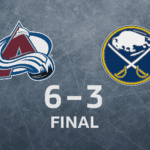

Colorado Avalanche 6-3 Buffalo Sabres | NHL Game Recap | IHM News

Colorado Avalanche 6-3 Buffalo Sabres | NHL Game Recap | IHM News

Colorado Avalanche 6-3 Buffalo Sabres: Necas Drives Avalanche Comeback Push

Date: 14 November 2025 | Author: IHM News

Martin Necas posted a multi-goal performance and Colorado turned a tense 3-3 game into a statement home win over Buffalo.

Colorado’s top offensive core needed a response night, and they delivered. After a wild first period in Denver that ended 3-2 for the Avalanche, the Sabres battled back to level the score in the second. In the final frame, however, Colorado’s depth and puck-movement finally broke Buffalo’s resistance, with Necas and captain Gabriel Landeskog finishing the job to secure a 6-3 victory.

Colorado came out flying, attacking off the rush and off offensive-zone faceoffs. Necas opened the scoring less than a minute into the game off a low slot feed from Cale Makar, immediately tilting the ice. Artturi Lehkonen then doubled the lead on another quick-strike sequence where the Avalanche recovered a dump-in, changed sides high in the zone, and hit Lehkonen in the soft ice between Buffalo’s weak-side defenseman and the slot defender.

Buffalo answered with pushback of their own. The Sabres used longer offensive shifts with layered support below the goal line, and they were rewarded when Brandon Byram jumped into the play to beat the coverage from the left circle. Even after Ben Nelson restored Colorado’s two-goal cushion with a middle-lane drive, Buffalo stayed in it, as Jordan Greenway cut the margin to 3-2 by winning inside position at the crease and jamming home a rebound.

The second period turned into more of a special-teams and details battle. Penalties on Colorado gave Buffalo repeated looks with the extra skater, and the Sabres finally converted when Tage Thompson ripped a power-play one-timer from the right flank to make it 3-3. Colorado answered quickly, though, as Gavin Brindley finished a well-executed delayed attack - the Avalanche worked the puck low-to-high, pulled Buffalo’s box apart, and Brindley arrived late on the weak side to beat Ukko-Pekka Luukkonen for 4-3.

In the third, Colorado shifted into a more controlled, veteran type of game. They tightened their gap control in the neutral zone, forcing Buffalo to chip pucks in and skate through contact rather than entering clean with possession. That structure created counter-attack windows; Necas capitalized again late in the period off a quick give-and-go with Nathan MacKinnon to push the lead to 5-3. With Buffalo’s net empty, Landeskog sealed the result, reading a Sabres D-to-D miscue at the blue line and sliding the puck the length of the ice into the open cage.

Key Numbers | IHM Performance Metrics

  • Shots on goal: Colorado 33, Buffalo 22
  • Shot attempts off target: Colorado 24, Buffalo 17
  • Blocked shots: Colorado 11, Buffalo 12
  • Goaltender saves: Colorado 19, Buffalo 27
  • Penalty minutes: Colorado 8, Buffalo 4

At even strength, Colorado’s forecheck (pressure on the puck in the offensive zone) layered effectively, especially from the second period on, forcing Buffalo’s defense to move pucks under duress and limiting controlled exits.

Coach Mark comment

Colorado did an excellent job of correcting in-game issues after Buffalo’s power-play equalizer. The Avalanche tightened their neutral-zone spacing and stopped trading rushes, which is what allowed Necas and MacKinnon to attack in better, more controlled situations. If Colorado keeps this level of puck support through the middle, they will win a lot of these high-event games.

Questions & Answers | IHM Performance Metrics

How did Colorado create such a strong start offensively?

The Avalanche stacked speed through the middle and used early cross-ice passes at the blue line to disorganize Buffalo’s gap control. That generated inside-lane looks for Necas and Lehkonen before the Sabres could settle their defensive zone structure.

What changed after Buffalo tied the game 3-3?

Colorado shifted from run-and-gun to a more compact neutral-zone posture, using a tighter three-man layer between the red line and their own blue. That limited Buffalo’s controlled entries and turned the game into one of retrievals and wall battles, which favoured Colorado’s heavier, more experienced forwards.

How important was special-teams play?

Buffalo’s power-play goal from Thompson kept them in the game and briefly seized momentum, but Colorado’s penalty kill adjusted by tightening seams through the middle and forcing outside shots. On the other side, even when Colorado did not score on the man advantage, they generated enough zone time to tire out Buffalo’s key penalty killers.

Which Avalanche players stood out in terms of driving play?

Necas drove the attack with his puck-carrying and shot volume, Makar controlled breakouts and offensive-zone blue-line play, while MacKinnon dictated pace through the middle. Together, that trio consistently tilted the ice in Colorado’s favour in terms of zone time and quality looks.

What is the bigger takeaway for Buffalo from this loss?

The Sabres showed resilience by erasing a two-goal deficit and striking on special teams, but they struggled once Colorado raised the forecheck pressure. Cleaning up defensive-zone exits and limiting dangerous turnovers under pressure will be key if they want to close out similar games on the road.

More NHL coverage: Visit the NHL section on IHM for daily news, analysis and advanced breakdowns.


Seattle Kraken 1-2 Columbus Blue Jackets (SO) - Game Recap | IHM News

Seattle Kraken 1-2 Columbus Blue Jackets (SO) – Game Recap | IHM News

Seattle Kraken 1-2 Columbus Blue Jackets (SO)

Blue Jackets survive on special teams and win it in the shootout; Fantilli’s PPG forces overtime.

Nov. 12, 2025 – Author: IHM News

Columbus walked out of Seattle with two points, claiming a 2-1 victory after the shootout. The Blue Jackets erased an early deficit when Adam Fantilli struck on the power play late in the second, and then finished the job in the skills competition through Kirill Marchenko and Charlie Coyle. Seattle opened with a first-period punch but could not solve the Jackets’ structure again, despite a heavy block rate and a sterling performance in goal.

Game Flow

The Kraken landed first at 16:43 of the opening frame: Ryan Winterton drove inside space and finished a net-front touch from Ben Meyers and Jamie Oleksiak for 1-0. Seattle then leaned into a compact neutral-zone look and protected the middle.

Period two flipped on special teams. After a string of minors, Columbus leveled at 18:22 when Fantilli snapped home a left-dot feed on the man advantage, assisted by Kirill Marchenko and Sean Monahan. That sequence changed the tilt and sent the game tied into the third.

The third period was trench hockey: Seattle absorbed zone time (high block count) while Columbus funneled pucks from the points. Overtime brought controlled entries but no breakdowns, so it went to the shootout.

In the tiebreaker, Marchenko opened Columbus’ account and Coyle sealed it. Seattle’s attempts (including Jordan Eberle, Eeli Tolvanen, Kaapo Kakko) were turned away, giving the Jackets the road win.

Numbers Box

  • Shots on goal: Seattle 23, Columbus 34
  • Blocked shots: Seattle 21, Columbus 11
  • Goalkeeper saves: Seattle 33, Columbus 22
  • Save %: Seattle 97.06% (33/34), Columbus 95.65% (22/23)
  • Penalties: Seattle 4, Columbus 2
  • Power-play impact: Seattle 0 PPG, Columbus 1 PPG (Fantilli)

Team Notes

  • Seattle: Scored first but couldn’t add on; strong interior protection and high block volume kept it tight.
  • Columbus: Special-teams swing and cleaner exits in the third; confident finishes in the shootout.

Coach Mark comment

Columbus managed the middle better as the game wore on and trusted their power-play trigger. Seattle’s structure was fine, but they needed quicker weak-side activation to create second looks. In the shootout, the Jackets showed more deception and speed change.

Questions & Answers | IHM Performance Metrics

Q: What swung the game after Seattle’s first-period lead?
A: Penalties in the second created Columbus’ PPG and momentum; from there the Jackets drove more controlled entries.

Q: Why did Seattle lose despite elite goaltending numbers?
A: Low shot quality after the opener and limited interior touches; the shootout conversion gap finished it.

Q: Which micro-areas Columbus won late?
A: D-zone retrievals and first pass exits, plus better spacing on the PP half-wall sequence.

Q: Who decided the shootout?
A: Kirill Marchenko and Charlie Coyle scored for Columbus; Seattle’s attempts were denied.

More NHL news on IHM


Vancouver Canucks 3-5 Winnipeg Jets | IHM Game Recap

Vancouver Canucks 3-5 Winnipeg Jets | IHM Game Recap

Vancouver Canucks 3-5 Winnipeg Jets

Date: November 12, 2025   |   Author: IHM News

Deck: Special teams swung the night – Winnipeg scored twice on the power play and survived a late push before sealing it with an empty-netter.

At Rogers Arena, Winnipeg cooled off Vancouver with a 5-3 road victory built on crisp special-teams execution and a steady night from Connor Hellebuyck (30 saves). The Canucks actually grabbed a brief lead in the first, but a rapid two-goal response from the Jets flipped the script and forced Vancouver to chase. A scoreless second tightened the screws before Winnipeg’s power play struck again early in the third; Brock Boeser’s late goal gave the building life, yet Alex Iafallo hit the empty net to close it out.

How the game flowed

First period: Winnipeg opened through Jansen Harkins/Toews J. (listed as Toews J. on the feed) at 4:57 for 0-1. Vancouver answered at 10:21 via Kiefer Sherwood (1-1), then took a 2-1 edge on a Jay DeBrusk power-play marker at 11:58. Winnipeg answered immediately: Josh Morrissey tied it 2-2 on the PP at 14:38, and Nino Niederreiter pushed the Jets ahead 2-3 at 14:53.

Second period: Tight, heavy sticks and blocked lanes. No scoring; Vancouver switched in net as Kevin Lankinen relieved Thatcher Demko to start the frame.

Third period: Another Winnipeg PP conversion – Gabriel Vilardi made it 2-4 at 0:48. Vancouver kept grinding and Brock Boeser cut it to 3-4 at 18:30. With the Canucks’ net empty, Alex Iafallo finished it off at 19:14 for 3-5.

Numbers box

  • Shots on goal: Vancouver 33, Winnipeg 30
  • Shooting %: VAN 9.09% (3/33), WPG 16.67% (5/30)
  • Power play: VAN 1/2, WPG 2/4 (two key conversions – Morrissey, Vilardi)
  • Blocks: VAN 17, WPG 14
  • Goaltenders: Demko/Lankinen combined 25 saves on 29; Hellebuyck 30/33 (90.9% SV)
  • Penalties (min): VAN 4 (8), WPG 2 (4)
  • Game-winners: Vilardi PP early 3rd proved decisive; Iafallo EN sealed it

Team notes

  • Jets: Top unit moved the puck quickly through the flank and bumper; Morrissey’s one-touch timing dismantled Vancouver’s box. Hellebuyck was tidy on screens and tips.
  • Canucks: First-period push was strong, but the parade to the box in the opening frame ceded momentum. Boeser continues to be the late-game threat.

Coach Mark comment

Winnipeg won the situational minutes – goals inside 2-3 shifts of swings, especially after Vancouver’s PP marker. Morrissey controlled the weak-side seam, and Vilardi’s inside-lane timing on the third-period PP is tape-to-teach. Vancouver’s PK spacing got stretched east-west; that’s the clip they’ll work on before the next one.

Questions & Answers | IHM Performance Metrics

Q: What was the turning point?
A: The 15-second, two-goal reply in the first (Morrissey PPG, then Niederreiter 5-on-5) flipped score effects and forced Vancouver to chase.

Q: Why did the Jets’ power play work?
A: Quick puck speed through the flank to the point, Morrissey shooting without dusting it, and Vilardi arriving to the slot line on time.

Q: Did Vancouver deserve more at 5-on-5?
A: They edged shots 33-30 and zone time was fine, but Winnipeg owned the high-leverage sequences (special teams + goalie saves).

Q: Goalie edge?
A: Hellebuyck’s 30/33 with strong rebound control vs. a Canucks tandem at 25/29; that’s the difference in a one-goal game before the EN.

Q: Any lineup nuggets?
A: Jets’ top pair (Morrissey-DeMelo) handled the heavy minutes; Boeser’s line generated Vancouver’s late push and should stay intact.

More NHL news on IHM


Colorado Avalanche 4-1 Anaheim Ducks - Finished | IHM Game Recap

Colorado Avalanche 4-1 Anaheim Ducks | IHM Game Recap

Colorado Avalanche 4-1 Anaheim Ducks

November 12, 2025 – Author: IHM News

Wedgewood turns away 35 shots; Necas nets the dagger on the power play as Colorado controls the third.

Colorado snapped out quickly and never really let go, beating the Anaheim Ducks 4-1 at home after a wire-to-wire, shot-heavy night. Artturi Lehkonen scored 28 seconds in, Gabriel Landeskog restored the lead in the second, and Martin Necas delivered the key third-period power-play strike before an empty-netter sealed it. Scott Wedgewood handled the rest with a composed 35-save performance, outdueling Lukas Dostal as the Avalanche managed special teams and game state down the stretch.

How it happened

First period – 1-1. Colorado set the tone immediately: Lehkonen finished from the slot at 00:28 off touches from Nathan MacKinnon and Cale Makar. Anaheim answered late when Leo Carlsson tied it 1-1 at 18:16, capping a greasy sequence around the crease. The frame also featured a parade of minors that foreshadowed a special-teams-tilted night.

Second period – 2-1 COL. With the game tightening, the Avalanche leaned on their forecheck and blue-line activation. Gabriel Landeskog snapped the 1-1 deadlock at 11:37, finishing a feed from Valeri Nichushkin with defenseman Sam Malinski jumping into the play.

Third period – Avalanche close the door. A delay-of-game minor put Anaheim under pressure, and Colorado cashed: Necas ripped the PPG at 07:02 (Lehkonen, MacKinnon) for a crucial two-goal cushion. With Dostal pulled, Parker Kelly iced it into the empty net at 17:39 (MacKinnon, Nelson). From there, Wedgewood’s structure-clean lanes, square on first shots-did the rest.

Numbers Box

  • Shots on goal: COL 36, ANA 36
  • Shots off target: COL 15, ANA 9
  • Shooting %: COL 11.11% (4/36), ANA 2.78% (1/36)
  • Blocked shots: COL 19, ANA 13
  • Goalie saves: Wedgewood (COL) 35/36 – 97.22%; Dostal (ANA) 32/36 – 91.43%
  • Penalties: COL 3, ANA 5
  • PIM: COL 6, ANA 10
  • Power play: COL 1/5, ANA 0/3
  • Notable: Lehkonen GWG + 2-point night; MacKinnon 2 A; Necas PPG; Colorado wins the special-teams battle.

Team Notes

  • Colorado: Fast start metric matters-Lehkonen’s first-minute goal set the ice tilt. Blue line activation (Makar/Toews/Malinski) drove the middle frame.
  • Anaheim: Created volume (36 SOG) but struggled to get interior looks; 0-for-4 on the power play proved costly.

Coach Mark Comment

Colorado’s neutral-zone work funneled Anaheim outside and protected the slot. The third-period detail on the PP was clinical- quick puck speed, middle-lane presence, and a one-touch finish from Necas. Wedgewood’s reads were calm, especially on east-west.

Questions & Answers | IHM Performance Metrics

Q1: What was the true separator at 5-on-5?

A: Colorado’s controlled exits and layered entries-defenseman activation plus F3 discipline-tilted possession even with shots equal.

Q2: How did special teams impact the result?

A: The Avalanche went 1/4 and denied Anaheim on all four attempts; the single PPG arrived at a clutch game state to make it 3-1.

Q3: Which matchup mattered most?

A: MacKinnon’s line versus Anaheim’s top six; Colorado generated interior touches and drew the key penalty that led to the dagger.

Q4: Goalie edge?

A: Wedgewood (97.22% SV) out-performed Dostal (91.43%), particularly on first-chance looks from the dots.

Q5: What’s the takeaway for the next meeting?

A: If Anaheim doesn’t win the net-front and PP entries, Colorado’s pace and blue-line support will keep dictating shot quality.

More NHL news on IHM


Vegas Golden Knights 2-3 Florida Panthers - Game Recap

Vegas Golden Knights 2-3 Florida Panthers – Game Recap

Date: 11 November 2025
Author: IHM Newsroom

Recap

Florida Panthers secured a hard-fought road win in Vegas by playing a structured, disciplined game and controlling the neutral zone for most of the night. The opening period leaned in Florida’s favor when Boqvist made it 0-1 at 14:47 after a clean low-cycle sequence from Sebrango and Petry.

The second period pushed the momentum even further toward Florida. Marchand extended the lead to 0-2 at 10:54 after a sharp transition through Forsling and Sebrango. Vegas repeatedly broke their own rhythm with avoidable penalties. Whitecloud and Howden took back-to-back minors, giving Florida full control over puck movement and tempo.

Vegas finally sparked something early in the third. Hertl cut the score to 1-2 at 01:25 from a feed by Theodore, but Florida answered almost immediately. Reinhart buried a power-play goal at 04:54 after great puck circulation between Jones and Marchand, restoring the two-goal cushion at 1-3.

Barbashev made it 2-3 at 09:04, giving Vegas hope, but Florida executed a near-perfect closing stretch. They shut down the slot, forced Vegas to shoot from distance, and relied on sharp goaltending from Bobrovsky, who finished with 28 saves.

Key Stats

  • Shots on Goal: Vegas 30 – Florida 20
  • Shooting Percentage: 6.67% – 15%
  • Blocked Shots: 13 – 13
  • Goalie Saves: Lindbom 17 – Bobrovsky 28
  • Save Percentage: 85% – 93.33%
  • Penalties: 5 – 5
  • PIM: 13 – 13

IHM Analysis

Florida controlled the structural elements of the game. Vegas had chances but lacked discipline and consistency in transitions. Florida’s immediate responses to pressure moments were decisive.

Coach Mark Comment

Bobrovsky delivered the key difference. Florida stayed compact in the neutral zone and Vegas never established enough clean entries to create consistent pressure. The Panthers executed with patience and discipline and their timing on both goals and zone exits was excellent.

Q&A

Why did Florida win?

They won because of disciplined structure, neutral-zone control, and timely scoring.

What changed for Vegas in the third period?

Vegas raised their pace but defensive errors and penalties broke their momentum.

Who was the most impactful player?

Sergei Bobrovsky with 28 saves.

Was special teams important?

Yes. Reinhart’s power-play goal at 04:54 was decisive.

Did Vegas outshoot Florida?

Yes, 30 to 20, but many shots came from the perimeter.

What was the turning point?

Florida’s quick response to Vegas’ early third-period goal, restoring control instantly.

More NHL news on IHM


Vancouver Falls 4-5 to Colorado in Overtime | NHL Recap | IHM News

Vancouver Falls 4-5 to Colorado in Overtime | NHL Recap | IHM News

Vancouver Canucks 4-5 Colorado Avalanche (OT)

Date: November 10, 2025
Author: IHM News

Vancouver Falls 4-5 to Colorado in Overtime | NHL Recap

Vancouver Falls 4-5 to Colorado in Overtime | NHL Recap | IHM News

The Colorado Avalanche escaped Rogers Arena with a 5-4 overtime win after a chaotic, momentum-swinging game that featured elite finishing, defensive breakdowns, and special-teams volatility. Vancouver erased a two-goal deficit twice, forcing overtime with a late power-play goal, but Colorado’s skill core delivered when it mattered most.

Nathan MacKinnon powered the Avalanche with a dominant performance, scoring twice in the first period – including a power-play blast – and adding multiple primary contributions across all zones. Vancouver responded with structured pressure and opportunistic scoring, solving Colorado’s defensive coverage in the second and third periods.

Game Flow

MacKinnon opened the scoring at 6:41 of the first period on a setup from Nichushkin and Makar, beating Lankinen cleanly from distance. He struck again at 8:10 on the power play, firing home a rebound after strong puck circulation from Olofsson and Nichushkin.

Vancouver cut the deficit to 2-1 at 11:47 when Leo Karlsson converted a rebound created by Hronek and Kane. Early in the second period, Kiefer Sherwood tied the game 2-2 at 1:44 by capitalizing on a loose puck around the crease.

Colorado regained the lead 3-2 at 0:28 of the third when Artturi Lehkonen cleaned up a rebound created through net-drive pressure from Burns and MacKinnon. Vancouver answered shorthanded at 7:26 when O’Connor jumped on a turnover and beat Blackwood to tie it 3-3.

Lehkonen struck again at 9:47 on the power play, finishing a crisp passing sequence from Necas and MacKinnon. But Vancouver refused to go away – Jake DeBrusk hammered home a power-play equalizer at 16:59, with Boeser and Hughes setting up a perfect shooting lane.

In overtime, Colorado sealed the win quickly. Gavin Brindley scored just 1:08 into the extra frame off a feed from Makar and MacKinnon, giving the Avalanche a hard-earned 5-4 victory on the road.

Numbers Box

  • Shots on Goal: VAN 33, COL 33
  • Shots off Target: VAN 22, COL 13
  • Blocked Shots: VAN 13, COL 18
  • Goalie Saves: Lankinen 28/33 (84.8%), Blackwood 29/33 (87.9%)
  • Penalties: VAN 3, COL 5
  • PIM: VAN 6, COL 10
  • Power Play: VAN 1/5, COL 2/3 (based on shown scoring events: MacKinnon PPG, Lehkonen PPG x2, DeBrusk PPG)
  • Notable: MacKinnon 2G, Lehkonen 2G (including PPG), DeBrusk SHG + PPG, Brindley OT winner

Coach Mark Comment

MacKinnon drove the entire game with pace and control. Colorado’s power-play puck movement was sharp, and Lehkonen’s timing around the crease created consistent problems. Vancouver showed real fight, but their defensive detail in overtime cost them.

Questions & Answers | IHM Performance Metrics

Why did Colorado control the key moments?

Their top line generated the highest-danger touches, and their puck retrievals on the power play kept pressure sustained. MacKinnon dictated tempo every shift.

How did Vancouver stay in the game despite defensive issues?

Their transition counters were efficient, and they capitalized on Colorado turnovers. The shorthanded goal was a major momentum swing.

What made Lehkonen so impactful?

His crease positioning and timing off MacKinnon’s entries created repeat scoring chances. He won most of the inside-lane battles.

What ultimately decided the OT?

Colorado won the opening faceoff, gained clean entry, and used a quick rotation to isolate space for Brindley. Vancouver never touched the puck.

More NHL news and updates on IHM.


Anaheim Ducks 4-1 Winnipeg Jets | IHM Game Recap

Anaheim Ducks 4-1 Winnipeg Jets | IHM Game Recap

Anaheim Ducks 4-1 Winnipeg Jets

Date: November 10, 2025
Author: IHM News

Ducks dominate Jets with special-teams precision, extend home momentum

Anaheim delivered another composed, structured home performance, beating the Winnipeg Jets 4-1 behind two power-play goals from Leo Carlsson and a standout all-situations night from rookie Beckett Sennecke. Winnipeg generated a shot edge but struggled to break Anaheim’s layered defensive zone reads, while Lukas Dostal delivered calm, technically precise goaltending to steady the Ducks throughout.

Game Flow

1st Period: Anaheim controlled pace early and struck first at 07:18 when Beckett Sennecke buried a rebound created through Corey Gauthier’s entry pressure. Physicality ramped up, but the Ducks kept composure. At 19:03, Carlsson doubled the lead on the power play, snapping a one-timer off a crisp Terry-to-Kreider passing rotation for 2-0.

2nd Period: Winnipeg responded quickly at 04:22 through Kyle Connor, finishing off a Morrissey-Scheifele sequence. Anaheim stabilized fast, and Sennecke answered at 11:48 with his second of the night after controlled middle-lane support from McTavish and Gauthier, restoring a 3-1 lead.

3rd Period: Early in the period at 02:46, Carlsson struck again on the power play, timing the weak-side seam perfectly for 4-1. Winnipeg thought they pulled one back at 19:13, but a successful goalie-interference challenge overturned the goal. Anaheim closed out confidently.

Numbers Box

  • Shots on Goal: ANA 21, WPG 24
  • Shots off Target: ANA 23, WPG 19
  • Power Play: ANA 2/4, WPG 0/4
  • Blocked Shots: ANA 15, WPG 14
  • Saves: Dostal 23/24 (95.8%), Comrie 16/20 (80%)
  • PIM: ANA 8, WPG 8
  • Notable: Sennecke 2G, Carlsson 2 PPG goals, Ducks win special-teams battle

Coach Mark Comment

Carlsson’s timing on the power play keeps getting better. Sennecke showed real poise in tight areas, and Anaheim’s defensive reads were simple but effective. When the Ducks control their neutral-zone tempo like this, they’re difficult to break.

Questions & Answers | IHM Performance Metrics

Why did Anaheim control this matchup?

Their special teams dictated pace, and their neutral-zone layers forced Winnipeg into predictable entries. Dostal handled the rest.

What stood out about Beckett Sennecke’s performance?

His goal-scoring came from smart support routes and quick-release positioning. He consistently attacked inside ice.

How did Winnipeg generate more shots but fewer dangerous chances?

Anaheim kept most attempts to the perimeter. Jets lacked sustained slot penetration, especially at even strength.

What made Carlsson’s power-play goals possible?

Elite timing, clean east-west puck rotation, and Winnipeg’s passive penalty-kill spacing.

Is Anaheim’s home performance trend sustainable?

Yes. Their defensive structure and transition clarity hold up well against most opponents.

More NHL news available on IHM.


Ottawa Senators 4-2 Utah Mammoth | Merilainen Shines as Point Streak Hits Five

Ottawa Senators 4-2 Utah Mammoth | Merilainen Shines as Point Streak Hits Five

Ottawa Senators 4-2 Utah Mammoth | Merilainen Shines as Point Streak Hits Five

Date: November 10, 2025
Author: IHM News

Merilainen steps up in return as Ottawa delivers a controlled, mature performance at home

The Ottawa Senators extended their point streak to five games with a composed 4-2 win over the Utah Mammoth at Canadian Tire Centre. The night marked a strong return for Leevi Merilainen, who made 29 saves in his first appearance since Oct. 27 and delivered several critical stops in the third period. Ottawa once again leaned on its balanced scoring and disciplined puck management to secure its sixth win in the past ten games.

Ridly Greig and Jordan Spence each posted a goal and an assist, Dylan Cozens added two assists, and Michael Amadio scored for the fourth consecutive game. Ottawa (8-5-3) showed maturity in all three zones, closing shifts cleanly and protecting the interior of the ice with structure and timing. Head coach Travis Green praised the group’s composure, noting that the team managed momentum swings well and stayed sharp even under Utah’s late push with the extra attacker.

For Utah (9-7-0), Nick Schmaltz and Clayton Keller provided the offense, but the Mammoth couldn’t turn sustained pressure into a breakthrough. Goaltender Vitek Vanecek finished with 21 saves, while the team dropped its third straight game to close a difficult four-game road trip. Utah has now lost five of its past six (1-5-0), struggling to generate timely goals despite competitive stretches of play.

How the Game Unfolded

Greig opened the scoring at 13:59 of the first period, finishing a chaotic rebound sequence created by Fabian Zetterlund’s one-timer from the right circle. The puck deflected off Dmitri Simashev, then off Dylan Cozens’ skate, before settling in the crease for Greig to tap home.

Utah tied the game 1-1 at 17:33 when Clayton Keller attacked off the rush just after a power play expired. Taking a pass from Mikhail Sergachev, Keller drove down the left wing, followed his own rebound, and slipped the puck through Merilainen’s pads.

Jordan Spence restored Ottawa’s lead 2-1 at 7:13 of the second period with a sharp slap shot from the high slot after a turnover by Dylan Guenther below Utah’s goal line. Spence, who has been a healthy scratch nine times this season, now has seven points in seven games and continues to impress with mobility and decision-making.

Nick Cousins extended the lead to 3-1 at 15:52, beating Vanecek with a strong wraparound finish under the left pad. Schmaltz responded at 18:56, cutting the score to 3-2 with a powerful move around Jake Sanderson before sliding a backhand past Merilainen.

Utah thought it had tied the game 22 seconds into the third period, but Ottawa’s challenge for goaltender interference was successful, negating Jack McBain’s effort. Minutes later, at 3:46, Amadio sealed the win with a deflection off Thomas Chabot’s point shot, making it 4-2 and locking down Ottawa’s fifth straight game with points.

Numbers Box

  • Shots on Goal: OTT 25, UTA 31
  • Power Play: OTT 0/1, UTA 0/2
  • Faceoffs: OTT 52%, UTA 48%
  • Goaltending: Merilainen (OTT) 29 saves on 31 shots; Vanecek (UTA) 21 saves on 24 shots
  • Streaks: Amadio (G in 4), Senators (points in 5 straight)

Coach Mark Comment

Merilainen gave them exactly what they needed. His reads were clean and he controlled rebounds well, especially late. Ottawa managed the middle of the ice with maturity and Utah never solved their defensive layers consistently. A strong identity game for the Senators.


Questions & Answers | IHM Performance Metrics

Why are the Senators on a five-game point streak?
They’ve tightened their defensive structure, supported the puck better, and limited rush chances against. Their transition game has stabilized their five-on-five play.

How impactful was Merilainen in his return?
Very. His positioning was sharp and he delivered key momentum saves, especially in the third period under pressure. It steadied the entire bench.

What’s driving Ottawa’s balanced scoring lately?
Multiple lines are contributing because of improved puck support, cleaner exits, and strong inside-lane pressure. Their bottom-six has also raised its pace.

Why is Utah struggling despite competitive stretches?
They generate volume but lack high-danger finishes. Defensive lapses at key moments have also cost them games on this road trip.

More NHL Coverage

Follow more NHL breaking news and insights on IHM.


Tanev Leaves on Stretcher as Maple Leafs Beat Flyers 5-2 | IHM News

Tanev Leaves on Stretcher as Maple Leafs Beat Flyers 5-2 | IHM News

Tanev Leaves on Stretcher as Maple Leafs Beat Flyers 5-2

by IHM Team | IHM News | November 2, 2025

Veteran blueliner collided with Matvei Michkov in the third period. Toronto says he was moving and speaking and was taken to hospital for evaluation.

Tanev Leaves on Stretcher as Maple Leafs Beat Flyers 5-2 | IHM News

PHILADELPHIA - A scary moment overshadowed the Toronto Maple Leafs’ 5-2 win when Chris Tanev was taken off on a stretcher at 8:23 of the third period after a collision with Matvei Michkov near the Leafs’ blue line. Michkov received a minor penalty for interference.

Head coach Craig Berube said Tanev was moving and speaking and had been transported to a local hospital for tests. He added there is a chance Tanev could be released to travel with the team.

Captain Auston Matthews called it “a tough feeling,” noting the team is hoping for the best. The game was Tanev’s first after missing four with an upper-body injury. He assisted on Jake McCabe’s goal that made it 2-1 in the second period.

Tanev, 35, has two assists in eight games this season. He joined Toronto from Dallas in June 2024 and signed a six-year contract on July 1.

IHM Bench Notes

  • Incident time: 8:23 of the third.
  • Penalty: Interference on Michkov.
  • Next up: Leafs host Penguins on Monday.
  • Tanev career: 874 GP - 36 G - 173 A - 209 PTS.

Coach Mark: For Toronto, Chris Tanev is the backbone of their defensive identity - structure, poise, reliability. The important thing is that he was conscious and moving. In situations like this it’s pure protocol: stabilize, assess, clear.
Tonight wasn’t about systems or execution. It was about a human moment. The two points matter - but health always comes first.