Tag: Utah Mammoth

NHL Short Ice: OT Chaos, Playoff Race, Returns | Mar 23

NHL Short Ice: OT Chaos, Playoff Race, Returns | Mar 23

NHL SHORT ICE - OT Chaos, Playoff Race, Returns | March 23

Date: March 23, 2026
By: IceHockeyMan Newsroom

Want to stay on top of everything happening in the NHL without wasting time on long articles? IHM NHL SHORT ICE delivers the most important updates, key moments and league trends in a fast, structured format. Built for busy professionals, hockey fans and anyone who wants real insight without information overload.

Trending Signals

The league is now fully in late-season pressure mode. Overtime games, comeback wins and clinching scenarios are shaping the standings almost every night. Structure, goaltending and emotional control are deciding more games than raw shot volume.

Utah Wins Another Tight One in Overtime

Nick Schmaltz scored twice, including the overtime winner, as the Mammoth defeated the Kings in another high-pressure game. Lawson Crouse added three points, while Los Angeles forced extra time late through a tying goal from Panarin.

Impact: Utah continues to look dangerous in low-margin hockey because it can create second-effort offense without losing defensive shape. Schmaltz remains one of the cleanest puck-touch finishers in their attack.

Vegas Lands a Statement Win Over Dallas

Reilly Smith broke the tie late in the third period as the Golden Knights defeated the Stars and climbed into second place in the Pacific Division. Casey DeSmith made 30 saves for Dallas, but Vegas looked sharper in the final execution phase.

Impact: This was not just a standings win. It was a psychological win against a top Western opponent, and it reinforces Vegas as a team that still trusts its late-game structure.

Colorado Clinches and Keeps Pushing

The Avalanche defeated Chicago and became the first team in the league to clinch a playoff berth. Martin Necas posted a goal and two power-play assists to reach a new career high in points, while Colorado hit the 100-point mark.

Impact: Colorado is no longer playing for qualification. It is playing for playoff control. That changes the pressure profile and allows them to sharpen match details rather than chase points in panic mode.

Landeskog Return Changes the Feel Around Colorado

Colorado also received another emotional lift with Gabriel Landeskog scoring in his return from injury against Washington. The Avalanche then recovered for an overtime win against the Capitals, while Ovechkin reached the 1,000-goal combined mark across regular season and playoffs.

Impact: Landeskog’s return matters beyond production. He adds net-front weight, leadership presence and playoff identity. Colorado suddenly looks deeper and more complete.

Ducks Break Buffalo’s Momentum in Overtime

Anaheim recovered late in the third period and then beat Buffalo in overtime on Troy Terry’s second goal of the game. The Sabres had entered the night on a four-game winning streak, but Anaheim found the extra push after a late power-play equalizer from Granlund.

Impact: Momentum is fragile in March. Buffalo has been one of the hotter teams in the league, but Anaheim showed how one late special-teams moment can flip an entire game script.

Nashville Extends Its Run

Filip Forsberg scored twice and added an assist as the Predators edged Chicago in overtime for their fourth straight win. Nashville continues to strengthen its hold on the second wild-card position in the West.

Impact: Nashville is not just surviving the race. It is building real separation through repeatable late-game execution, which is exactly what bubble teams usually fail to do.

Carolina Stays Hot, Islanders Stay Alive

Seth Jarvis had three points as the Hurricanes handled Pittsburgh for their third straight victory, ending the Penguins’ four-game point streak. In the East, Ilya Sorokin made 26 saves as the Islanders shut out Columbus and gained ground in the wild-card race.

Impact: Carolina continues to win with layered pressure and pace. The Islanders, meanwhile, are proving they can still grind out meaningful points when the race tightens.

Discipline Watch: Greer Suspended

A.J. Greer was suspended three games for boarding Flames center Connor Zary. At this point in the season, discipline decisions matter even more because missing even a short stretch can damage lineup continuity and playoff positioning.

Impact: Teams cannot afford unnecessary physical recklessness now. The line between aggressive hockey and self-inflicted damage gets thinner every week in March.

Goalie Watch

Adin Hill was set to start in Dallas. Spencer Knight got the nod for Chicago against Nashville. Darcy Kuemper started in Salt Lake City, Alex Lyon drew the road start in Anaheim, Juuse Saros returned to the crease for Nashville, Jonas Johansson got the call in Calgary, Frederik Andersen started for Carolina and Stuart Skinner was set for Pittsburgh.

Impact: Starting goalie signals are becoming even more important because many games are now tactical coin flips. One stable performance in net can swing both standings points and game flow.

Injury Radar and Availability Notes

Victor Hedman remained unavailable due to illness. Shayne Gostisbehere stayed out with a lower-body issue. Tyler Toffoli was ruled out, while Mikko Rantanen moved closer to a return and is expected to travel with Dallas on its upcoming road trip.

Impact: Late-season availability is now almost as important as top-line form. Healthy depth wins matchups when the schedule gets tighter and the checking gets heavier.

Playoff Pressure Index

The Stars still had a chance to clinch with at least one point, but Vegas denied them. Utah’s win over Los Angeles also carried direct playoff significance. The West is now being shaped by overlapping races where every overtime result creates damage for one contender and life for another.

Key Takeaways

Colorado has officially moved into playoff-caliber control mode. Utah keeps proving it can win late. Vegas strengthened its Pacific position with a serious statement win. Nashville looks increasingly dangerous in the wild-card race. The East remains volatile, with Carolina and the Islanders both gaining momentum at the right time.

Coach Mark Comment

This is the stage of the season where details stop being background noise and become the result itself. Overtime structure, line-change discipline, net-front coverage and the first clean pass under pressure now decide games more than highlight-reel talent. Colorado is dangerous because its structure matches its skill. That is the combination every contender wants right now.

Fan Pulse

Which team looks more dangerous right now in the West: Colorado because of structure, or Vegas because of timing and late-game composure?

Q&A: NHL Short Ice Insights

Why was Colorado’s clinch so important?

Because it shifts the focus from survival to positioning. Teams that clinch early can start sharpening playoff habits instead of chasing points under stress.

Why do overtime wins matter so much now?

They create double pressure. One team gains extra confidence and points, while the other loses ground in direct competition.

What makes Utah a real factor in this stretch?

Its ability to stay composed in tight games. Utah is creating offense without opening itself up too much defensively.

Why is Nashville’s run significant?

Because bubble teams usually wobble when pressure rises. Nashville is doing the opposite and building consistency through clutch execution.

Why are goalie confirmations so important at this stage?

Because many late-season games are one- or two-goal environments. Starting goaltenders can shift expected game flow immediately.

Why does Landeskog’s return matter beyond the box score?

He changes the emotional and physical profile of Colorado. He adds leadership, puck-retrieval presence and playoff edge.


IHM NHL SHORT ICE - Top Stories in Minutes January 10, 2026 | IHM News

IHM NHL SHORT ICE – Top Stories in Minutes January 10, 2026 | IHM News

🏒 NHL SHORT ICE - All Key Stories in Minutes

January 10, 2026 | IHM News

Short hockey news for busy professionals who want clarity without repetition.

🔥 Top Results and Momentum

Mammoth extend streak, top Blues behind Schmaltz
Utah’s Mammoth secure a third straight win as Nick Schmaltz drives offensive flow and situational execution against St. Louis.

Capitals spoil Bedard return as Ovechkin leads Washington
Connor Bedard returns from a shoulder injury, but Washington controls the game, with Alex Ovechkin setting the tone physically and offensively.

Mammoth continue surge ahead of Winter Classic announcement
Momentum builds for Utah as results align with off-ice spotlight ahead of a future marquee event.

📰 Top Headlines

Kane joins NHL’s 500-goal club
Patrick Kane becomes the 50th player in league history to reach the milestone, underscoring elite longevity and scoring efficiency.

Golden Knights goalie Hart exits with leg injury
Vegas faces uncertainty in net after an in-game injury forces an early departure.

Sharks acquire Brossoit from Blackhawks
San Jose adds goaltending depth in a trade aimed at stabilizing rotations.

Hall of Fame goalie Hall dies at 94
The league remembers an ironman goaltender whose 502 consecutive starts remain unmatched.

Mammoth to host 2027 Winter Classic vs Avalanche
The NHL confirms Utah as host for the outdoor showcase at the Utes’ field.

📊 League Notes and Context

Zadorov makes impact in Boston
Nikita Zadorov’s presence is felt both on the ice and in the room as the Bruins lean on size and edge.

MacKinnon leads tight Hart Trophy race
Nathan MacKinnon sits atop a three-player MVP race, driven by sustained elite production.

Tampa outdoor game framed as engineering showcase
League officials preview the event as a technical and logistical statement piece.

Team Finland Olympic line projections released
Early lineup concepts highlight balance and two-way responsibility.

Veteran goalie mentorship emphasized league-wide
Teams continue leaning on experience to stabilize younger netminders.

🔁 Status Report

Tom Wilson placed on injured reserve
Washington will adjust its forward depth while Wilson recovers from a lower-body issue.

Aliaksei Protas activated from IR
The Capitals regain forward depth as Protas returns to availability.

❓ IHM Q&A - NHL Short News (10 January 2026)

Why was Bedard’s return closely watched?
It marked a key health checkpoint, even though Chicago could not convert momentum into results.

What does Kane’s 500th goal represent?
Elite efficiency and longevity in a scoring-tight era.

Why are the Mammoth gaining attention?
On-ice consistency combined with growing league visibility.

How significant is Hart’s injury for Vegas?
Goaltending stability becomes a short-term concern.

Why does the Winter Classic announcement matter?
It reinforces Utah’s integration into the NHL’s marquee calendar.


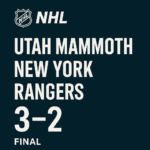
Utah Mammoth 3-2 New York Rangers - NHL Game Recap | IHM News

Utah Mammoth 3-2 New York Rangers – NHL Game Recap | IHM News

Utah Mammoth 3-2 New York Rangers – NHL Game Recap

Date: November 23, 2025 Author: IHM News

Summary

Utah secured a gritty 3-2 home win against the New York Rangers, leaning on structure, defensive urgency and timely scoring. Despite being out-possessed for stretches, the Mammoth executed a composed, opportunistic approach – capitalizing on key offensive windows while limiting the Rangers’ interior looks.

Game Flow

Utah struck first midway through the opening frame, before the Rangers equalized late in the period via a well-executed point rotation. The second period unfolded as a tactical chess match: both teams alternated momentum, traded penalties, and tested depth scoring units as the game tightened. Each goal in the middle frame came off structured zone sequences rather than rush plays – highlighting both teams’ readiness and discipline.

In the third, Utah delivered the decisive punch. A rebound conversion at 7:32 restored the lead, after which the Mammoth absorbed pressure, blocked interior lanes, and received clinical work from their goaltending tandem in the final stretch.

Key Numbers

  • Shots on goal: Utah 33, New York 22
  • Blocked shots: Utah 9, New York 13
  • Saves: Utah 20, New York 30
  • Shooting percentage: Utah 9.09%, New York 9.09%
  • PIM: Utah 6, New York 4

Notable Performers

  • Desimone (UTM): GWG, strong net-front presence late
  • Keller (UTM): critical equalizer in 2nd
  • Panarin (NYR): primary driver during transition surges
  • Goalies: combined 50 saves

Coach Mark Comment

Utah showed confidence in their structure late. They avoided over-reacting after conceding, played within roles, and took advantage of the Rangers’ wide gaps in the neutral zone. Winning the middle of the ice is what won them the game.

Questions & Answers | IHM Performance Metrics

What won Utah the match? Discipline in the defensive zone, aggressive shot blocking and efficient finishing on prime looks.

Why couldn’t New York complete the comeback? They lacked consistent interior access and lost the slot battle in the final ten minutes.

Which tactical theme defined this matchup? Tight 5-on-5 structure with limited rush trading – execution in set formations dictated momentum.

What stands out statistically? Despite fewer shots, New York produced a similar shooting percentage – Utah’s higher volume allowed for greater scoring probability.

More NHL news on IHM.


Utah Mammoth 1-4 Vegas Golden Knights | NHL Game Recap | IHM News

Utah Mammoth 1-4 Vegas Golden Knights | NHL Game Recap | IHM News

November 21, 2025  |  Author: IHM News

Utah Mammoth 1-4 Vegas Golden Knights

Vegas leaned on star power and structure, riding a Jack Eichel brace, a deep defensive rotation and Logan Thompson’s 25-save performance to a controlled 1-4 win in Utah.

In their expansion home rink, the Utah Mammoth ran into a Vegas Golden Knights team that looked very much like a seasoned contender. Vegas absorbed an early wave of energy, won the special-teams battle and gradually tightened the screws in a 1-4 victory that never felt out of hand once the Knights found their rhythm. Utah generated volume, but Vegas dictated where those attempts came from, keeping most of the traffic to the outside and trusting Thompson to clean up the rest.

The result underlines the gap in execution between a maturing contender and a still-learning newcomer. Utah’s discipline wobbled in the second period, their shooters could not solve Thompson’s controlled positioning, and their own netminder was left exposed on a series of high-quality looks from the slot and weak-side seams.

First period: feeling-out stretch and rising temperature

The opening twenty minutes were scoreless but hardly quiet. Utah pushed pace with an aggressive F1-F2 forecheck, trying to pin Vegas in its own zone and force rushed exits. The Mammoth created a handful of point shots through traffic, yet Vegas’ defensive layers stayed compact, keeping sticks in lanes and limiting clean looks from the middle.

Physically, the tone escalated early. Scrums around both creases and a cluster of minor penalties foreshadowed the emotional second period to come. For Utah, it was energy without finish; for Vegas, it was the groundwork for exploiting special teams once the whistles really started to pile up.

Second period: Vegas punishes mistakes

The game flipped in the second. Utah’s penalty trouble opened the door and Vegas walked straight through it, taking control with a pair of quick strikes. Eichel finally broke the deadlock on a structured power-play look, drifting into the bumper lane to redirect a seam pass past a screened goaltender. Less than a minute later, a clean neutral-zone transition and layered entry led to the 0-2 goal, with Vegas’ middle lane drive pulling Utah’s coverage apart.

Utah briefly clawed back life when Schmidt jumped into the rush and finished a trailing play to make it 1-2, rewarding one of the few Mammoth sequences where they connected cleanly through the neutral zone. Any momentum disappeared late in the frame, though, as Eichel struck again off sustained zone time, wiring a shot through traffic to restore a two-goal cushion and silence the building heading into intermission.

Third period: professional close-out

Up 1-3, Vegas shifted into a classic road lock-down template. If they can layer in better puck support on exits and build more structured offensive-zone rotations, the foundation of work ethic is already there.

Coach Mark Comment

Vegas executed a mature road game. Their transition defense forced Utah into low-percentage looks all night, and the Golden Knights won every key moment. Utah needs more interior play to stay competitive against structured teams.


Questions & Answers | IHM Performance Metrics

Q1: What was Utah’s biggest issue in this matchup?
Utah failed to generate high-danger opportunities and relied heavily on perimeter shooting, leading to a 3.85% shooting percentage.

Q2: How did Vegas control the neutral zone?
They layered their forecheck, used tight 1-1-3 looks, and forced Utah to dump pucks rather than attack with control.

Q3: Did special teams influence the result?
Indirectly yes - even without power-play goals, Utah’s penalty issues handed Vegas momentum and zone time in crucial sequences.

Q4: Why did Utah collapse defensively in the second period?
Penalty trouble created mismatches, Vegas attacked quickly off set plays, and Utah never reset their defensive spacing.

Q5: What stands out most analytically for Vegas?
Their defensive efficiency - allowing only 26 SOG while producing a 96% save performance suggests elite puck control and goalie stability.

For more NHL insights, systems breakdowns and nightly recaps, visit the IceHockeyMan homepage and follow our dedicated NHL section.


San Jose Sharks 3-2 Utah Mammoth (OT): Celebrini delivers hat trick winner | IHM News

San Jose Sharks 3-2 Utah Mammoth (OT): Celebrini delivers hat trick winner | IHM News

San Jose Sharks 3-2 Utah Mammoth (OT): Celebrini’s hat trick rescues Sharks

Date: November 19, 2025 – Author: IHM News

Key storyline: Macklin Celebrini stamped his star status with a three-goal night, including the overtime winner on a power play, as San Jose survived a furious Utah push to claim a 3-2 victory after overtime.

San Jose’s young core needed a response after nearly letting a perfect start slip away, and their franchise rookie supplied it. Celebrini scored twice in the opening six minutes to give the Sharks early control, then completed his hat trick in overtime on a man-advantage after Utah was whistled for too many men. The Mammoth, who were slow out of the gate, dominated large stretches of the third period and erased a 2-0 deficit behind a relentless forecheck and heavy net drives, forcing extra time despite trailing on the shot clock for most of the night.

From an IHM Performance Metrics lens, this game was all about chance quality swings. San Jose owned the interior in the first period, with Celebrini repeatedly slipping into soft pockets between the dots. Utah adjusted with a more aggressive F1-F2 pressure in the neutral zone and a tighter slot box, turning the middle frame into a grind. The third period flipped fully toward the visitors: Utah drove up their high-danger attempts, extended shifts in the Sharks’ zone and pinned San Jose back with layered entries. In overtime, however, one discipline mistake and one elite release decided everything.

Game flow: how Sharks survived Utah’s push

First period - Celebrini explosion. San Jose came out with pace and structure, stacking clean exits into controlled entries. Celebrini opened the scoring just 1:47 in, jumping on a feed from William Smith in the low slot and beating the goalie with a quick catch-and-release snapshot. A few minutes later he doubled the lead, arriving as the late trailer off a weak-side slash and finishing a cross-ice pass from Graf. Utah’s coverage was loose, their weak-side defender losing inside body position twice in the same shift. The Sharks’ 2-0 cushion reflected superior slot control more than raw shot volume.

Second period - Utah stabilizes. The Mammoth tightened their defensive layers and started winning more races on the walls. Their F3 stayed higher in the offensive zone, preventing Sharks stretch plays and forcing San Jose to chip pucks out instead of skating in transition. Even though the scoreboard didn’t change in the middle frame, Utah quietly tilted possession: they pumped more pucks from the points and generated traffic, while Sharks goalie Filip Lindberg (25 saves) held the line with strong rebound control and calm puck-tracking through screens.

Third period – Mammoth comeback. Utah finally broke through when JJ Peterka finished a net-drive sequence early in the third, cleaning up a loose puck after a seam pass forced San Jose’s box to collapse. The tying goal came later in the period, again from Peterka, who attacked downhill off the rush, used the defender as a screen and beat Lindberg low far side. At 2-2, the Mammoth were winning virtually every 50-50 puck, widening their edge in high-danger attempts and extending shifts in San Jose’s end. The Sharks spent long stretches in survival mode, collapsing around the blue paint and relying on blocked shots to protect their crease.

Overtime - discipline and execution. Extra time swung on one detail. Utah was called for too many men on the ice, handing San Jose a 4-on-3 power play. The Sharks set up in a 1-3-1 umbrella with Celebrini on the left flank. After a couple of patient puck rotations to move the Mammoth box laterally, Eklund and Smith combined to feed Celebrini in his one-timer pocket. The rookie wired a heavy shot short-side high at 2:51 of OT, freezing the goalie and sealing his first NHL hat trick in dramatic fashion.

Numbers box | IHM Performance Metrics

  • Final score: San Jose Sharks 3, Utah Mammoth 2 (after overtime)
  • Shots on goal: Sharks 23, Mammoth 27
  • Shooting percentage: Sharks 13.04% (3/23), Mammoth 7.41% (2/27)
  • Blocked shots: Sharks 10, Mammoth 16
  • Goaltender saves: Sharks 25, Mammoth 20
  • Save percentage: Sharks 92.59%, Mammoth 86.96%
  • Penalties: Sharks 2, Mammoth 5 (including too many men in OT)
  • PIM: Sharks 4, Mammoth 10
  • Key streaks: Celebrini registers his first NHL hat trick and now has goals in back-to-back games.

Coach Mark comment

Celebrini showed exactly why he is projected as a franchise center. He attacked inside lanes, adjusted to Utah’s tighter coverage and still found space in the biggest moments. San Jose will be thrilled with the result, but they will not like the way they sat back in the third period; closing games with the puck instead of defending for 20 straight minutes has to be the next step.

Questions & Answers | IHM Performance Metrics

Q: How did San Jose build the early 2-0 lead?
A: The Sharks dominated the interior in the first period, using clean exits and middle-lane drives to attack the slot. Celebrini’s first two goals both came from prime scoring areas, with strong support from Smith and Graf on east-west puck movement that stretched Utah’s defensive box.

Q: Was Utah’s third-period push reflected in the underlying numbers?
A: Yes. The Mammoth finished ahead in shots on goal (27-23) and generated the bulk of their high-danger looks in the final 20 minutes, especially off the rush. Their increased shot volume and net-front presence turned what had been a controlled game for San Jose into a scramble.

Q: What did the too many men penalty change in overtime?
A: It flipped the matchup from 3-on-3, where Utah’s speed was dangerous, into a 4-on-3 situation favoring San Jose’s puck-movers. With an extra passing option high in the zone, the Sharks could run a 1-3-1 set and isolate Celebrini on his one-timer side, which is exactly how the winner was scored.

Q: How did the goaltenders perform in IHM Performance Metrics terms?
A: Lindberg’s 25 saves on 27 shots (92.59%) were efficient, but more importantly he managed rebounds and traffic extremely well during Utah’s push. At the other end, the Mammoth goalie faced fewer overall shots but a higher proportion from the inner slot, which is reflected in the lower save percentage (86.96%) and the three goals against from close range.

Q: What does this result mean for the Sharks going forward?
A: It reinforces the idea that their new identity runs through Celebrini and the young skill group. When San Jose plays fast through the middle and trusts their structure, they can trade chances with anyone. The concern remains game management: they will want to turn third-period leads into controlled possession time, not prolonged defending shifts.

More NHL news on IHM

For more Sharks coverage and NHL insights, visit our San Jose Sharks hub and the main newsroom on IceHockeyMan.com.


Utah Mammoth 2-3 New York Islanders (OT) - NHL Game Recap | IHM News

Utah Mammoth 2-3 New York Islanders (OT) – NHL Game Recap | IHM News

Utah Mammoth 2-3 New York Islanders (OT)

November 15, 2025 - Author: IHM News

Utah Mammoth 2-3 New York Islanders (OT) - NHL Game Recap | IHM News

New York escapes Salt Lake City with a 2-3 overtime win, powered by elite goaltending, timely special-teams execution and a composed finish from Schaefer just 2:06 into OT. Utah controlled large stretches of play, but discipline issues and missed conversion chances cost them a statement home win.

How the Game Unfolded

First period: Utah started aggressively, drawing momentum from early puck pressure and winning most puck races. Peterka tied the game 1-1 after Heineman opened the scoring for New York, and Guenther’s power-play marker pushed Utah ahead 2-1 after a sharp rotation sequence (low-to-high switch creating a shooting lane). However, the Mammoth also took three first-period minors that invited dangerous NYI pressure.

Second period: A grinding, tactical 20 minutes with both teams trading zone time but no scoring. Utah’s penalty kill was excellent during this stretch, forcing Islanders entries into the boards and breaking up their 1-3-1 setup before it could settle.

Third period: The turning point came at 13:44 when Drouin tied it 2-2 during a chaotic net-front sequence. Utah’s penalty trouble escalated again, stacking minors that drained momentum and left their top pair exhausted.

Overtime: Islanders struck quickly – Barzal won the opening puck touch, created a controlled entry, and Schaefer finished the sequence from the slot for the 3-2 winner.

Numbers Box

  • Shots on goal: Utah 29, New York 22
  • Shots off target: Utah 19, New York 16
  • Shooting %: Utah 6.9%, NYI 13.64%
  • Blocked shots: Utah 11, NYI 20
  • Goalie saves: Vejmelka 19, Rittich 27
  • Penalties: Utah 4, NYI 7
  • PIM: Utah 8, NYI 22

Team Notes

Utah: Strong transition game but discipline issues erased momentum and forced heavy minutes on their PK rotation. New York: Excellent defensive commitment, especially in the third period with 12 blocks.

Coach Mark comment

Utah had the structure to win this game, but discipline destroyed their flow. New York showed veteran composure – they managed fatigue well and executed their systems during key moments. Utah’s special teams need to settle down; the base is strong.

Questions & Answers | IHM Performance Metrics

Q: Did Utah outplay New York at even strength?
A: Yes. Utah generated more controlled entries and higher expected shot volume but failed to convert.

Q: What changed in overtime?
A: NYI executed a clean 3-man weave entry, while Utah lost their lane assignment on the first transition.

Q: Was goaltending the deciding factor?
A: Rittich’s 27 saves at 93.1% were game-saving, especially late in the third.

Q: Did penalties drive the outcome?
A: Absolutely. Utah’s stacked minors in P1 and P3 shifted momentum directly into NYI scoring moments.

Q: How does this impact standings?
A: Utah misses a valuable point in a tight wildcard race, while NYI gain separation.

More NHL news on IHM.


Utah Mammoth 5-2 Buffalo Sabres - NHL Game Recap | IHM News

Utah Mammoth 5-2 Buffalo Sabres – NHL Game Recap | IHM News

Utah Mammoth 5-2 Buffalo Sabres | NHL Game Recap

Date: November 13, 2025 – Author: IHM News

Utah breaks through with a four-goal third period surge

The Mammoth overturned a 2-1 deficit with a dominant final frame, exploding for four unanswered goals to secure a 5-2 home victory over the Sabres. Utah’s depth scoring and their aggressive forecheck in the final 20 minutes completely shifted the momentum after Buffalo controlled long stretches of the first half. Despite Buffalo’s early structure and Rosen’s two-goal start, the Sabres could not withstand Utah’s transition pressure and rising shot volume.

Game Flow

1st Period – Buffalo sets the tone.
Isak Rosen opened the scoring just 5:33 into the game, finishing a clean net-drive sequence created by Quinn and Byram. Utah struggled with puck management early and took two penalties, allowing Buffalo to dictate possession and take a 0-1 lead into the break.

2nd Period – Both teams trade goals.
Rosen struck again at 06:42 after a defensive misread by Utah, doubling Buffalo’s advantage. The Mammoth finally responded midway through the period when Nick DeSimone jumped into the rush and buried a low wrister to cut the deficit to 1-2.

3rd Period – Utah takes over completely.
Utah delivered a statement period. JJ Peterka tied the game just 52 seconds in, sparking a complete shift in momentum. Crouse’s powerful drive off a feed from Peterka and McBain made it 2-3. Schmaltz extended the lead with a precise release at 10:09. Keller sealed the win with an empty-netter in the final seconds, capping a four-goal frame.

Numbers Box

  • Shots on goal: Utah 36, Buffalo 19
  • Power play: Utah 0/2, Buffalo 0/3
  • Blocked shots: Utah 13, Buffalo 7
  • Goaltending: Vejmelka (17 SV - 2 GA), Ellis (31 SV - 4 GA + EN)
  • Key performer: Keller (1 G, 1 A)
  • Streaks: Peterka – points in 3 straight

Coach Mark comment

Utah showed exactly how a structured team responds when trailing – pushing tempo, winning puck battles, and attacking with pace through the neutral zone. Their third-period forecheck overwhelmed Buffalo. Strong identity win for the Mammoth.

Questions & Answers | IHM Performance Metrics

Q: What was the turning point?
A: Peterka’s early third-period goal shifted full momentum to Utah.

Q: Why did Buffalo collapse late?
A: They were pinned in their zone and couldn’t exit cleanly under Utah’s aggressive pressure.

Q: Who was Utah’s most impactful player?
A: Keller – he drove offense and added the insurance marker.

Q: Which metric best highlights Utah’s edge?
A: Shot differential – 36 vs 19, with heavy tilt in the final frame.

More NHL news on IHM

Visit IHM News


Ottawa Senators 4-2 Utah Mammoth | Merilainen Shines as Point Streak Hits Five

Ottawa Senators 4-2 Utah Mammoth | Merilainen Shines as Point Streak Hits Five

Ottawa Senators 4-2 Utah Mammoth | Merilainen Shines as Point Streak Hits Five

Date: November 10, 2025
Author: IHM News

Merilainen steps up in return as Ottawa delivers a controlled, mature performance at home

The Ottawa Senators extended their point streak to five games with a composed 4-2 win over the Utah Mammoth at Canadian Tire Centre. The night marked a strong return for Leevi Merilainen, who made 29 saves in his first appearance since Oct. 27 and delivered several critical stops in the third period. Ottawa once again leaned on its balanced scoring and disciplined puck management to secure its sixth win in the past ten games.

Ridly Greig and Jordan Spence each posted a goal and an assist, Dylan Cozens added two assists, and Michael Amadio scored for the fourth consecutive game. Ottawa (8-5-3) showed maturity in all three zones, closing shifts cleanly and protecting the interior of the ice with structure and timing. Head coach Travis Green praised the group’s composure, noting that the team managed momentum swings well and stayed sharp even under Utah’s late push with the extra attacker.

For Utah (9-7-0), Nick Schmaltz and Clayton Keller provided the offense, but the Mammoth couldn’t turn sustained pressure into a breakthrough. Goaltender Vitek Vanecek finished with 21 saves, while the team dropped its third straight game to close a difficult four-game road trip. Utah has now lost five of its past six (1-5-0), struggling to generate timely goals despite competitive stretches of play.

How the Game Unfolded

Greig opened the scoring at 13:59 of the first period, finishing a chaotic rebound sequence created by Fabian Zetterlund’s one-timer from the right circle. The puck deflected off Dmitri Simashev, then off Dylan Cozens’ skate, before settling in the crease for Greig to tap home.

Utah tied the game 1-1 at 17:33 when Clayton Keller attacked off the rush just after a power play expired. Taking a pass from Mikhail Sergachev, Keller drove down the left wing, followed his own rebound, and slipped the puck through Merilainen’s pads.

Jordan Spence restored Ottawa’s lead 2-1 at 7:13 of the second period with a sharp slap shot from the high slot after a turnover by Dylan Guenther below Utah’s goal line. Spence, who has been a healthy scratch nine times this season, now has seven points in seven games and continues to impress with mobility and decision-making.

Nick Cousins extended the lead to 3-1 at 15:52, beating Vanecek with a strong wraparound finish under the left pad. Schmaltz responded at 18:56, cutting the score to 3-2 with a powerful move around Jake Sanderson before sliding a backhand past Merilainen.

Utah thought it had tied the game 22 seconds into the third period, but Ottawa’s challenge for goaltender interference was successful, negating Jack McBain’s effort. Minutes later, at 3:46, Amadio sealed the win with a deflection off Thomas Chabot’s point shot, making it 4-2 and locking down Ottawa’s fifth straight game with points.

Numbers Box

  • Shots on Goal: OTT 25, UTA 31
  • Power Play: OTT 0/1, UTA 0/2
  • Faceoffs: OTT 52%, UTA 48%
  • Goaltending: Merilainen (OTT) 29 saves on 31 shots; Vanecek (UTA) 21 saves on 24 shots
  • Streaks: Amadio (G in 4), Senators (points in 5 straight)

Coach Mark Comment

Merilainen gave them exactly what they needed. His reads were clean and he controlled rebounds well, especially late. Ottawa managed the middle of the ice with maturity and Utah never solved their defensive layers consistently. A strong identity game for the Senators.


Questions & Answers | IHM Performance Metrics

Why are the Senators on a five-game point streak?
They’ve tightened their defensive structure, supported the puck better, and limited rush chances against. Their transition game has stabilized their five-on-five play.

How impactful was Merilainen in his return?
Very. His positioning was sharp and he delivered key momentum saves, especially in the third period under pressure. It steadied the entire bench.

What’s driving Ottawa’s balanced scoring lately?
Multiple lines are contributing because of improved puck support, cleaner exits, and strong inside-lane pressure. Their bottom-six has also raised its pace.

Why is Utah struggling despite competitive stretches?
They generate volume but lack high-danger finishes. Defensive lapses at key moments have also cost them games on this road trip.

More NHL Coverage

Follow more NHL breaking news and insights on IHM.


IHM Performance Metrics Report: Why the Ducks and Utah Mammoth Suddenly Look Like Analytics Superpowers

IHM Performance Metrics Report: Why the Ducks and Utah Mammoth Suddenly Look Like Analytics Superpowers

Date: November 8, 2025 | Author: IHM News Analytics


Why the Ducks and Utah Mammoth suddenly look like analytics superpowers

A deep breakdown of two surprising engines of the 2025-26 NHL season

The first month of the season has delivered two unexpected machines of chaos: Anaheim Ducks, suddenly the brightest offensive show in the West, and Utah Mammoth, who instantly found an elite play-driver in Nick Schmaltz.

But behind the flurries of goals, comebacks and nightly highlights lies a far more revealing truth. This is an analytics-based evolution built on:

  • high-danger efficiency
  • elite transitional play
  • explosive speed clusters
  • possession metrics that indicate sustainability

IHM EDGE broke down both teams under the microscope – here’s what we found.


🦆 SECTION I – Anaheim Ducks: Inside the engine of a sudden powerhouse

1. High-danger ecosystem

Anaheim aren’t just scoring a lot – they are scoring the right way. The Ducks have already generated 28 high-danger goals, more than most of their division combined. Chris Kreider and Cutter Gauthier are currently among the top high-danger producers in the NHL.

Carlsson, Sennecke and Terry form a constant pressure triangle built on:

  • fast zone entries
  • short-link passing
  • finishes from the kill zone (2-4 meters)

This is not randomness - it’s a system. And it works.

2. Cutter Gauthier: The EDGE monster exceeding every projection

Gauthier is one of the most “unstoppable” analytical profiles in the league right now. His EDGE metrics look engineered:

  • average shot speed – 97th percentile
  • speed bursts – 97th percentile
  • hardest shot – 93rd percentile
  • mid-range goals – leads NHL
  • Goals Above Projected – +5.91 (1st in NHL)

He scores shots that models classify as low-probability. When a player beats the model itself – we’re dealing with elite talent.

3. Territorial control – Ice Tilt as a predictor of future success

Anaheim currently rank No. 1 in the NHL in first-period Ice Tilt advantage. This means they take control of rink territory and game tempo early.

Carlsson (+63) and Gauthier (+60) dominate 5v5 shot differential like established superstars – at age 20 and 21.

4. Goaltending stability

Dostal has quietly become a stabilizer:

  • elite mid-range SV%
  • 7-3-1 record
  • 5v5 save% above league average

For a team that has lacked a foundation in net for years, this is transformative.


🦬 SECTION II – Utah Mammoth: Schmaltz’s reinvention and the rise of a new top-six

Utah play fast, aggressive and structured – but their entire offensive shape is glued together by one player: Nick Schmaltz, the most underrated starter of the season.

1. Shot profile: dangerous from every lane

Schmaltz is one of the rare forwards producing elite volume from all three shot tiers:

  • high-danger – 96th percentile
  • mid-range – 95th percentile
  • long-range – 92nd percentile

42 shots in 12 games – the best pace of his entire career. Utah are top-two in shot differential, which confirms structure, not luck.

2. High-danger finishing touch

Five high-danger goals – fourth in the NHL. Two goals on deflections – placing him in rare company with Crosby and Miles Wood.

Schmaltz has long been a high-danger creator, but now he’s finishing at a career-high level.

3. Speed metrics: Utah = a missile

Schmaltz:

  • 20+ mph bursts – 84th percentile
  • total distance – 93rd percentile

Utah as a whole:

  • Cooley – second-fastest skater in the NHL
  • team – 4th in total speed bursts
  • shots allowed per game – 2nd fewest in NHL

This is a team that skates fast without losing structural discipline.

4. Chemistry: Keller – Schmaltz – Hayton

This long-developing trio finally has the personnel to play at full throttle. They drive Utah’s PP1 and tempo game, making possession swings almost automatic.


🚀 SECTION III – What Ducks and Mammoth have in common

Both teams:

  • dominate high-danger creation
  • apply speed as a core identity, not just a tool
  • are led by young stars who already think like veterans
  • show sustainable possession trends
  • benefit from EDGE-positive profiles across the top six
  • look structurally built, not statistically lucky

🎯 IHM VERDICT

Ducks:

Legitimate contenders for a top-2 finish in the Pacific Division. Their metrics match conference finalists – not pretenders.

Utah Mammoth:

Massively underrated playoff candidates. Their top-six is good enough to drag them into contention all season.


Questions & Answers | IHM Performance Metrics

Why are the Anaheim Ducks performing so well this season?

The Ducks rank among the NHL’s best teams in high-danger scoring, first-period territorial control (Ice Tilt) and 5-on-5 possession metrics. Their young core, led by Carlsson and Gauthier, drives elite shot volume and transition pace.

What makes Cutter Gauthier’s analytics profile elite?

Gauthier ranks in the 93rd-99th percentiles in shot power, speed bursts, midrange scoring and goals above expected. He consistently beats projected goal models.

Why is Nick Schmaltz breaking out for the Utah Mammoth?

Schmaltz produces high-volume shots from every scoring tier and ranks top-five in high-danger goals this season. His skating metrics and chemistry with Keller elevate Utah’s entire top six.

Are the Ducks and Mammoth legitimate playoff contenders?

Both teams show sustainable shot-differential and chance-generation metrics, suggesting long-term competitiveness rather than early-season variance.