Tag: nhl highlights

Watch the best NHL highlights featuring top plays, goals, saves, and game-changing moments. Relive the excitement of the National Hockey League with expert breakdowns and analysis of key plays.

NHL SHORT ICE - Eliminations, Breakthroughs & Playoff Pressure | IHM

NHL SHORT ICE - Eliminations, Breakthroughs & Playoff Pressure | IHM

NHL SHORT ICE - Eliminations, Breakthroughs & Playoff Pressure | April 30, 2026

Date: April 30, 2026
By IceHockeyMan Newsroom

This is where playoff hockey turns brutal. Series end, stars are pushed to extremes, and one decision can define a season.

Here is your full 24-hour NHL playoff breakdown - results, signals and real momentum shifts.


🔥 TOP STORY - FLYERS ELIMINATE PENGUINS IN OT DRAMA

Philadelphia closes the series in Game 6 overtime, eliminating Pittsburgh and ending one of the most dramatic comeback attempts of this postseason.

Key signals:

  • Flyers survive momentum shift after Games 4-5
  • Goaltending stability under pressure
  • Execution in clutch moment

Pittsburgh pushed hard, but closing experience and timing belonged to Philadelphia.

IHM Signal:
The hardest win in a series is always the final one.

👉 Full breakdown: Flyers eliminate Penguins


⚠️ OILERS - ALL IN MOVE WITH MCDAVID & DRAISAITL

Facing elimination, Edmonton makes the ultimate decision - putting McDavid and Draisaitl on the same line.

This is not just a tactical move. It is a statement.

  • Maximum offensive pressure
  • Reduced depth balance
  • Everything focused on top talent

It is a high-risk, high-reward strategy.

IHM Insight:
Stacking stars means you either dominate - or collapse.

👉 Full breakdown: McDavid Draisaitl line


🟢 HURRICANES - QUIETLY DOMINATING

Carolina sweeps Ottawa and advances to the second round for the eighth straight season.

This is not hype. This is consistency.

  • Disciplined structure
  • Reliable goaltending
  • No emotional swings

They now wait for Philadelphia in Round 2 - a much tougher test.


⚔️ CANADIENS - PUSHING TAMPA TO THE EDGE

Montreal wins Game 5 and puts Tampa Bay in a dangerous elimination situation.

Important detail:

  • Secondary scoring stepping up
  • System holding under pressure
  • Momentum shifting late in series

Tampa now must respond immediately or the series ends.


🧠 WILD VS STARS - SERIES ON A KNIFE EDGE

Minnesota now has a chance to close the series in Game 6 - their first potential series win in over a decade.

Dallas, meanwhile, is looking for a bounce:

  • Better puck luck needed
  • More efficient finishing
  • Cleaner defensive structure

IHM Signal:
Game 6 is often decided by desperation vs composure.


🟡 DUCKS VS OILERS - FINAL PUSH

Anaheim is trying to close the series, while Edmonton is fighting to survive.

The Ducks’ biggest strength:

  • Comeback ability
  • Confidence under pressure
  • Balanced attack

Edmonton must dictate from the first shift.


🏆 VEZINA FINALISTS ANNOUNCED

The top goaltenders of the season:

  • Ilya Sorokin
  • Jeremy Swayman
  • Andrei Vasilevskiy

This reflects the importance of elite goaltending in today’s NHL.


📊 OTHER KEY SIGNALS

Sabres vs Bruins:
Boston still alive - dangerous “nothing-to-lose” situation.

Avalanche:
Rest advantage while waiting for opponent.

Tkachuk:
Confirms commitment to Senators despite rumors.

Doughty:
Wants to finish career with Kings and take leadership role.


🏥 GOALIE & LINEUP WATCH

  • Vasilevskiy expected to start
  • Dobes confirmed for Montreal
  • Silovs continues for Pittsburgh earlier series
  • Vejmelka expected for Utah

At this stage, goaltending decisions are often series-defining.


📈 PLAYOFF TRENDING SIGNALS

  • Elimination games increasing intensity
  • Overtime becoming decisive factor
  • Star players being overused in key moments
  • Momentum swings faster than earlier rounds

🧠 Coach Mark Comment

Now we see the real playoffs. Systems are set. Adjustments are minimal. Everything is about execution and pressure. Philadelphia proved they can close. Edmonton is going all-in. Carolina remains stable. This is where contenders separate from emotional teams.


🔥 Fan Pulse

Which move is bigger: Flyers closing the series or Oilers stacking McDavid and Draisaitl?


❓ Q&A: Playoff Reality Check

What is the hardest game in a series?
The elimination game.

What is the biggest trend now?
Momentum swings and pressure execution.

Why stack star players?
To maximize scoring in critical moments.

What decides series now?
Discipline, goaltending and timing.

What to watch next?
Game 6 reactions and elimination responses.


Flyers Eliminate Penguins in OT | IHM

Flyers Eliminate Penguins in OT | IHM

Flyers Eliminate Penguins in OT as York and Vladar Deliver Game 6 Statement

Date: April 30, 2026
By IceHockeyMan Newsroom

Philadelphia did not close this series with a comfortable win. The Flyers closed it the playoff way: one screen, one point shot, one goaltender refusing to break.

Cam York scored with 2:28 left in overtime, Dan Vladar stopped 42 shots, and the Flyers eliminated the Penguins with a 1-0 Game 6 win. Pittsburgh pushed hard enough to make the series feel dangerous again, but Philadelphia survived the pressure and now moves into the second round against Carolina.


🔥 YORK’S WINNER - SIMPLE PLAY, PERFECT PLAYOFF EXECUTION

York’s overtime goal was exactly the kind of play that decides tight postseason games. It was not a highlight-reel rush. It was a blue-line shot through traffic, with Noah Cates screening in front and the puck finding the post and going in.

That is playoff scoring at its most honest:

  • Get the puck through
  • Put bodies in front
  • Force the goalie to track through traffic
  • Accept that ugly goals decide beautiful seasons

IHM Signal:
In elimination games, the best shot is not always the hardest shot. It is the shot that arrives through layers.


🥅 VLADAR’S 42-SAVE SHUTOUT CHANGED THE SERIES

Dan Vladar was the difference between survival and collapse. Pittsburgh outshot Philadelphia heavily over the third period and overtime, but Vladar gave the Flyers the one thing every closing team needs: time.

His performance gave Philadelphia permission to stay patient even when Pittsburgh controlled stretches of the game.

  • 42 saves
  • Second shutout of the series
  • Calm under extended pressure
  • Series-clinching performance

IHM Insight:
A goalie does not only stop pucks. In closeout games, he protects the bench from panic.


⚔️ PITTSBURGH PUSHED, BUT COULD NOT BREAK THROUGH

The Penguins did not disappear. They carried large parts of the late game, generated chances, hit posts and forced Philadelphia into long defensive sequences.

But the difference was finishing. Pittsburgh had the volume. Philadelphia had the decisive moment.

That is the cruel part of playoff hockey. A team can push the game, win stretches, and still lose because one detail goes the other way.

IHM Signal:
Momentum only matters if it becomes a goal. Pittsburgh had pressure, but Philadelphia had conversion.


🧠 MICHKOV RETURNS AND CREATES THE FINAL MOMENT

Matvei Michkov returned to the lineup and played a direct role in the winning sequence. That matters beyond the assist layer because it shows Philadelphia was willing to reinsert skill into a high-pressure closeout environment.

The decision worked. In a game with almost no space, one controlled puck touch at the blue line helped create the shot that ended the series.

IHM Insight:
Young skill becomes dangerous in playoff hockey when it is used inside structure, not outside it.


📊 WHY PHILADELPHIA ADVANCED

The Flyers did not dominate every game, but they controlled enough of the series identity to survive Pittsburgh’s late push.

  • Goaltending advantage in key moments
  • Defensemen contributing offensively
  • Better closeout discipline in Game 6
  • Ability to survive momentum swings

Philadelphia’s defensemen scored repeatedly throughout the series, and York’s winner became the final confirmation that this blue line was not passive. It shaped the matchup.


📉 WHAT THIS MEANS FOR PITTSBURGH

The Penguins avoided embarrassment by fighting back from 3-0 to force a serious Game 6 battle. But the series also showed the limit of their recovery.

Crosby, Letang and the veteran core still pushed the game emotionally and tactically, but Philadelphia’s goaltending and defensive scoring gave the Flyers just enough separation.

Pittsburgh exits with respect, but also with major offseason questions about depth, pace and how long the veteran core can keep carrying playoff pressure.


🚨 ROUND 2 OUTLOOK - FLYERS VS HURRICANES

Philadelphia now gets Carolina, a team that swept Ottawa and enters the second round with rest, structure and momentum.

This is a very different challenge:

  • Carolina plays faster defensively
  • Carolina gives less space through the neutral zone
  • Philadelphia must generate more sustained offense
  • Vladar may need to stay elite immediately

IHM Projection:
If Philadelphia relies only on survival hockey against Carolina, the series becomes dangerous fast. The Flyers need more controlled puck possession to match the Hurricanes.


🧠 Coach Mark Comment

This was a classic playoff closeout. Philadelphia did not play perfect hockey, but they had the goalie, the screen and the decisive shot. Pittsburgh pushed hard, but when you cannot score through pressure, the game eventually punishes you. Against Carolina, the Flyers will need more than Vladar. They will need cleaner exits, faster support and more time with the puck.


🔥 Fan Pulse

Can the Flyers carry this momentum into Round 2, or will Carolina’s structure be too much?


❓ Q&A: Flyers vs Penguins Game 6

Who scored the series-winning goal?
Cam York scored in overtime with 2:28 left.

Why was Dan Vladar so important?
He made 42 saves and gave Philadelphia the stability needed to survive Pittsburgh’s pressure.

Did Pittsburgh play badly?
No. Pittsburgh pushed hard, but failed to convert its best chances.

Who do the Flyers play next?
The Flyers will face the Carolina Hurricanes in the second round.

What must Philadelphia improve for Round 2?
Cleaner breakouts, more puck possession and stronger offensive-zone control.


Penguins Force Game 6 After Game 5 Win | IHM

Penguins Force Game 6 After Game 5 Win | IHM

Penguins Force Game 6 as Crosby and Letang Keep Pittsburgh Alive

Date: April 27, 2026
By IceHockeyMan Newsroom

The Pittsburgh Penguins were almost finished after three games. Now the series feels completely different.

Pittsburgh defeated Philadelphia 3-2 in Game 5, winning a second straight elimination game and forcing the series back to the Flyers’ building. Philadelphia still leads 3-2, but the psychological balance has clearly changed.


🔥 LETANG DELIVERS AGAIN

Kris Letang scored the go-ahead goal for the second straight game, giving Pittsburgh another decisive playoff moment from the blue line.

The goal itself was ugly, chaotic and playoff-perfect. A point shot, traffic, deflections, end-board bounce, goalie contact and the puck crossing the line.

IHM Signal:
At this stage of a series, clean goals become rare. Traffic, pressure and repeat shots decide games.


🧠 CROSBY CONTROLS THE SERIES TEMPO

Sidney Crosby did not need to score to dominate the game. His two assists reflected something more important than production: control.

  • He managed possession under pressure
  • He supported faster transition decisions
  • He created cleaner attacking rhythm for Pittsburgh
  • He helped the Penguins escape the slow, grinding style that hurt them early in the series

When Crosby controls pace, Pittsburgh looks like a different team.

IHM Insight:
Elite playoff players do not always win with highlight plays. They win by changing how the game is played.


⚡ PENGUINS FOUND THEIR SPEED AGAIN

The biggest difference in Games 4 and 5 has been pace.

Earlier in the series, Pittsburgh was dragged into slower, heavier sequences where Philadelphia could control body position and contact. Now the Penguins are playing faster through the neutral zone and making cleaner decisions with the puck.

  • Quicker first passes
  • Shorter support routes
  • More direct attacks after turnovers
  • Less hesitation entering the offensive zone

IHM Signal:
Pittsburgh’s comeback only exists because the team stopped playing Philadelphia’s preferred tempo.


🥅 SILOVS GIVES PITTSBURGH STABILITY

Arturs Silovs did not face overwhelming volume, but he provided the calm structure Pittsburgh needed.

That matters because elimination hockey is not only about save totals. It is about whether the goalie allows the bench to stay composed.

Silovs gave Pittsburgh a stable base, and that allowed the skaters to play with more confidence in front of him.


⚠️ FLYERS NOW FEEL CLOSING PRESSURE

Philadelphia remains in the better position, but the mood has shifted.

The Flyers are still one win away from advancing, yet they are no longer controlling the series emotionally. Two straight losses have changed the pressure profile.

  • Young players are now facing heavier decisions
  • Veterans must slow the game down emotionally
  • Game 6 becomes a test of closing ability

The Flyers had moments in Game 5, including goals from Alex Bump and Travis Sanheim, but the start was too passive and Pittsburgh punished it.

IHM Insight:
A 3-0 lead gives comfort. A 3-2 lead after two losses creates doubt.


🌟 BUMP’S PLAYOFF DEBUT SIGNAL

Alex Bump scoring in his playoff debut is still a strong positive for Philadelphia.

The Flyers may have lost, but getting young-player production in a pressure game matters. Bump showed direct attacking instinct and willingness to challenge defenders one-on-one.

That type of confidence can matter in Game 6 if Philadelphia needs an energy shift.


📊 GAME 6 OUTLOOK

The series now returns to Philadelphia, but it does not return in the same emotional state.

For Pittsburgh:

  • Keep pace high
  • Let Crosby and Letang control rhythm
  • Avoid early penalties
  • Force Philadelphia to defend while nervous

For Philadelphia:

  • Start faster
  • Shorten shifts
  • Win board battles early
  • Stop letting Pittsburgh build speed through the middle

IHM Projection:
If Pittsburgh scores first in Game 6, the pressure on Philadelphia could become massive.


🧠 Coach Mark Comment

This is exactly how a series changes. Pittsburgh did not suddenly become a different team. They returned to their own pace. The Flyers still lead, but now they must close with pressure on their shoulders. That is the hardest win in a series. Crosby and Letang understand that moment. The question is whether Philadelphia can reset before Game 6.


🔥 Fan Pulse

Can Pittsburgh complete the comeback, or will Philadelphia close the series at home?


❓ Q&A: Penguins vs Flyers Game 5

Why was Game 5 so important?
Because Pittsburgh won a second straight elimination game and changed the series pressure.

Who was the key player for Pittsburgh?
Sidney Crosby controlled the tempo, while Kris Letang delivered the go-ahead goal.

Why is Philadelphia under pressure now?
Because the Flyers have lost two straight chances to close the series.

What changed for Pittsburgh?
The Penguins played faster, cleaner and more connected through the neutral zone.

What decides Game 6?
The first goal, early pace and whether Philadelphia can control pressure at home.


NHL SHORT ICE - Playoff Chaos, Draisaitl Returns, Canes Survive | IHM

NHL SHORT ICE - Playoff Chaos, Draisaitl Returns, Canes Survive | IHM

NHL SHORT ICE - Playoff Chaos, Draisaitl Returns, Canes Survive | April 22, 2026

Date: April 22, 2026
By IceHockeyMan Newsroom

Want to stay on top of everything happening in the NHL without wasting time on long articles? IHM NHL SHORT ICE delivers the most important updates, key moments and league trends in a fast, structured format. Built for busy professionals, hockey fans and anyone who wants real insight without information overload.

This playoff cycle was less about clean dominance and more about emotional swings, lineup stress and pressure response. Some teams stabilized at the right moment. Others showed cracks. The biggest stories now are no longer about regular-season reputation. They are about which teams and players can absorb chaos and still execute.


📉 VEGAS-UTAH SERIES JUST CHANGED TEMPERATURE

Utah’s late winner in Game 2 changed the emotional profile of the series. Vegas no longer holds the clean momentum edge, and Utah now has proof that it can survive pressure and finish late. That matters because young or emerging playoff teams often become more dangerous the moment belief becomes real.

IHM Insight:
The first playoff win is often more dangerous than the second. It removes fear and replaces it with freedom.

👉 Full breakdown


🧱 TAMPA-MONTREAL BECOMES A REAL SERIES

Tampa Bay’s overtime win against Montreal brought that matchup back to neutral ground. The key takeaway is not only the result, but the way the game was won. Defensemen stepping into decisive roles, special teams influence and tighter late-game structure are all signs that this series may become more tactical than emotional.

👉 Full breakdown: Tampa Bay’s overtime win against Montreal


⚡ DRAISAITL RETURNS AND EDMONTON RESPONDS

Leon Draisaitl came back and immediately helped reset Edmonton’s offensive rhythm, finishing with two points in a 4-3 Game 1 win over Anaheim. His return matters far beyond the scoresheet because it restores central gravity to the Oilers’ attack and changes how opponents must defend the middle of the ice.

IHM Signal:
A healthy Draisaitl changes the entire geometry of Edmonton’s offense and reduces the isolation pressure on their other elite threats.

👉 Full breakdown: Draisaitl returns with 2 points as Oilers win G1


🔥 CAROLINA SURVIVES THE KIND OF GAME THAT BUILDS A SERIES

The Hurricanes did not just win. They survived a playoff stress test. After a potential winning goal was overturned and an earlier chance disappeared, Carolina still found a way through double overtime with Jordan Martinook delivering the winner.

Those are the nights that reveal structure, bench calm and emotional endurance. Ottawa was close, but Carolina showed the difference between competing hard and surviving the full weight of playoff pressure.

IHM Signal:
Double-overtime wins do more than shift a series. They reinforce trust inside a team’s system.

👉 Full breakdown: Martinook lifts Canes in 2OT after goal overturn


🌟 MARTONE KEEPS BUILDING A REAL PLAYOFF STORY

Porter Martone scoring again at 19 is no longer a novelty. It is now a legitimate playoff storyline. Philadelphia’s young winger continues to produce in heavy hockey, and the Flyers now carry a 2-0 lead over Pittsburgh with more than physical edge alone. They also have a rising talent already impacting the emotional and tactical shape of the series.

IHM Signal:
When a teenager becomes a repeat playoff factor, he stops being a prospect story and becomes a series problem.


📈 PLAYOFF TEMPERATURE CHECK

Oilers: Better balanced with Draisaitl back, but still vulnerable to defensive volatility.

Hurricanes: Up in the series and looking mentally composed in the hardest stretches.

Flyers: Dictating one of the most emotionally charged matchups of the round.

Golden Knights: Still dangerous, but no longer moving through this series without friction.

Bruins and Sabres: Now entering the kind of split series that often becomes heavily goaltending-driven.


🥅 GOALIE WATCH

Playoff pressure is now landing directly on the crease.

  • Overtime games are increasing the value of one mistake or one save
  • Bench confidence is now tightly connected to goalie stability
  • Series are starting to turn on moments, not volume

IHM Signal:
In the first round, goaltending is not always the star of the story, but it is almost always the final filter on who survives.


📊 TRENDING SIGNALS

  • Star returns are changing series structure immediately
  • Emotional playoff wins are feeding identity-driven teams
  • Young players are impacting big moments earlier than expected
  • Several series are already shifting from tactics to psychology
  • Depth and calm benches are becoming major separators

⚠️ WHY THIS DAY MATTERS

This was a playoff day where momentum stopped being theoretical. Edmonton got a star back. Carolina survived extreme pressure. Philadelphia kept feeding a breakout story. Utah changed its series with one late strike. These are not isolated headlines. These are structural moments that start shaping round-one identity.

At this stage, every result carries two layers: what happened on the scoreboard, and what changed inside the series. The second layer is where the real playoff story lives.


🧠 Coach Mark Comment

The playoffs become dangerous when series stop following the expected script. Edmonton getting Draisaitl back makes them harder to read defensively. Carolina winning that kind of overtime game tells me their bench still trusts the system even after emotional disruption. And with Martone, what matters is not just that he scored again. It is that he still looks calm in a game type that usually swallows young players. That is a serious signal.


🔥 Fan Pulse

Which storyline feels biggest right now: Draisaitl’s return, Carolina’s double-overtime survival, or Martone’s playoff breakout?


❓ Q&A: NHL Short Ice Playoff Signals

Why is Draisaitl’s return so important?
Because it changes Edmonton’s attack structure, matchup pressure and offensive spacing immediately.

Why does Carolina’s 2OT win matter beyond the score?
Because those wins strengthen belief in the system and often change the mental balance of a series.

Why is Martone’s run becoming such a major story?
Because very few teenagers handle playoff hockey this quickly and this effectively.

What is the biggest early playoff trend now?
Series are being shaped as much by emotional control as by pure tactical execution.

Why did Utah’s win matter so much?
Because it gave the team real playoff belief and took clean momentum away from Vegas.

What should fans watch over the next games?
Bench reactions, goalie stability, special teams swings and whether leading teams can handle the next layer of pressure.


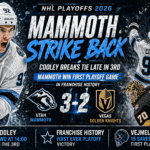
Mammoth Strike Back - Utah Levels Series Against Vegas | IHM

Mammoth Strike Back - Utah Levels Series Against Vegas | IHM

Mammoth Strike Back - Utah Levels Series Against Vegas

Date: April 22, 2026
By IceHockeyMan Newsroom

The Utah Mammoth did more than win Game 2. They changed the emotional and tactical shape of the series.

A 3-2 road victory over the Golden Knights gave Utah its first playoff win in franchise history and, more importantly, erased Vegas’ early momentum. What looked like a clean series advantage for the Golden Knights now becomes a real fight heading to Salt Lake City.


⚡ COOLEY’S WINNER WAS A PLAYOFF-TYPE GOAL

Logan Cooley’s late third-period goal did not come from a perfect setup or a highlight finish. It came from timing, net drive and second-effort awareness - exactly the kind of goal that decides playoff games.

Utah attacked through the middle with speed, forced a rebound sequence, and Cooley arrived at the crease at the right moment to finish the play.

IHM Signal:
Playoff series turn when talented players stop searching for clean goals and start scoring dirty ones.


🚨 UTAH WON THE SECOND PERIOD - AND THE GAME STARTED THERE

The biggest underlying story of Game 2 was not the final goal. It was Utah’s control in the middle phase of the game.

The Mammoth outshot Vegas 13-4 in the second period and pushed the Golden Knights into long defensive sequences. That stretch changed the energy of the night.

  • Utah built speed through the middle of the ice
  • Vegas lost puck control in exits
  • Shift length and defensive fatigue increased for the Golden Knights

IHM Insight:
Series are often decided by who controls the “hidden period” - the stretch where pressure builds before the game-breaking moment arrives.


🎯 GUENTHER AND YAMAMOTO ADDED THE RIGHT KIND OF SUPPORT

Dylan Guenther and Kailer Yamamoto gave Utah exactly what playoff underdogs need: support scoring and pace-driving shifts.

Guenther’s goal was clean, quick and direct, but his larger impact came in how he attacked with pace and forced Vegas defenders to back off. Yamamoto’s two-assist game added another layer of smart puck movement and quick decision-making.

This matters because Utah cannot win this series relying on one line alone. Game 2 showed that their support cast can create real series pressure.


🧱 VEGAS LOST ITS GRIP AFTER A STRONG START

Vegas opened with the right tone and grabbed the first goal, but the game slowly drifted away from its preferred structure.

The Golden Knights were still dangerous in moments. Mark Stone and Ivan Barbashev both produced. Jack Eichel continued to drive offense. But the broader control was missing for too long.

Key issue areas:

  • Too little offensive-zone possession after the first phase
  • Not enough puck support under Utah’s pressure
  • Defensive reads stretched by Utah’s middle-lane speed

IHM Signal:
Vegas did not lose because it lacked talent. It lost because Utah dictated the pace for too many important stretches.


🧠 TORTORELLA’S TEAM NOW FACES A DIFFERENT SERIES

John Tortorella’s group no longer enters Game 3 with calm control. The tone has changed.

What was a chance to push toward a commanding lead is now a tied series moving into Utah’s building, where emotion and belief will be significantly higher.

This is where coaching matters most:

  • Can Vegas recover offensive-zone discipline?
  • Can it slow Utah’s speed through the middle?
  • Can it win back the emotional edge quickly?

IHM Insight:
A tied series is not just about score. It is about which team absorbs the last result better.


🥅 VEJMELKA GAVE UTAH THE RIGHT KIND OF GOALTENDING

Karel Vejmelka did not need to steal the game, but he did exactly what playoff teams need from their goaltender in these spots - he stayed calm, held shape and made the saves that protected momentum.

That type of performance becomes even more valuable for a team trying to establish itself in a series against a higher seed.


📊 GAME 3 OUTLOOK

Now the pressure shifts.

For Utah:

  • Keep attacking with pace through the middle
  • Use home energy without losing structure
  • Continue turning rebounds and net drives into chances

For Vegas:

  • Rebuild offensive-zone time
  • Limit Utah’s transition speed
  • Regain control of the second-period flow

IHM Projection:
Game 3 becomes the real emotional pivot of the series. If Utah wins again, belief turns into pressure on Vegas immediately.


🧠 Coach Mark Comment

This was an important playoff lesson for both teams. Utah learned that it can impose pace and survive against a top seed. Vegas learned that early control means nothing if you stop managing the middle of the game. The team that wins this series will probably be the team that controls the second period best, because that is where rhythm is being decided right now.


🔥 Fan Pulse

Did Utah just turn this into a real upset threat, or will Vegas reset and take back the series in Game 3?


❓ Q&A: Mammoth vs Golden Knights Game 2

Why was Cooley’s goal so important?
Because it came from playoff-style net pressure and gave Utah the decisive late edge.

What really changed the game?
Utah’s control of the second period and its ability to build pressure through the middle.

Did Vegas play badly?
Not overall, but it lost structure for too many stretches and allowed Utah to dictate pace.

Why does this win matter beyond the score?
Because it gives Utah belief and sends the series home tied with real momentum.

What is the key factor in Game 3?
Whether Vegas can slow Utah’s speed and reestablish offensive-zone control.


Martinook Wins in 2OT - Hurricanes Take 2-0 Lead | IHM

Martinook Wins in 2OT - Hurricanes Take 2-0 Lead | IHM

Martinook Redemption - Hurricanes Survive Chaos in Double Overtime

Date: April 22, 2026
By IceHockeyMan Newsroom

Some playoff games are about systems. Others are about moments. This one was about surviving both.

Carolina defeated Ottawa 3-2 in double overtime, but the result only tells part of the story. The real turning point was emotional control - after a disallowed goal, a missed penalty shot and a full reset of momentum.


⚡ THE SEQUENCE THAT CHANGED EVERYTHING

Late in the first overtime, Carolina believed the game was over. The puck was in the net. The bench reacted. The crowd reacted.

Then came the review.

Offside. No goal.

Moments later, instead of celebrating, the Hurricanes had to reset mentally and face a penalty shot opportunity that carried the full emotional weight of the overturned finish.

IHM Signal:
Playoff hockey punishes teams that cannot emotionally reset within seconds.


🎯 PENALTY SHOT MISS - PRESSURE SPIKE

Martinook’s missed penalty shot was not just a lost scoring chance. It was a psychological swing point.

At that moment:

  • Momentum flipped toward Ottawa
  • Energy dropped on Carolina’s bench
  • Game tension increased significantly

Most players carry that moment forward. Martinook did not.


🔥 SECOND OVERTIME - CONTROL THROUGH CHAOS

Instead of forcing plays in the second overtime, Carolina returned to structure:

  • Controlled zone entries
  • Sustained puck pressure
  • Net-front traffic

The game-winning goal came from exactly that environment - layered offense, not desperation.

Martinook’s finish was simple, fast and direct. No hesitation.

IHM Insight:
After chaos, the team that returns to structure first usually wins.


🧠 WHY THIS WIN IS BIGGER THAN 2-0

A double-overtime win after emotional disruption does more than give a series lead. It builds internal belief.

Carolina now has:

  • Confidence in its system under stress
  • Proof it can recover from momentum loss
  • Control of the psychological layer of the series

That is more dangerous than any tactical advantage.


⚠️ OTTAWA - CLOSE BUT NOT CLOSED

The Senators were not outplayed. They were outlasted.

Key positives:

  • Goaltending held under extreme pressure
  • Defensive structure mostly intact
  • Ability to survive extended overtime play

But the difference remains:

  • Finishing key moments
  • Maintaining control after emotional swings

IHM Signal:
In playoffs, being competitive is not enough. You must convert moments.


🥅 GOALTENDING FACTOR

Linus Ullmark delivered a high-level performance, but overtime hockey eventually exposes even strong goaltending when pressure becomes continuous.

The longer a team defends, the more likely structure breaks down - even slightly - and that is enough at this level.


📊 GAME 3 OUTLOOK

The series now shifts to Ottawa, but the pressure has already changed sides.

For Carolina:

  • Maintain structure and patience
  • Avoid emotional overextension after big win

For Ottawa:

  • Convert early opportunities
  • Regain control of tempo
  • Avoid extended defensive sequences

🧠 Coach Mark Comment

This is a classic playoff lesson. The Hurricanes lost the game mentally for a moment when the goal was overturned and the penalty shot was missed. But they recovered quickly. That is what separates experienced teams. Ottawa is close, but they are still reacting to moments instead of controlling them. In playoffs, that difference decides games.


🔥 Fan Pulse

Did this double-overtime win decide the series, or can Ottawa still flip momentum in Game 3?


❓ Q&A: Hurricanes vs Senators Game 2

Why was the disallowed goal so important?
It created a major emotional swing and forced Carolina to reset instantly.

What decided the game?
Carolina’s ability to return to structure after chaos.

Why did Martinook’s goal matter?
Because it completed a full emotional recovery after missing a key chance.

Can Ottawa come back in the series?
Yes, but they must control momentum instead of reacting to it.

What is the key factor going forward?
Mental stability under pressure and execution in decisive moments.


NHL SHORT ICE - Playoff Swings, Ovi Watch, Rising Stars | IHM

NHL SHORT ICE - Playoff Swings, Ovi Watch, Rising Stars | IHM

NHL SHORT ICE - Playoff Swings, Ovi Watch, Rising Stars | April 21, 2026

Date: April 21, 2026
By IceHockeyMan Newsroom

Want to stay on top of everything happening in the NHL without wasting time on long articles? IHM NHL SHORT ICE delivers the most important updates, key moments and league trends in a fast, structured format. Built for busy professionals, hockey fans and anyone who wants real insight without information overload.

The playoff picture is already starting to separate teams by more than talent. Some clubs are imposing identity, some are surviving emotionally, and some are already facing pressure that feels much heavier than a normal first-round series. This stage of the postseason is where systems begin to show their real value.


🔥 VEGAS KEEPS BUILDING MOMENTUM

The Golden Knights continue to look like one of the most dangerous teams in the West under John Tortorella. Their Game 1 comeback was not only about three third-period goals. It was about structure, patience and the ability to raise pressure late without losing discipline.

IHM Signal:
Vegas is no longer playing reaction hockey. They are controlling emotional momentum and forcing opponents to defend deeper in games.

👉 Full breakdown: Vegas remains hot under Tortorella with G1 rally


👀 OVI WATCH - WASHINGTON PREPARES FOR BOTH REALITIES

Alex Ovechkin’s future remains one of the biggest emotional and strategic storylines around the league. Washington says it is prepared whether he stays or retires, but those are two completely different franchise paths.

This is bigger than one player decision. It is about identity, leadership, fan expectation and long-term roster direction. Few stars in NHL history carry this kind of weight into one offseason decision.

IHM Signal:
The Capitals are not just waiting on a contract answer. They are waiting on a culture-defining answer.

👉 Full breakdown: Ovi or not Ovi? Caps set if star stays or retires


🌟 MARTONE IS TURNING INTO A PLAYOFF STORY

Porter Martone is not just contributing. He is becoming a playoff signal. Scoring in each of his first two postseason games at age 19 says a lot about poise, timing and how quickly certain players can adapt when the game gets heavier.

Philadelphia now carries a 2-0 series lead, and Martone’s emergence gives the Flyers another layer beyond physicality and structure.

IHM Signal:
Young players who can handle playoff pressure early often shift a series faster than expected.

👉 Full breakdown: Martone, 19, scores again as Flyers take 2-0 lead


📈 PLAYOFF TEMPERATURE CHECK

Flyers: Up 2-0 and imposing the emotional rhythm of the series against Pittsburgh.

Stars: Responded in Game 2 and avoided the early danger of falling into a deeper hole against Minnesota.

Hurricanes: Continue to look structured and mature, surviving long pressure stretches and still finding finishing moments.

Canadiens: Got a meaningful boost from Carrier’s return and showed that lineup reinforcements can immediately stabilize a playoff group.


🧱 SERIES IDENTITY IS FORMING EARLY

The biggest playoff takeaway right now is simple: teams are already separating into categories.

  • Teams dictating tempo
  • Teams surviving off execution
  • Teams already chasing control

That line matters because once a team spends the first two games reacting instead of imposing, the series often becomes much harder to recover.

IHM Insight:
The first two games do not just change the scoreline. They define the mental shape of a matchup.


⚔️ GAME 2 AND GAME 3 PRESSURE POINTS

Dallas needed a response and got one. Pittsburgh needed composure and did not find enough of it. Boston is now in reset mode, and Ottawa is already under pressure to avoid a damaging early gap in control and confidence.

This is where playoff series stop being theoretical. One team starts believing. The other starts protecting itself from panic.


🥅 GOALIE WATCH

Dan Vladar: Shutout in Game 2 and a major stabilizing factor for Philadelphia.

Scott Wedgewood: Continues to give Colorado calm minutes behind a team with serious depth.

Connor Hellebuyck storyline: Emotional fallout remains part of Winnipeg’s wider tension after the season.

IHM Signal:
The goaltenders who calm their bench, not just stop pucks, become playoff difference-makers.


📊 TRENDING SIGNALS

  • Vegas looks more unified and aggressive under Tortorella
  • Philadelphia is becoming one of the early identity teams of the postseason
  • Young talent is making immediate playoff impact
  • Veteran legacy questions still dominate off-ice attention
  • Series pressure is building faster than many expected

⚠️ WHY THIS DAY MATTERS

This was not just another playoff news cycle. It was a day where the league showed its two biggest postseason truths at once:

  • Winning teams create clarity
  • Lingering uncertainty creates pressure

Vegas created clarity. Philadelphia created clarity. Washington still lives inside uncertainty because of Ovechkin’s future. Those are very different emotional environments, and they shape everything around a team.


🧠 Coach Mark Comment

At this stage of the playoffs, the scoreboard is only part of the story. I look at which teams are getting cleaner in their habits as pressure rises. Vegas is showing stronger identity every game. Philadelphia is showing that physical confidence can become a system advantage when young players contribute. And with Washington, the story is emotional. When a franchise is waiting on one player’s future, that affects the whole atmosphere around the team. This is what makes playoff hockey bigger than tactics alone.


🔥 Fan Pulse

Which storyline feels biggest right now: Vegas under Tortorella, Ovechkin’s future, or Martone’s playoff breakout?


❓ Q&A: NHL Short Ice Playoff Signals

Why does Vegas look different now?
Because their game has become more aggressive, more connected and more controlled under pressure.

Why is Ovechkin’s future such a major story?
Because it affects not only Washington’s roster plans, but the identity of the franchise itself.

Why is Martone’s playoff start important?
Because teenagers rarely produce this quickly in heavy postseason hockey.

What is the biggest early playoff trend?
Teams that establish identity fast are gaining control before the series fully settles.

Does a 2-0 lead always decide a series?
No, but it changes the mental and tactical pressure dramatically.

What should fans watch most over the next games?
Tempo control, special teams response, and whether trailing teams can reset emotionally.


Golden Knights 4th Line Impact - Playoff X-Factor | IHM

Golden Knights 4th Line Impact - Playoff X-Factor | IHM

Golden Knights 4th Line Impact - The Hidden Engine Behind Vegas Playoff Push

Date: April 21, 2026
By IceHockeyMan Newsroom

Most playoff series are decided by stars. But sometimes, they are controlled by players who never make headlines. In Game 1 against the Mammoth, Vegas showed that their fourth line is not just depth - it is becoming a tactical weapon.

The trio of Nic Dowd, Colton Sissons and Cole Smith delivered one of the most important underlying performances of the night. Not because of raw scoring, but because of how they shifted momentum, zone control and physical pressure.


⚙️ LINE CHEMISTRY BUILT FOR PLAYOFF HOCKEY

This line was not built over a full season. It came together late through trades and adjustments, but the profiles match perfectly. All three players operate with a similar mindset - direct, physical and predictable in structure.

That matters more in the playoffs than creativity. Predictability at high intensity allows faster reads, quicker pressure and more consistent execution inside systems.

IHM Insight:
Playoff chemistry is not about time together. It is about role clarity under pressure.


💥 FORECHECK PRESSURE AS A SYSTEM WEAPON

Vegas did not just forecheck hard. They forechecked with intent and structure. The fourth line consistently forced Utah into rushed decisions, especially on zone exits.

This is where games shift without being obvious:

  • Delayed breakouts
  • Turnovers under pressure
  • Defensive fatigue over shifts

Sissons’ goal came directly from this identity - attacking the back post, staying inside the structure and finishing in traffic.

IHM Tactical Signal:
Heavy forecheck lines are not just about hits. They are about removing time and space from opposing defensemen.


🧱 DOWD AS THE “GLUE PLAYER” FACTOR

Nic Dowd represents a classic playoff profile - not a star, but a connector. Faceoffs, penalty kill, positioning, emotional tone. These players stabilize teams in chaotic moments.

His goal was not accidental. It came from reading space, timing movement and being inside the play instead of around it.

Equally important was his emotional presence. Engaging physically, responding to opponents and maintaining intensity without crossing the line.

IHM Signal:
Teams that win series usually have 1-2 players like Dowd controlling the emotional temperature.


🧠 TORTORELLA EFFECT - IDENTITY OVER TALENT

Since taking over, John Tortorella has clearly shifted Vegas toward identity-based hockey. Less reliance on skill moments, more focus on structure, pressure and accountability.

This fourth line is a perfect reflection of that philosophy:

  • Simple decisions
  • High work rate
  • Clear tactical role

In the playoffs, this often becomes more valuable than individual talent bursts.

IHM Insight:
Coaches do not just change systems. They change which players become important.


⚔️ WHY THIS LINE MATTERS FOR THE SERIES

Against Utah, this line creates a specific type of pressure:

  • Forces defense to play faster than comfortable
  • Creates physical wear over multiple games
  • Builds momentum for top lines starting shifts in offensive zones

Even if they stop scoring, their impact will remain.

That is the key difference between regular season depth and playoff depth.


📊 GAME 2 OUTLOOK

Game 2 will test whether this performance was situational or structural.

If Vegas’ fourth line continues to:

  • Win puck battles
  • Maintain forecheck pressure
  • Control emotional tempo

Then this series could shift faster than expected.

IHM Projection:
If the fourth line repeats even 70% of Game 1 impact, Vegas gains a significant series control advantage.


🧠 Coach Mark Comment

This is classic playoff hockey. Everyone looks at top players, but coaches watch lines like this. If your fourth line is winning shifts, you control the game underneath the surface. Vegas is starting to build that kind of structure. It is not flashy, but it is very difficult to play against over a series.


🔥 Fan Pulse

Can Vegas win the series based on depth and structure, not just star power?


❓ Q&A: Playoff Depth Impact

Why is a 4th line important in playoffs?
Because they control energy, physicality and momentum in non-scoring situations.

What makes this Vegas line effective?
Similar playing styles, strong forecheck and clear tactical roles.

Is scoring from this line sustainable?
Not necessarily, but their impact does not depend on scoring.

What is the biggest advantage they create?
They wear down opposing defenses over time.

How does this affect top lines?
It gives them better starting positions and less defensive pressure.


NHL Playoffs 2026 - Game 1 Breakdown & Opening Dynamics

NHL Playoffs 2026 - Game 1 Breakdown & Opening Dynamics

NHL Playoffs 2026 - Game 1 Breakdown & Opening Dynamics

Date: April 19, 2026
By IceHockeyMan Newsroom

The opening night of the 2026 Stanley Cup Playoffs immediately confirmed one thing - playoff hockey is a completely different environment. Pace increased, space disappeared, and games were decided by structure, not talent alone.


🔥 Hurricanes 2 : 0 Senators - Structure Wins

Carolina controlled Game 1 with a disciplined defensive structure, shutting down Ottawa’s transition game and limiting high-danger chances. Frederik Andersen delivered a composed performance in goal, while the Hurricanes executed a clean forecheck system.

IHM Signal:
Carolina is already playing playoff hockey. Ottawa is still playing regular season hockey.


⚔️ Penguins 2 : 3 Flyers - Physical Series Begins

Philadelphia imposed a heavy physical style, disrupting Pittsburgh’s rhythm early. Travis Sanheim’s late goal reflected a key playoff trend - sustained pressure eventually breaks defensive structure.

Evgeni Malkin produced offensively, but Pittsburgh struggled with puck control under pressure.

IHM Signal:
Flyers are dictating the series tempo. Penguins must adjust physically or lose control fast.


🌪 Stars 1 : 6 Wild - Depth Impact Game

Minnesota opened the series with a complete performance led by Matt Boldy, who controlled offensive flow and created high-danger chances. Jesper Wallstedt showed strong composure in his playoff debut.

Dallas struggled with defensive coverage under pressure and allowed too many second-chance opportunities.

IHM Signal:
Wild depth is already a factor. Stars need structural adjustments immediately.


📊 PLAYOFF OPENING DYNAMICS

  • Neutral zone tightened across all games
  • More dump-and-chase instead of controlled entries
  • Higher physical intensity from first shift
  • Goaltending already influencing outcomes

IHM Signal:
Game 1 is not about scoring first - it is about imposing your system first.


🧠 Coach Mark Comment

Playoffs remove comfort. Teams that rely on skill struggle early because space disappears. The teams that understand structure, positioning and timing win Game 1. What we saw today is simple - the teams ready for playoff hockey won, the others are now forced to adjust.


🔥 Fan Pulse

Which team looked the most dangerous after Game 1?

  • Carolina Hurricanes
  • Philadelphia Flyers
  • Minnesota Wild
  • Colorado Avalanche

❓ Q&A: NHL Playoffs Game 1

Why is Game 1 so important?
It sets tactical control and forces adjustments for the rest of the series.

What changed from regular season?
Pace, physicality and defensive structure increased significantly.

What decides Game 1 most?
Structure, discipline and goaltending.

Can teams recover after losing Game 1?
Yes, but they must adjust quickly both tactically and mentally.

Which teams had the edge?
Teams that controlled tempo and limited mistakes.


Golden Knights Clinch Pacific - Late Season Surge Defines Vegas Identity

Golden Knights Clinch Pacific - Late Season Surge Defines Vegas Identity

Golden Knights Clinch Pacific - Late Season Surge Defines Vegas Identity

Date: April 16, 2026
By IceHockeyMan Newsroom

Vegas did not just win a game. They closed the regular season by locking in control of the Pacific Division, confirming what has been building quietly over the final weeks - this is a team peaking at exactly the right moment.

A 4-1 win over Seattle capped a 10-game point streak and completed one of the most important late-season turnarounds in the league. From flirting with wildcard uncertainty to finishing on top, the Golden Knights reshaped their entire trajectory heading into the playoffs.


📊 GAME FLOW SHIFT - FROM CONTROL TO DOMINANCE

Seattle struck first early in the second period, but the response from Vegas was immediate and structured. Instead of opening up the game, they tightened spacing, accelerated puck movement through the neutral zone, and forced Seattle into reactive hockey.

Once Shea Theodore equalized late in the period, momentum shifted fully. The third period was not chaotic. It was controlled pressure. Vegas dictated pace, won key faceoffs, and consistently attacked through high-danger lanes.

Reilly Smith’s two-goal sequence sealed the result, but the real story was territorial control and transition efficiency.


⚙️ SYSTEM CHANGE UNDER TORTORELLA

Since the coaching change, Vegas has not become more complex. They have become more direct.

The focus is clear:

  • Faster exits from the defensive zone
  • Immediate pressure after puck loss
  • Shorter decision windows in transition
  • More aggressive positioning in all three zones

This is not a tactical revolution. It is a behavioral shift. And that is why it is working.

IHM Signal:
Vegas is no longer playing “safe hockey.” They are playing “forward hockey” - reducing hesitation and forcing opponents to react under pressure.


🔥 KEY PERFORMERS - IMPACT BEYOND STATS

Reilly Smith: Two goals and constant net-front presence. Not just finishing, but creating second-chance chaos.

Jack Eichel: Continues to drive offensive flow. His puck distribution is controlling tempo, not just creating chances.

Carter Hart: Quiet but critical. Stable goaltending allowed Vegas to stay composed after conceding first.

Defensive core: Clean puck movement and strong gap control limited Seattle’s ability to generate sustained pressure.


📉 SEATTLE SIGNAL - GAME MANAGEMENT PROBLEM

For Seattle, the issue was not talent. It was decision-making under pressure.

After taking the lead, the Kraken slowed down, lost puck discipline, and allowed Vegas to dictate transitions. Turnovers and poor spacing turned a manageable game into a one-sided third period.

IHM Insight:
Teams that cannot manage the puck late in the season rarely survive playoff-level pressure. Seattle showed exactly why.


⚔️ PLAYOFF CONTEXT - VEGAS VS UTAH

Vegas now moves into the first round against Utah, a matchup that brings together structure versus unpredictability.

Utah enters with nothing to lose. Vegas enters with expectations and momentum.

IHM Matchup Signal:
If Vegas controls pace early in the series, their structure will suffocate Utah. If Utah disrupts rhythm, the series becomes volatile.


📈 TREND SIGNALS

  • Vegas enters playoffs on one of the strongest form runs in the NHL
  • Coaching change created immediate behavioral impact
  • Transition speed is now a core identity trait
  • Confidence level inside the group is visibly rising

⚠️ WHY THIS WIN MATTERS

This was not about standings. It was about identity confirmation.

Teams that finish strong with structure tend to carry that into the playoffs. Teams that rely on moments often collapse under pressure.

Vegas is trending toward the first category.


🧠 Coach Mark Comment

Vegas found the most important thing at the right time - clarity. You can see it in how quickly they move the puck, how little hesitation there is in their decisions, and how they recover after mistakes. This is not about talent. This is about timing and identity. When a team enters the playoffs knowing exactly how it wants to play, it becomes extremely dangerous.


🔥 Fan Pulse

Are the Golden Knights the most dangerous team in the Western Conference right now?


❓ Q&A: Vegas Golden Knights Playoff Outlook

Why is Vegas peaking at the right time?
Because their structure and decision-making have stabilized under pressure.

What changed under the new coach?
Simplification of play, faster transitions and more aggressive positioning.

Is their form sustainable in the playoffs?
Yes, if their system discipline holds under higher intensity.

What is their biggest strength right now?
Controlled pace and efficient transition play.

What could be their weakness?
If forced into chaotic, high-variance games.

Who drives this team the most?
Eichel controls tempo, while depth scoring supports overall balance.