Tag: icehockey world

Global ice hockey coverage with analysis of major leagues, international tournaments, and emerging talents. From the NHL to European leagues, our insights connect fans with the latest trends, strategies, and stories shaping the world of hockey.

IHM Season Update | Coach Mark System 2026

IHM Season Update | Coach Mark System 2026

IHM Update: Season Strategy Shift and Coach Mark Performance Review

Date: April 6, 2026

By IceHockeyMan Newsroom

Dear subscribers,

As we approach the final phase of the NHL regular season, we want to share an important strategic update regarding IHM Premium content.

From this season onward, Coach Mark Lehtonen will focus his match analysis exclusively on regular season games only. All playoff analysis across leagues will be published separately in open-access posts, available to all readers.

Due to the limited number of remaining regular season games, new premium subscriptions are now closed for this cycle.

Season Performance: Coach Mark Lehtonen

This season has once again confirmed the level, structure, and consistency of Coach Mark’s analytical system.

  • 80%+ success rate on Premium verdicts
  • Strongest performance observed in NHL and Swiss National League
  • High stability in reading game tempo shifts, matchup exploitation, goaltending variance, and tactical structure under pressure

What separates this system is not volume, but precision and selectivity. Each verdict is built from a coaching perspective, not surface-level statistics, but real game structure.

Tactical Layer: Why This Season Stood Out

From a tactical standpoint, this season highlighted several key patterns that were consistently identified inside IHM analysis.

  • Transition control became a decisive factor in NHL match outcomes
  • European leagues showed higher predictability due to structured systems
  • Playoff-style intensity started appearing early in late regular season games
  • Goaltending volatility created value spots, especially in back-to-back scenarios

But the key upgrade this season, and the hidden edge behind these results, was the introduction of Coach Mark’s internal coaching database.

This system is built on accumulated knowledge of coaching styles and identities, bench behavior under pressure, matchup adjustments between coaches, line deployment logic in different game states, and reaction patterns after losses or schedule fatigue.

Instead of analyzing teams only through players or stats, IHM analysis is now structured through coach versus coach dynamics.

This allows earlier detection of tactical mismatches, pace control advantages, structural breakdown risks, and hidden game scripts before they fully develop.

Coach Mark’s ability to read these signals before they become visible to the public remains the core edge of IHM.

Important Message for Subscribers

We want to directly inform all readers and subscribers that from this point forward, Mark Lehtonen will continue his structured regular season match work only within the remaining regular season window, while playoff analysis will move into separate public posts for wider access.

This approach reflects the final stage of the season and allows IHM to transition naturally into a broader playoff content model, where readers will still receive high-level tactical breakdowns from Coach Mark across the leagues.

We also want to underline once again that this premium season has fully confirmed the elite level of our respected coach Mark Lehtonen. With a little over 80 percent successful verdicts, this was another season that proved the strength of real hockey intelligence, real coaching interpretation, and real structural analysis.

A special mention should be given to the NHL and the Swiss National League, where Mark’s reading of game flow, pressure points, and tactical mismatches stood out especially strongly.

You have already seen Coach Mark’s playoff verdicts for the European leagues, and soon we move into one of the most important annual traditions at IHM, the NHL playoff bracket analysis with full breakdowns from our coach.

What’s Next

You have already seen Coach Mark’s playoff insights for European leagues.

The next stage will bring full NHL Playoff Bracket Analysis with deep breakdowns of coaching matchups, series dynamics, and tactical adjustments.

This will follow the traditional IHM playoff format, structured, detailed, and built from a coaching perspective.

Stay Connected

Continue following IHM to stay ahead of the game.

  • Daily news
  • Tactical insights
  • Playoff analysis
  • Signal-Based Explanations from Coach Mark

This is where hockey is explained not from the surface, but from the bench.

This content is based on professional hockey analysis and is intended for informational purposes only.

Coach Mark Comment

The difference this season was not talent or luck. It was structure recognition. When you understand how a team builds its game under pressure, the outcome becomes a logical continuation of that structure.

Fan Pulse

Do you think coaching matchups decide playoff series more than player talent?

Q&A: IHM Season Update

Why are new subscriptions closed now?

Because the regular season is nearing completion and the remaining volume of games is limited.

Will playoff analysis still be available?

Yes. All playoff content will be published in open-access format.

What is Coach Mark’s database?

It is an internal system tracking coaching styles, tendencies, and matchup behaviors across leagues.

Was this season really above 80%?

Yes, based on internal tracking across all Premium verdicts.

Which leagues performed best?

NHL and Swiss National League showed the strongest consistency.

Will Premium return next season?

Yes, with potential upgrades in structure and content depth.


Best Player in Every NHL Team’s History | IceHockeyMan

Best Player in Every NHL Team’s History | IceHockeyMan

Best Player in Every NHL Team’s History

Date: March 31, 2026

By IceHockeyMan Newsroom

Who is the single greatest player each NHL franchise has ever called its own? This is where legacy, dominance, trophies, influence, identity and franchise-level impact all collide. Some choices are untouchable. Others will start wars in comment sections. That is exactly what makes this conversation one of the best in hockey.


How This IHM Ranking Was Built

This is not just a list of the most famous names. The real question is bigger: which player most fully represents the competitive peak, historical weight and identity of a franchise?

To build this franchise-by-franchise breakdown, the IHM lens focuses on five factors:

  • Peak dominance - how overpowering the player was at his best
  • Franchise legacy - how strongly the player is tied to that team’s identity
  • Statistical control - goals, points, wins, records and consistency
  • Trophy and playoff impact - awards, Cups and pressure-game influence
  • Historical footprint - whether the player changed how that franchise or position was viewed

Also important: if one player had legendary runs for multiple teams, he gets attached to the franchise where his legacy feels most definitive.


Franchise Icons - Team by Team

Anaheim Ducks - Teemu Selänne

No player is more deeply woven into Ducks history than Teemu Selänne. His speed, scoring instincts and charisma gave Anaheim a true global icon. He brought elite finishing, star power and long-term identity to a young franchise, then capped it with a Stanley Cup in 2007. For Anaheim, Selänne is not just the best player. He is the emotional face of the organization’s rise.

Boston Bruins - Bobby Orr

This one is almost beyond debate. Bobby Orr did not merely dominate from the blue line - he rewrote what a defenseman could be. His skating, creation, scoring and total command of the game changed hockey permanently. For Boston, Orr is more than a franchise legend. He is one of the sport’s great structural disruptors.

Buffalo Sabres - Dominik Hašek

Gilbert Perreault built the offensive heartbeat of the franchise, but Dominik Hašek reached a level few goaltenders in history have touched. In Buffalo, he turned chaos into survival and survival into contention. His style was unconventional, but the results were pure elite control. The Sabres have had stars. Hašek was a force multiplier.

Calgary Flames - Jarome Iginla

Iginla remains the complete symbol of Calgary hockey - skill, toughness, captaincy, consistency and big-moment credibility. He scored, led, fought through hard eras and carried the franchise with dignity. Even in a strong Flames history, no one feels more central to the organization’s competitive identity than Iginla.

Carolina Hurricanes / Hartford Whalers - Ron Francis

Francis gave this franchise elite production without needing theatrical attention. He drove offense, played a detailed two-way game and gave the organization continuity across eras. His statistical control of franchise history is overwhelming, and his impact reaches from Hartford roots into Carolina relevance. Quiet greatness is still greatness.

Chicago Blackhawks - Stan Mikita

Chicago has iconic names, but Mikita’s blend of production, intelligence and evolution gives him the edge. He was not only an offensive engine, but also one of the league’s smartest centers of his era. His transformation as a player and his sustained excellence make him the deepest long-term choice for the Blackhawks.

Colorado Avalanche / Quebec Nordiques - Joe Sakic

Sakic was the calm center of everything - elite shot, elite timing, elite leadership. He produced at a historic level while making the franchise feel stable, dangerous and championship-ready. Great captains do not just perform. They regulate the standard around them. Sakic did that for two different franchise identities in one continuous run.

Columbus Blue Jackets - Sergei Bobrovsky

For Columbus, this is about franchise-level importance. Bobrovsky gave the Blue Jackets legitimacy in net, elite Vezina-level play and one of the biggest playoff moments in team history. His best seasons were the kind that change how a team is perceived around the league. Until another Blue Jacket builds a longer playoff-driven legacy, Bobrovsky stays on top.

Dallas Stars - Mike Modano

Few players define a market the way Modano defined hockey in Dallas. He was the skill face of the franchise, the American star, the offensive reference point and a central part of the team’s championship identity. He did not just lead statistically. He helped make the Stars matter in a non-traditional market.

Detroit Red Wings - Nicklas Lidström

This is one of the hardest franchise calls in the NHL, which tells you how powerful Lidström’s case really is. Detroit has giants everywhere in its history, but Lidström gave the Red Wings something uniquely rare: complete defensive order with elite offensive intelligence and championship calm. He was precision under pressure. Shift after shift, year after year.

Edmonton Oilers - Wayne Gretzky

The easiest selection on the list. Gretzky is not only Edmonton’s greatest player. He is the measuring stick for offensive genius in hockey history. The Oilers were the stage for his most explosive dominance, and the league still lives inside statistical shadows he created decades ago.

Florida Panthers - Pavel Bure

Some players own a franchise through longevity. Others do it through pure intensity of impact. Bure belongs to the second category. His Florida stretch was explosive, terrifying for defenders and offensively disproportionate to almost anything the franchise had seen. In a shorter window, he still bent the Panthers around his speed and finishing.

Los Angeles Kings - Anze Kopitar

Kopitar is the modern Kings identity in one player: responsible, intelligent, difficult to play against, productive and built for playoff hockey. He does not always get loud praise because his greatness is rooted in completeness rather than flash. But franchise greatness is not always about noise. Sometimes it is about control.

Minnesota Wild - Mikko Koivu

Kirill Kaprizov may yet take this spot one day, but Koivu still represents the deepest version of Wild identity - captaincy, structure, defensive conscience and long-term loyalty. He was never built around glamour. He was built around trust. For a franchise still shaping its history, that matters.

Montreal Canadiens - Jean Béliveau

For a franchise this rich, picking one name is almost unfair. But Béliveau combines class, production, championships and era-defining stature in a way that feels uniquely Montreal. He was not just a winner. He was elegance with authority. In Canadiens history, that combination carries enormous weight.

Nashville Predators - Pekka Rinne

Rinne is Nashville’s foundational pillar. He stabilized the crease, gave the franchise top-end identity and anchored the deepest competitive stretch the organization has known. For long periods, the Predators’ entire ceiling was tied to his ability to erase mistakes and hold structure together under pressure.

New Jersey Devils - Martin Brodeur

This is not only a franchise pick. It is an all-time positional pick. Brodeur defined the Devils’ most successful era and, in many ways, helped define the tactical reputation of the team itself. Volume, durability, puck-handling and results - few goalies have ever carried more organizational weight.

New York Islanders - Mike Bossy

Bossy’s scoring efficiency remains absurd, even by historical superstar standards. He gave the Islanders finishing power at a level that made dynasty hockey feel inevitable. His touch around the net was ruthless, repeatable and clean. In a franchise full of championship names, Bossy remains the sharpest offensive blade.

New York Rangers - Brian Leetch

The Rangers have had major names, major eras and major personalities, but Leetch delivered elite two-way brilliance from the back end while also becoming central to one of the most important championship moments in franchise history. For a defenseman to carry that much offensive and historical gravity in New York matters.

Ottawa Senators - Daniel Alfredsson

Alfredsson is the Ottawa Senators. That is the shortest and strongest case. He carried the franchise through its modern rise, gave it credibility, leadership and consistency, and left a mark far beyond raw points. Some players become symbols almost by accident. Alfredsson earned it season by season.

Philadelphia Flyers - Bobby Clarke

For the Flyers, the answer had to come from the core of their identity: hard, relentless, unapologetic and built to lead. Clarke was all of that, plus elite production and trophy-level impact. He was not merely a star in Philadelphia. He was the standard-setter for what Flyers hockey came to mean.

Pittsburgh Penguins - Mario Lemieux

This is where greatness becomes myth-level. Lemieux combined size, touch, imagination and scoring destruction in a way very few players ever have. Injuries took away massive chunks of his career, and he still produced an all-time résumé. On top of that, his value to Pittsburgh extends beyond the ice. He saved the franchise itself.

San Jose Sharks - Patrick Marleau

This may be one of the list’s most debated calls, because Joe Thornton’s playmaking case is huge. But Marleau’s durability, franchise attachment, all-time games played status and long-range organizational imprint give him the nod. He feels like the player most inseparable from Sharks history.

Seattle Kraken - Jared McCann

Seattle is still in the early-building stage, so this is a young conversation. For now, McCann owns the offensive benchmark and remains the clearest individual face of the franchise’s first scoring identity. This spot is still open to future takeover, but at this moment, it belongs to him.

St. Louis Blues - Brett Hull

Hull’s St. Louis run was a goal-scoring detonation. The volume, pace and fear factor were off the charts. Bernie Federko has the franchise completeness case, but Hull’s peak offensive violence with the Blues pushes him over the top. Some peaks are simply too extreme to ignore.

Tampa Bay Lightning - Nikita Kucherov

This is one of the most modern and most interesting franchise debates. Stamkos gave Tampa leadership, goals and championship captaincy. Kucherov, however, has elevated into a level of offensive command that is impossible to soften. When the game slows for him, everyone else looks late. That is franchise-best territory.

Toronto Maple Leafs - Dave Keon

The Leafs have a massive history, which makes Keon’s place even more impressive. His defensive intelligence, skating, leadership and championship contribution made him one of the most complete centers the franchise has ever had. In a city that values both style and sacrifice, Keon’s profile holds up powerfully.

Utah Mammoth - Clayton Keller

For Utah, the conversation is still being written in real time. Keller gets the nod because he is the most advanced high-end offensive talent connected to the current identity, and he has already shown the kind of production pace that gives a new market a true lead figure. This story is early, but right now he is the answer.

Legacy note: For the old Jets/Coyotes line, Shane Doan remains the defining franchise figure. He was loyalty, endurance and leadership in one long desert-era run.

Vancouver Canucks - Henrik Sedin

Bure had the electricity. Linden had the emotional bond. Naslund had the scoring peak. Henrik Sedin gets the final edge because of how fully he controlled the offensive identity of the Canucks over time. Vision, timing, possession control and franchise records push him into the top seat.

Vegas Golden Knights - Jonathan Marchessault

Vegas moves fast, so these rankings will always be vulnerable to change. But Marchessault’s original-misfit status, franchise scoring leadership and Conn Smythe-winning championship run still give him the strongest case. Jack Eichel is applying heavy pressure to this spot, but Marchessault still owns the defining résumé.

Washington Capitals - Alex Ovechkin

This is another no-doubt selection. Ovechkin is Washington hockey. Records, one-timers, physical force, identity, charisma and the long-awaited Cup - no Capital has ever approached his total franchise impact. Even on an all-time league scale, his case is historic.

Winnipeg Jets - Mark Scheifele

For the modern Jets/Thrashers line, Scheifele now has the strongest overall argument. The production, the role, the playoff involvement and the long-term franchise centrality are all there. He may not be the cleanest public-consensus pick everywhere, but from a franchise-building standpoint, his case is strong and mature.


The Hardest Franchise Debates

Not every team gives you a clean answer. Some franchises force a real split between peak dominance and long-term identity.

  • Detroit: Lidström vs Howe vs Yzerman is an all-time impossible room
  • Montreal: Béliveau vs Richard vs Lafleur vs Roy is a dynasty-level argument
  • Tampa Bay: Kucherov vs Stamkos is a modern era civil war
  • San Jose: Marleau vs Thornton depends on whether you value longevity or playmaking gravity
  • Minnesota: Koivu holds the legacy edge, but Kaprizov is the active threat to flip the table
  • Vegas: Marchessault holds it today, but Eichel is building a serious future case

What This List Really Shows

The most interesting thing about this exercise is not the winners. It is the pattern behind them.

Some franchises are built around scorers. Some around goaltenders. Some around captains. Some around players who transformed the entire tactical ceiling of a team.

That is why lists like this matter. They reveal what each organization truly values at its core: explosive offense, championship control, emotional leadership, defensive order or generational star power.


Coach Mark Comment

When I look at a list like this, I do not start with raw points or trophies. I start with one question: if I had to build the psychological identity of a franchise around one player, who would carry the standard every night?

That is why some names become bigger than statistics.

Bobby Orr changed the geometry of the ice. Lidström made elite defending look almost silent. Iginla gave Calgary emotional force. Sakic gave Colorado calm under pressure. Brodeur and Hašek did not just make saves - they changed the risk tolerance of the teams in front of them.

This is where many fans get the debate wrong. The best player in franchise history is not always the one with the loudest highlights. Very often it is the player who made the entire team function at a higher tactical and emotional level.

The strongest franchise players do three things at once: they produce, they stabilize, and they define behavior.

That is real greatness.


Fan Pulse

Which franchise has the toughest all-time player debate right now?

  • Detroit Red Wings
  • Montreal Canadiens
  • Tampa Bay Lightning
  • San Jose Sharks
  • Another one - drop it in the comments

This one should create war in the comments section, and that is exactly the point.


Q&A: Best Player in Every NHL Team’s History

How do you judge the best player in a franchise’s history?

You look at peak performance, franchise records, trophies, playoff impact, longevity and how strongly that player shaped the team’s identity.

Is the best franchise player always the leading scorer?

No. Some teams are more clearly defined by elite goaltending, leadership, defensive dominance or championship influence than by pure point totals.

Why can a goalie be the best player in team history?

An elite goalie can completely change a franchise’s competitive ceiling, especially if he carries average or flawed rosters deep into contention.

Why was Bobby Orr such a transformational player for Boston?

He changed the role of the defenseman by combining skating, offense and game control at a level hockey had never seen before.

Why is Wayne Gretzky the clear choice for Edmonton?

Because his peak with the Oilers remains one of the greatest stretches of offensive domination in the history of professional sports.

Why does Mario Lemieux still rank above Sidney Crosby in Pittsburgh?

Lemieux’s peak talent, scoring dominance and franchise-saving legacy still give him the edge, even though Crosby has an extraordinary case of his own.

Why is Nicklas Lidström such a strong choice for Detroit?

He combined defensive perfection, offensive intelligence, longevity and championship impact in one of the deepest franchise histories in hockey.

Could current players still take these spots in the future?

Yes. Players like Kaprizov, Eichel and others are still building their cases and could eventually become the top player in franchise history.

Why does longevity matter so much in franchise debates?

Because long-term excellence creates identity, trust and emotional connection with the organization and its fan base.

What is the biggest mistake fans make in debates like this?

They often compare highlight value instead of total franchise impact. Greatness is bigger than flash.

Which franchise debate is the most controversial?

Detroit, Montreal, Tampa Bay and San Jose are among the hardest because each has multiple players with elite but very different cases.

Why are these all-time franchise lists valuable for fans?

They help explain what each team has historically been built around - offense, defense, goaltending, captaincy or championship structure.


NHL Daily Recap - March 18, 2026 | IceHockeyMan

NHL Daily Recap - March 18, 2026 | IceHockeyMan

Date: March 18, 2026
By IceHockeyMan Newsroom

The NHL schedule on March 18 featured a full slate of games with several overtime decisions, strong goaltending performances and multiple examples of efficiency determining outcomes. Columbus delivered a dominant win over Carolina, Montreal edged Boston in overtime, the Islanders capitalized on their chances against Toronto, and Nashville secured a shootout victory over Winnipeg.

Across the board, teams that executed better in finishing and goaltending situations came out on top, even in games where they were outshot or spent less time in the offensive zone.

Final Scores

Columbus Blue Jackets 5 - 1 Carolina Hurricanes
Montreal Canadiens 3 - 2 Boston Bruins (OT)
Toronto Maple Leafs 1 - 3 New York Islanders
Chicago Blackhawks 3 - 4 Minnesota Wild (OT)
Winnipeg Jets 3 - 4 Nashville Predators (SO)
Edmonton Oilers 5 - 3 San Jose Sharks
Seattle Kraken 2 - 6 Tampa Bay Lightning
Vancouver Canucks 5 - 2 Florida Panthers
Vegas Golden Knights 0 - 2 Buffalo Sabres

Game-by-Game Breakdown

Columbus Blue Jackets 5 - 1 Carolina Hurricanes

Columbus combined efficient finishing with strong goaltending to secure a convincing win. Despite similar shot totals, the Blue Jackets capitalized on their chances far more effectively.Stat Box
Shots on Goal: 30 - 28
Shots off Target: 13 - 11
Shooting %: 16.67% - 3.57%
Blocked Shots: 17 - 22
Goalkeeper Saves: 27 - 25
Save %: 96.43% - 83.33%
Penalties: 3 - 5
PIM: 9 - 17

Montreal Canadiens 3 - 2 Boston Bruins (OT)

Montreal generated more offensive pressure and controlled the flow of the game, eventually converting in overtime after sustained puck possession.Stat Box
Shots on Goal: 31 - 28
Shots off Target: 28 - 12
Shooting %: 9.68% - 7.14%
Blocked Shots: 15 - 12
Goalkeeper Saves: 26 - 28
Save %: 92.86% - 90.32%
Penalties: 3 - 1
PIM: 8 - 2

Toronto Maple Leafs 1 - 3 New York Islanders

The Islanders relied on disciplined structure and strong goaltending. Toronto created opportunities but struggled with finishing efficiency.Stat Box
Shots on Goal: 27 - 34
Shots off Target: 16 - 19
Shooting %: 3.7% - 8.82%
Blocked Shots: 8 - 12
Goalkeeper Saves: 31 - 26
Save %: 91.18% - 96.3%
Penalties: 6 - 4
PIM: 17 - 11

Chicago Blackhawks 3 - 4 Minnesota Wild (OT)

Minnesota controlled shot volume and maintained pressure throughout the game. Chicago stayed competitive but eventually broke under sustained offensive pressure.Stat Box
Shots on Goal: 26 - 37
Shots off Target: 16 - 11
Shooting %: 11.54% - 10.81%
Blocked Shots: 14 - 15
Goalkeeper Saves: 33 - 23
Save %: 89.19% - 88.46%
Penalties: 1 - 2
PIM: 2 - 4

Winnipeg Jets 3 - 4 Nashville Predators (SO)

Winnipeg dominated in shot volume, but Nashville’s goaltender delivered an outstanding performance and secured the win in the shootout.Stat Box
Shots on Goal: 39 - 23
Shots off Target: 18 - 14
Shooting %: 7.69% - 13.04%
Blocked Shots: 17 - 13
Goalkeeper Saves: 20 - 36
Save %: 86.96% - 92.31%
Penalties: 1 - 4
PIM: 2 - 8

Edmonton Oilers 5 - 3 San Jose Sharks

Edmonton controlled key moments and displayed better finishing ability, converting their chances more efficiently than San Jose.Stat Box
Shots on Goal: 37 - 30
Shots off Target: 7 - 19
Shooting %: 13.51% - 10%
Blocked Shots: 14 - 7
Goalkeeper Saves: 27 - 32
Save %: 90% - 86.49%
Penalties: 1 - 4
PIM: 2 - 8

Seattle Kraken 2 - 6 Tampa Bay Lightning

Tampa Bay delivered a dominant offensive performance, combining high shooting efficiency with strong defensive structure.Stat Box
Shots on Goal: 18 - 27
Shots off Target: 11 - 15
Shooting %: 11.11% - 22.22%
Blocked Shots: 7 - 20
Goalkeeper Saves: 21 - 16
Save %: 80.77% - 88.89%
Penalties: 4 - 4
PIM: 11 - 11

Vancouver Canucks 5 - 2 Florida Panthers

Vancouver displayed strong offensive efficiency and took advantage of Florida’s defensive mistakes, converting a high percentage of their chances.Stat Box
Shots on Goal: 22 - 23
Shots off Target: 9 - 27
Shooting %: 22.73% - 8.7%
Blocked Shots: 10 - 12
Goalkeeper Saves: 21 - 17
Save %: 91.3% - 77.27%
Penalties: 4 - 6
PIM: 24 - 28

Vegas Golden Knights 0 - 2 Buffalo Sabres

Buffalo secured a shutout win through disciplined defense and perfect goaltending, while Vegas failed to convert despite generating opportunities.Stat Box
Shots on Goal: 27 - 25
Shots off Target: 21 - 13
Shooting %: 0% - 8%
Blocked Shots: 13 - 12
Goalkeeper Saves: 23 - 27
Save %: 95.83% - 100%
Penalties: 3 - 4
PIM: 6 - 8

Coach Mark Comment

This game day once again confirmed a key hockey principle: efficiency beats volume. Winnipeg and Toronto both generated strong offensive numbers but failed to convert, while teams like Nashville, Islanders and Tampa Bay demonstrated how structured play and finishing ability dictate outcomes. Goaltending also played a decisive role in multiple games, particularly in Nashville’s shootout win and Buffalo’s shutout performance.

Q&A

Which team had the most dominant win?

Columbus delivered a strong 5 to 1 victory with excellent goaltending and finishing efficiency.

Which game highlighted the importance of goaltending the most?

Winnipeg vs Nashville, where Nashville’s goalie made 36 saves and secured the win.

Which team was the most efficient offensively?

Tampa Bay scored six goals on twenty-seven shots, showing elite efficiency.

Which game featured a shutout performance?

Buffalo defeated Vegas 2 to 0 with a perfect 100 percent save percentage.


NHL Rumors: Are NHL Teams Killing Free Agency?

NHL Rumors: Are NHL Teams Killing Free Agency?

NHL Rumors: Are NHL Teams Killing Free Agency?

Date: 16 March 2026
By IceHockeyMan Newsroom

The NHL free agent market has quietly been shrinking for several seasons, and another major extension last week added more evidence to that trend. Forward Nick Schmaltz signed a significant long-term deal, removing yet another potential impact player from the upcoming July 1 market.

Across the league, front offices are increasingly focused on locking up core players long before they reach unrestricted free agency. The result is a growing shift in roster construction strategy. Instead of waiting for summer bidding wars, teams are prioritizing internal extensions, cap certainty, and long-term stability.

That shift raises an important question being discussed around league circles. Has traditional NHL free agency lost its role as the primary engine of offseason change?

Why the Free Agent Market Is Shrinking

Only a decade ago, the NHL offseason regularly featured multiple high-profile stars hitting the open market. Today, that scenario is becoming increasingly rare.

Teams are approaching contract management with a more proactive mindset. As soon as players enter the final two years of their deals, negotiations for extensions often begin. This strategy allows organizations to control long-term costs while avoiding the risk of losing core players to competitive bidding.

The salary cap environment has also encouraged this behavior. With cap projections becoming more predictable, teams can structure long-term deals earlier and reduce uncertainty around future roster construction.

Market Signal: The modern NHL roster model favors early extensions over open market negotiations.

Early Extensions Are Replacing July 1 Bidding Wars

The Nick Schmaltz deal is only the latest example of this trend. Over the past several seasons, numerous star players have signed extensions well before reaching free agency.

For general managers, the advantages are clear. Early deals prevent players from testing the market and allow teams to maintain roster continuity. It also avoids inflated prices that often occur once multiple clubs begin bidding.

This approach has effectively moved the most important negotiations from July 1 to the regular season itself.

Market Signal: Many of the NHL’s most impactful contracts are now signed months before free agency begins.

Why Offer Sheets Are Becoming Even Rarer

Restricted free agent offer sheets have always been uncommon in the NHL, but current market dynamics are making them even harder to execute.

The compensation structure required to sign another team’s restricted free agent remains steep. Draft pick compensation combined with the original team’s ability to match offers discourages aggressive attempts.

Most teams also maintain enough cap flexibility to match offers for key young players. As a result, executives around the league believe a successful offer sheet this summer is extremely unlikely.

Market Signal: The RFA market is effectively controlled by the players’ current teams.

The Toronto Maple Leafs and the Matthew Knies Situation

One situation drawing quiet attention around the league involves the Toronto Maple Leafs and young power forward Matthew Knies.

While Toronto is not actively shopping the player, league sources suggest his name surfaced in internal discussions prior to the trade deadline. The interest is less about moving Knies and more about understanding his league-wide value.

If the Maple Leafs eventually decide to rebalance their roster structure, Knies would likely command a significant return. Physical scoring wingers with size, playoff utility, and offensive upside remain highly coveted across the league.

Market Signal: Knies is not on the trade block, but Toronto is aware of the leverage his value could provide in a major roster retool.

Trades May Become the Real NHL Offseason Engine

As extensions remove star players from the free agent pool, trades are increasingly becoming the primary method for teams to reshape their rosters.

Front offices now expect that major offseason moves will involve complex trade structures rather than open market signings. Cap retention, multi-team deals, and asset exchanges have become more common as teams attempt to solve roster problems without relying on free agency.

For fans expecting blockbuster July 1 signings, the modern NHL landscape may look very different than it once did.

Market Signal: The future NHL offseason may revolve more around trades than free agency.


Q&A: NHL Free Agency Trends

Why are fewer players reaching NHL free agency?

Teams are increasingly negotiating extensions earlier in a player’s contract cycle to prevent them from testing the open market.

Is the salary cap influencing this trend?

Yes. Predictable cap growth encourages teams to sign players earlier rather than risk inflated market prices later.

Are offer sheets still a realistic strategy?

Technically yes, but the required compensation and matching rights make successful offer sheets extremely rare.

Why would Toronto consider moving Matthew Knies?

Only as part of a larger structural change designed to improve roster balance or defensive depth.

Is the NHL offseason becoming more trade-driven?

Yes. With fewer elite free agents available, teams increasingly rely on trades to reshape their rosters.

Could the July 1 free agency period become less important?

It likely will remain relevant, but its impact may continue to decline as teams secure core players through extensions.

Will star players ever return to the open market in large numbers?

Possibly, but current front office strategies strongly favor long-term stability over open market risk.


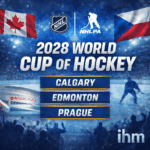
2028 World Cup Host Cities Named

2028 World Cup Host Cities Named

Date: March 16, 2026
By: IceHockeyMan Newsroom

NHL Names Host Cities for 2028 World Cup of Hockey

The NHL and NHLPA have officially announced the host cities for the 2028 World Cup of Hockey, confirming that Calgary, Edmonton and Prague will stage the international tournament.

The event will bring together the best hockey nations in the world in a best-on-best competition scheduled for February 2028.

According to the announcement, the North American portion of the tournament will take place in Calgary and Edmonton, while Prague will host the European stage of the competition.

Calgary and Prague to Host Round Robin Games

The newly constructed Scotia Place in Calgary and the O2 Arena in Prague will each host seven games during the tournament.

Those games will include:

• six round robin matchups
• one elimination game

Both arenas are considered among the most modern hockey venues in their respective regions and were key factors in the final selection process.

The NHL expects both cities to attract strong international attendance given their established hockey cultures and experience hosting major events.

Edmonton to Stage Semifinals and Final

While Calgary will host part of the early stage of the tournament, Rogers Place in Edmonton will serve as the main venue for the decisive games.

Edmonton will host:

• both semifinal games
• the championship final

Rogers Place has already hosted several major international and NHL events, making it a natural choice for the closing stage of the tournament.

NHL Continues Expansion of International Calendar

The 2028 World Cup is part of the NHL and NHLPA’s broader plan to restore a consistent international competition schedule.

The league confirmed earlier that the international calendar will follow a regular pattern:

• Olympic Games
• World Cup of Hockey
• Olympic Games
• World Cup of Hockey

This format would ensure that best-on-best international hockey takes place every two years.

Commissioner Gary Bettman emphasized the importance of global competition between the world’s top players.

He noted that international tournaments such as the Four Nations Face-Off and the Winter Olympics have demonstrated the enormous global interest in elite international hockey.

Eight Nations Expected to Compete

The 2028 World Cup of Hockey is expected to feature the eight strongest hockey nations in the world competing in a full international tournament format.

While the final participant list has not yet been officially confirmed, the event will once again bring together the NHL’s top players representing their national teams.

The return of regular best-on-best competition has been widely welcomed by players, fans and national federations.

Prague Selected Over Other European Candidates

Prague ultimately secured the European host role despite interest from several other cities.

Stockholm had been considered a strong candidate to host the European stage of the tournament, but the NHL and NHLPA selected the Czech capital due to its arena infrastructure, fan base and ability to stage large international hockey events.

The O2 Arena in Prague has previously hosted numerous major international tournaments and NHL Global Series games.

World Cup Could Expand in the Future

The NHL has also indicated that the World Cup of Hockey format could expand in future editions.

League officials have discussed the possibility of expanding the tournament structure as international hockey continues to grow.

For now, the 2028 tournament will feature eight teams competing in a condensed but high-level competition format.

Return of True Best-on-Best Hockey

The NHL continues to emphasize that the goal of the World Cup of Hockey is to create a true best-on-best international tournament.

Unlike traditional international competitions, the World Cup is organized jointly by the NHL and NHLPA, ensuring full participation from the league’s top players.

This structure allows fans to see the highest possible level of international hockey competition.

With Calgary, Edmonton and Prague confirmed as host cities, preparations for the 2028 World Cup of Hockey are now officially underway.

Q&A: 2028 World Cup of Hockey Host Cities

What are the host cities for the 2028 World Cup of Hockey?

The announced host cities are Calgary, Edmonton and Prague. Calgary and Prague will host early-stage tournament games, while Edmonton will stage the semifinals and final.

Which arenas will be used for the 2028 World Cup of Hockey?

The tournament will use Scotia Place in Calgary, Rogers Place in Edmonton, and the O2 Arena in Prague.

Why was Edmonton selected for the semifinals and final?

Rogers Place is one of the premier hockey arenas in North America and has already proven capable of hosting major NHL and international events. Edmonton also has a strong history of supporting elite hockey events.

What role will Calgary have in the tournament?

Calgary will host part of the opening stage of the competition, including round robin games and one elimination game. The city was chosen as part of the North American hosting structure.

Why is Prague hosting part of the World Cup of Hockey?

Prague gives the tournament a strong European base. The city has a rich hockey tradition, a proven international-event track record, and an arena capable of staging major tournament games.

How many teams are expected to play in the 2028 World Cup of Hockey?

The tournament is expected to feature eight national teams. The final confirmed field has not yet been officially announced, but the event is designed around the world’s strongest hockey nations.

Will the 2028 World Cup be a best-on-best tournament?

Yes. The intention is for the tournament to feature the best available NHL players representing their countries in a full best-on-best international format.

Who organizes the World Cup of Hockey?

The event is organized jointly by the NHL and the NHLPA. It is not run in the same way as IIHF world tournaments, which is why the format and participation structure are different.

Why is the World Cup of Hockey important for international hockey?

It provides one of the clearest stages for top NHL talent to compete for national teams outside the Olympic Games. Fans want to see the highest level of international hockey, and the World Cup is designed to deliver that.

How often will the NHL hold major international tournaments?

The current plan is to alternate major events every two years, moving between the Olympic Games and the World Cup of Hockey.

What does the new international calendar look like?

The intended sequence is Olympics, World Cup, Olympics, World Cup. That creates a regular best-on-best cycle every two years.

Why was Prague chosen instead of Stockholm?

Prague appears to have offered the strongest overall package in terms of venue quality, event history, fan culture and logistical readiness. Stockholm was discussed as a candidate, but Prague ultimately secured the European hosting role.

How many games will Calgary and Prague host?

Each city is expected to host seven games, consisting of six round robin contests and one elimination game.

What makes Scotia Place a notable venue for this event?

Scotia Place is Calgary’s new state-of-the-art arena, and the World Cup will be one of its biggest international hockey showcases. The modern venue helped strengthen Calgary’s bid.

What makes the O2 Arena in Prague a strong tournament venue?

The O2 Arena has hosted major international competitions before and is widely recognized as one of Europe’s top hockey venues. It offers the size, atmosphere and infrastructure required for a global event.

Could the World Cup of Hockey expand beyond eight teams in the future?

Yes. League officials have suggested that future expansion remains possible. If international demand and tournament growth continue, later editions could potentially include more teams or an expanded format.

Will Russia be part of the 2028 World Cup of Hockey?

That remains uncertain at this stage. Current international restrictions still influence eligibility discussions, and the final decision will depend on the political and sporting situation closer to the tournament.

Why do NHL players value the World Cup so highly?

Because it gives them a rare chance to represent their countries in a true best-on-best setting with the world’s top players. That level of competition carries strong prestige inside the game.

Why are host city announcements important so far in advance?

Major events need long planning cycles for arena scheduling, travel coordination, ticketing, sponsorship, security, media operations and fan experience. Announcing cities early allows all of that work to begin properly.

What does this announcement mean for hockey fans in Europe?

It means the tournament will not be limited only to North America. European fans will get direct access to major World Cup games in Prague, which helps make the event feel more international and globally relevant.

What does this announcement mean for hockey fans in Canada?

It reinforces Canada’s central role in hosting elite international hockey. With Calgary and Edmonton involved, Canadian fans will have a major share of the event, including the semifinals and final.

How important is this event for the NHL’s global strategy?

Very important. Best-on-best international hockey expands the league’s global visibility, strengthens relationships with fans in multiple markets, and creates a premium event that can be marketed worldwide.

Can the World Cup of Hockey become bigger than previous editions?

It can. With regular scheduling, stronger city planning, full NHL player participation and growing international interest, the 2028 edition could become the most significant World Cup of Hockey yet.


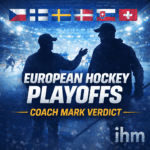
Coach Mark European Playoff Outlook 2026

Coach Mark European Playoff Outlook 2026

Date: March 16, 2026
By: Mark Lehtonen

Coach Mark European Playoff Outlook: Who Could Lift the 2026 League Titles

The playoff stage across Europe is always where structure, depth and discipline begin to outweigh regular season statistics. Systems tighten, space disappears, and the teams that survive are usually those that combine tactical identity with psychological resilience.

After studying the matchups, roster balance and playoff profiles across several European leagues, here are my verdicts on which clubs are best positioned to capture their respective championships this season.

Czech Extraliga - Pardubice

If we talk about roster balance and playoff readiness in Czech hockey this season, Pardubice stand out as the most complete team in the league.

They combine strong defensive structure with one of the most dangerous offensive transitions in the competition. What I particularly like about Pardubice is their ability to control pace through the neutral zone. They do not rush plays unnecessarily, but when they see space they accelerate quickly through the middle lane.

Another factor that becomes extremely important in playoff hockey is defensive zone discipline. Pardubice are very structured below the faceoff dots. Their defensemen close shooting lanes early and their forwards collapse quickly to support the slot area.

This makes them difficult to break down during tight playoff games where one goal often decides the outcome.

If they maintain composure and avoid unnecessary penalties, Pardubice have the structure required to win the Czech championship.

Danish Metal Ligaen - Herning Blue Fox

Herning Blue Fox are built almost perfectly for playoff hockey.

They play a very direct style built around strong forechecking pressure and physical puck retrieval. In playoff series, this kind of pressure gradually wears opponents down, especially over long seven-game matchups.

Herning are also extremely dangerous in transition. Their wingers attack quickly once possession is recovered and they create many scoring opportunities through fast entries rather than slow build-ups.

What separates them from other Danish teams is defensive responsibility from the entire lineup. Even offensive forwards are committed to backchecking and protecting the defensive zone.

Playoff hockey rewards teams that can stay patient, and Herning have shown throughout the season that they are comfortable playing low-scoring, disciplined games.

That profile makes them my choice to win the Danish championship.

Slovak Extraliga - Nitra

Nitra may not always dominate games territorially, but they are one of the most efficient teams in the Slovak league.

Efficiency is a critical trait in playoff hockey.

Nitra play with a very organized defensive zone structure. Their defenders protect the middle of the ice extremely well and force opponents to attack from the outside.

Offensively they rely heavily on opportunistic chances rather than constant pressure. This type of approach works well in playoffs because it reduces risk and forces opponents to overextend.

Another important factor is their goaltending stability. In tight playoff games, reliable goaltending often becomes the difference between advancing and elimination.

Nitra have the type of balanced, disciplined approach that can carry them through difficult playoff rounds.

Finnish Liiga - Tappara

Tappara remain one of the most tactically mature teams in European hockey.

Their system is built around structure, puck management and defensive patience. They rarely give opponents easy scoring chances because their defensive zone coverage is extremely organized.

One of the most impressive aspects of Tappara’s game is their ability to control momentum shifts.

Even when they face pressure, they stay calm with the puck and gradually reset the tempo of the game. That composure becomes invaluable in playoff situations where emotional swings often decide games.

Tappara also have excellent experience within their roster. Players who have already won championships understand how to manage long series and avoid unnecessary mistakes.

In a league known for its tactical discipline, Tappara still stand out as one of the most complete playoff teams.

Swedish SHL - Frölunda

Frölunda are always a dangerous playoff team because of the way they combine speed with structured defensive play.

Their system emphasizes quick puck movement and aggressive forechecking. When Frölunda establish offensive zone pressure, they force defenders into constant decision-making under pressure.

Another strength is their ability to generate offense from defensemen joining the attack. This creates additional layers of offensive pressure that many teams struggle to contain.

In playoff hockey, versatility is critical. Frölunda can win games through speed, through puck possession, or through disciplined defensive play.

That flexibility makes them one of the most difficult teams to prepare for in a playoff series.

DEL (Germany) - Kölner Haie

Kölner Haie have built a roster that looks extremely dangerous in playoff scenarios.

Their identity is based on strong physical engagement combined with structured defensive hockey. German playoff hockey often becomes extremely physical, and Köln are well prepared for that environment.

They also possess depth across their forward lines, allowing them to maintain pressure throughout games rather than relying on a single scoring line.

What stands out tactically is their defensive zone awareness. Their players stay compact and protect the slot effectively, forcing opponents to shoot from less dangerous areas.

If their goaltending remains stable during the playoffs, Köln have a realistic path to the championship.

Swiss National League - Fribourg-Gottéron

Fribourg are one of the most tactically disciplined teams in Switzerland.

They play a structured defensive game built around strong positioning and careful puck management. Swiss hockey often rewards teams that can combine structure with speed, and Fribourg execute that balance very well.

Their defensive pairings move the puck efficiently out of the zone, allowing the forwards to attack with speed through the neutral zone.

In the offensive zone they are patient. Rather than forcing plays, they create scoring opportunities through sustained pressure and intelligent puck movement.

Fribourg also benefit from strong leadership within their lineup. Experienced players often become decisive during difficult playoff games.

Because of their balance between defense, structure and experience, Fribourg are my verdict to win the Swiss championship this season.

Coach Mark Final Thoughts

Playoff hockey is a completely different environment from the regular season.

Systems tighten. Space disappears. Mistakes become far more expensive.

The teams that win championships usually share several key characteristics:

• defensive structure
• disciplined puck management
• reliable goaltending
• mental resilience under pressure

Each of the teams above has demonstrated those traits during the season.

Now the real test begins, because in playoff hockey, structure and composure always matter more than reputation.

Extended Q&A: Coach Mark European Playoff Outlook

Why does playoff hockey in Europe often look very different from the regular season?

Because the game compresses. In regular season play, teams can survive on rhythm, skill, or open-ice creativity for long stretches. In playoffs, those same teams suddenly face repeated matchups, stronger preparation, and far less free space through the middle. Coaches know opponent tendencies, lines are matched more carefully, and mistakes get replayed mentally after every game. That changes the entire style of hockey.

What is the most important trait for a European playoff team?

Structural discipline. Talent is important, but if a team cannot manage puck decisions, track back responsibly, and protect the slot under pressure, it will eventually break in a long series. Playoffs reward teams that can repeat good habits under stress.

Why did Pardubice stand out most in Czechia?

Because they have the right balance. They do not rely only on offense, and they do not sit back passively either. They control tempo through the neutral zone, defend with structure below the dots, and can punish teams quickly once space appears. That combination is extremely dangerous in playoff hockey.

What makes neutral-zone control so important in the Czech playoffs?

Czech playoff games often become tactical battles of entry denial and transition timing. A team that manages the neutral zone well can force dump-ins, reduce controlled entries against, and dictate whether the game becomes fast or slow. Pardubice do that at a very high level.

Why is Herning Blue Fox such a strong fit for the Danish playoff environment?

Because they pressure hard, retrieve pucks aggressively, and stay disciplined enough to avoid opening themselves up defensively. In long series, forechecking pressure becomes exhausting for opponents. When that pressure is tied to a responsible defensive structure, it becomes even harder to survive.

Does direct hockey work better in playoffs than possession-heavy hockey?

Not automatically. But direct hockey often becomes more effective when playoff pressure increases because defenders have less time and games become more physical. A team like Herning benefits from that environment because its style does not depend on perfect conditions.

Why was Nitra chosen in Slovakia despite not always dominating territorially?

Because territorial domination is not the only path to playoff success. Nitra are efficient, compact, and disciplined. They defend the middle well, rely on strong goaltending, and do not need constant offensive-zone time to stay dangerous. That profile travels well into playoff rounds.

What does “efficient” really mean in playoff hockey?

It means turning limited opportunities into meaningful offense while avoiding self-inflicted damage. Efficient teams do not need 40 shots to win. They create fewer but cleaner chances, and they avoid the kind of turnovers that hand momentum away.

Why is Tappara still viewed as one of the strongest playoff teams in Finland?

Because they remain one of the most tactically mature teams in Europe. Tappara understand how to reset games emotionally, how to defend without panic, and how to manage pressure when momentum shifts. In Liiga, those qualities become decisive very quickly.

What does tactical maturity look like from a coaching perspective?

It looks like a team that does not chase the game emotionally. It knows when to play simple, when to slow the pace, when to take away risk, and when to push. Mature teams do not confuse urgency with panic.

Why is Frölunda such a difficult team to prepare for in the SHL playoffs?

Because they can beat opponents in multiple ways. They can skate, forecheck, move pucks quickly, and get offense from the back end. That versatility makes game-planning harder because opponents cannot focus on just one threat pattern.

How important is blue-line activation in Swedish playoff hockey?

It is extremely important when executed with discipline. Defensemen who can join the attack force defensive coverage to stretch, which opens seams lower in the zone. Frölunda use that well without losing too much structure behind the play.

Why does Kölner Haie look like such a serious playoff team in Germany?

Because their identity matches the demands of DEL playoff hockey. They are physical, structured, and defensively compact. They can roll pressure through multiple forward lines and do not depend entirely on one scoring unit. That matters a lot in series where the physical toll accumulates.

What separates physical playoff hockey from undisciplined playoff hockey?

Controlled contact. Good playoff teams use physicality to close space, win pucks, and wear opponents down. Bad playoff teams mistake physicality for chaos and start giving away penalties or structure. Köln look much closer to the first category.

Why was Fribourg-Gottéron selected in Switzerland?

Because of balance. Fribourg have structure, pace, intelligent puck movement, and experienced leadership. They do not look rushed with the puck, and they rarely open themselves up unnecessarily. In Swiss playoff hockey, teams that combine patience with speed become very difficult to knock out.

How important is leadership in European playoff hockey?

Very important. Experienced players often calm benches after losses, stabilize shifts after goals against, and help younger players understand series momentum. Leadership is not only speeches. It is emotional control.

Do regular season standings always translate into playoff success?

No. Strong regular season teams often enter the playoffs with confidence, but not all of them are built for the same style of hockey once space tightens. Some clubs look excellent over 52 or 60 games and then struggle in a seven-game environment where every detail is magnified.

What kind of teams usually underperform in playoffs?

Teams that rely too heavily on rush offense without defensive recovery, teams that need too much open ice, and teams that become emotionally unstable after one bad game. Playoffs are not forgiving to fragile identities.

What kind of teams usually overperform in playoffs?

Teams with strong goaltending, clear defensive habits, mature puck decisions, and a willingness to win ugly. Those teams can steal series even against more talented opponents.

How much does goaltending influence a playoff verdict?

Enormously. Reliable goaltending can cover temporary offensive droughts and stabilize a team after mistakes. In every league, one hot goaltender can change a bracket. That is why teams with structure and stable goaltending are always dangerous.

What is the biggest mistake fans make when judging playoff teams?

They often assume the most entertaining regular season team is automatically the strongest playoff team. That is not always true. Playoffs reward patience, structure, and recovery habits just as much as skill.

Why does discipline matter more in playoff rounds?

Because every penalty carries more weight, and every emotional reaction can swing momentum across an entire series. Disciplined teams force opponents to beat them five-on-five instead of gifting them power-play chances.

Which of these league verdicts is based most heavily on system identity?

Tappara and Fribourg stand out there. Both teams have clear system identities that do not depend on wild game flow. That usually makes them more reliable over a long playoff path.

Which verdict is based most heavily on roster balance?

Pardubice. Their case is built on how complete they look rather than one superstar trait. They can defend, transition, manage pace, and survive tight games. That balance is one of the strongest foundations in playoff hockey.

Which verdict carries the most physical-series logic?

Kölner Haie. Their profile looks built for the type of heavy playoff environment that often defines long German postseason series.

Could any of these teams still fail early despite looking strongest on paper?

Of course. Playoffs are ruthless. A bad special teams stretch, a goalie swing, an injury, or one emotional collapse can flip a series quickly. A strong verdict does not mean certainty. It means strongest overall playoff profile.

Why is it important to analyze each European league separately rather than applying one universal model?

Because each league has its own rhythm, tactical tendencies, officiating culture, and playoff pressure points. The Czech playoffs do not feel exactly like Liiga. The SHL does not reward exactly the same patterns as the DEL. Good analysis respects those differences.

How should fans read Coach Mark’s league-by-league outlook?

As a structural playoff assessment. It is not based only on star names or standings. It is built around how each team’s identity projects into the kind of hockey that wins championships once the series start.

What is the clearest common thread linking all seven selected teams?

They all show some combination of defensive structure, mature puck management, reliable pressure habits, and emotional composure. That is the real playoff language in every league.


NHL Trade Deadline Watch 2026- IHM

NHL Trade Deadline Watch 2026

Date: 26 February 2026
By IceHockeyMan Newsroom

NHL Trade Deadline Watch: Kings Searching, Flames Listening, Market Reset After Olympics

The Olympic freeze has lifted. The gold medals are handed out. Now the real season resumes – and the NHL trade market is accelerating.

With just over a week until the deadline, front offices are recalibrating after Milano Cortina. Some contenders gained clarity. Others exposed structural holes.

Los Angeles Kings: Scoring Emergency

The Kings entered the Olympic break needing secondary scoring. They exit it with even greater urgency.

Kevin Fiala remains out long-term, and internally there is recognition that playoff hockey demands more finishing depth.

Patrik Laine has been mentioned externally, but league sources suggest he is not viewed as a structural fit in Los Angeles’ current system.

The Kings want controlled offense, not streak volatility. They are searching for middle-six production with defensive accountability.

Montreal Canadiens: Strategic Patience

The Canadiens are not acting emotionally. They are evaluating asset timing.

Montreal is listening more than initiating. They are not forced sellers. But they will extract premium value if a contender becomes desperate.

Calgary Flames: Kadri and Weegar Calls Increasing

Nazem Kadri’s name continues to surface. Calgary has received strong offers – and they believe better ones could emerge as the deadline approaches.

MacKenzie Weegar is drawing calls. The Flames are listening. But listening does not equal moving.

Calgary understands market leverage. Patience increases value.

Vancouver Canucks: Pettersson Watch

Elias Pettersson speculation remains alive but controlled. Vancouver will not initiate pressure. They will respond to it.

Internally, there is recognition that moving a franchise center shifts identity. It requires overwhelming return.

Winnipeg Jets and San Jose Sharks: Blue Line Conversations

Some teams are monitoring Winnipeg’s defensive depth. Meanwhile, San Jose is evaluating multiple defense targets.

Expect right-handed defensemen to command higher deadline value this year. The pending UFA market is stronger on that side.

Toronto, Colorado, Rangers: Quiet Calculations

Toronto has decisions to make regarding depth forwards. Colorado has flexibility if the right center becomes available.

New York Rangers could expand re-tool discussions depending on internal evaluation over the next five games.

Top Trade Watch List Themes

  • Secondary scoring depth for Western contenders
  • Right-handed defensemen premium market
  • Veteran centers with playoff experience
  • Pending UFAs driving bidding wars

Coach Mark - Trade Market Intelligence

The trade deadline is never about who wants to move. It is about who is forced to move.

After the Olympics, some teams gained belief. Others lost structural confidence. Confidence changes aggression.

Los Angeles will act. They cannot enter the playoffs thin upfront.

Calgary will wait. Patience is leverage.

Vancouver will only move if overwhelmed. Anything less is noise.

The most dangerous buyers are the teams that look stable but know internally they are not deep enough. Those front offices make decisive moves in the final 72 hours.

Watch Western Conference contenders. The East is calculating. The West is urgent.

Trade Pressure Meter - Deadline Urgency Scale

As the deadline approaches, urgency levels are separating contenders from pretenders. Here is the current pressure index across key teams.

  • Los Angeles Kings - HIGH: Offensive depth is not optional. They must add scoring support before entering playoff rounds.
  • Calgary Flames - MEDIUM: Listening aggressively, but not desperate. Kadri and Weegar leverage increases as the clock ticks.
  • Vancouver Canucks - CONTROLLED: Pettersson speculation exists, but internal pressure is low unless a blockbuster offer appears.
  • Montreal Canadiens - LOW: Strategic flexibility, no urgency.
  • Winnipeg Jets - WATCH: Blue line depth creates trade optionality.
  • Toronto Maple Leafs - QUIET CALCULATION: Depth tweaks possible.

Post-Olympic Market Shift

The Olympic tournament revealed more than medals. It exposed fatigue, chemistry dynamics, defensive reliability, and composure under pressure. Front offices adjust valuations after events like this.

Players who elevated under international spotlight have strengthened their leverage. Players who struggled may find their market quietly cooling.

This deadline will not only reflect standings. It will reflect Olympic data.

Coach Mark - Trade Deadline Psychology

Deadlines are not about talent. They are about pressure.

The teams that move early are confident. The teams that wait are calculating. The teams that move in the final 48 hours are usually reacting.

Los Angeles cannot afford hesitation. Calgary benefits from patience. Vancouver will only act from strength.

The most dangerous moves are the quiet ones – the depth defenseman, the reliable third-line center, the playoff penalty killer. Championship teams are built through stability, not splash.

IHM Trade Watch Report - Volume 2 will monitor final 72-hour acceleration across the league. The market is warming.


Q&A: NHL Trade Deadline 2026 - Market Intelligence Breakdown

Why is the trade market accelerating immediately after the Olympics?

International tournaments compress evaluation timelines. Front offices receive high-pressure performance data in elimination settings. That exposure forces clarity. Teams either confirm internal belief or identify structural gaps. Once the Olympic freeze lifted, recalibration began instantly.

Why are the Los Angeles Kings under high deadline pressure?

Los Angeles lacks consistent middle-six finishing depth. In playoff series, scoring depth becomes survival currency. With Fiala unavailable long-term, the Kings must add reliable offensive support without sacrificing defensive structure. Hesitation increases vulnerability in the Western Conference.

Is Patrik Laine a realistic fit for the Kings?

From a structural perspective, volatility conflicts with Los Angeles’ controlled system. The Kings prioritize defensive accountability within layered transition play. Laine offers high-end shot talent, but stylistic fit remains questionable. Deadline decisions will favor repeatable playoff utility over isolated scoring bursts.

Why are the Calgary Flames holding leverage with Nazem Kadri?

Calgary is not forced to move him. Patience creates bidding escalation. As contenders become nervous about center depth, offer quality improves. The Flames benefit from time. The closer to deadline, the stronger their negotiating position.

Could MacKenzie Weegar realistically be traded?

Calls are being taken, but moving a top-four defenseman requires elite return. Defense scarcity inflates value at the deadline. Calgary would only move Weegar if structural retooling outweighs short-term playoff positioning.

How serious is the Elias Pettersson trade speculation?

Speculation exists because elite centers always generate inquiry. However, Vancouver understands identity cost. A franchise center trade requires overwhelming return - multiple premium assets plus controllable value. Anything less is noise.

Are right-handed defensemen the true premium this year?

Yes. The pending UFA class is stronger on the right side. Playoff hockey magnifies breakout efficiency and defensive zone retrieval. Right-shot defenders capable of handling forecheck pressure will command elevated prices.

Which conference is more likely to make aggressive moves?

The Western Conference. The competitive density forces decisive action. The East has structured contenders with stable cores, while the West includes teams with identifiable scoring gaps.

What is the most dangerous type of deadline move?

The quiet move. A defensively responsible third-line center. A penalty-kill specialist. A stabilizing depth defenseman. Championship teams are often shaped by understated acquisitions rather than headline trades.

How does Olympic fatigue impact trade evaluation?

Performance swings post-tournament are common. Front offices separate fatigue from structural limitation. Smart teams avoid overreacting to short-term regression in the first NHL week back.

Is there a risk of overpaying this year?

Yes. Scarcity plus deadline psychology inflates cost. Teams chasing playoff positioning are vulnerable to panic bidding. Disciplined contenders avoid emotional escalation.

What is Coach Mark’s central principle at the deadline?

Acquire stability, not excitement. Depth, not headlines. Championship windows close because of structural cracks, not lack of star power.

Will Volume 2 focus on final-hour acceleration?

Yes. The final 72 hours reveal which general managers are confident and which are reacting. Trade Watch Report - Volume 2 will monitor market escalation patterns.


USA Wins Olympic Gold vs Canada 2026

USA Wins Olympic Gold vs Canada 2026

Date: 22 February 2026
By IceHockeyMan Newsroom

USA Wins Olympic Gold in Overtime Classic – And Coach Mark Was Right

Milano Cortina 2026 delivered exactly what global hockey wanted: USA vs Canada for Olympic gold. What it also delivered was validation.

Team USA defeated Canada 2-1 in overtime and captured Olympic gold in a final defined not by highlight flashes, but by structural discipline and execution under pressure.

Before this tournament began, Coach Mark issued a clear verdict: USA would win gold. Not emotionally. Not politically. Structurally.

Coach Mark Olympic Verdict: USA to Win Gold

The Game: Canada 1 - USA 2 (OT)

First Period – USA Establishes Structure

USA opened the scoring at 06:00 of the first period when Boldy converted a transition sequence, assisted by Matthews and Hughes. The early phase belonged to the Americans.

They exited the zone cleanly. They tracked back through the middle. They limited Canada’s east-west entries.

From the start, it felt organized.

Second Period – Canada Pushes Back

At 18:16 of the second period, Cale Makar tied the game 1-1 off a setup from Devon Toews. Canada increased zone time and tilted shot volume. Momentum appeared to shift.

But structurally, USA did not panic.

Third Period – No Margin

The third period was controlled tension. Physical play intensified. Both teams protected the middle ice. No goals. Everything moved toward overtime.

Overtime – The Decisive Moment

At 01:41 of overtime, Jack Hughes ended the Olympic tournament. Assisted by Zach Werenski, USA capitalized on a transitional opportunity and buried the gold medal winner.

One lane. One defensive gap. One mistake.

Gold shifted.

Statistical Breakdown

  • Shots on Goal: Canada 42 - USA 28
  • Shooting %: Canada 2.38% - USA 7.14%
  • Saves: USA 41 - Canada 26
  • Save Percentage: USA 97.62% - Canada 92.86%
  • Power Play Goals: 0 - 0
  • Penalties: 3 each

Canada controlled shot volume. USA controlled efficiency. In finals, efficiency decides championships.

Why USA Won

USA’s defensive layers were disciplined all tournament. They did not chase. They did not overcommit. They protected the slot.

Canada thrives in chaos. They generate offense in broken plays. They turn pressure into momentum.

But USA did not allow chaos to become extended possession. They absorbed pressure and reset.

That is elimination hockey.

Canada’s Structural Vulnerability

Canada’s attack is elite. No debate.

But defensively, their structure has been reactive rather than suppressive. They survive through offense. They do not dominate through control.

In a gold medal game, that difference matters.

The overtime goal came from a transitional gap. One misread. One delayed stick lane. That is all it takes.

Coach Mark

I said before this tournament that USA would win gold because their structure is repeatable under elimination pressure. That was the foundation of the verdict.

Canada can overwhelm teams with skill. But skill must sit on top of structure. If structure cracks, skill cannot always repair it.

Look at the numbers. 42 shots for Canada. Only one goal. Why? Because USA forced perimeter attempts. Because rebounds were cleared. Because the middle ice was protected.

This was not about emotional momentum. It was about neutral zone management, layered coverage, and disciplined defensive reads.

In finals, games swing on the first true mistake. And USA was simply less likely to make it.

Gold medals are rarely won by the most exciting team. They are won by the most stable one.

Verdict delivered.

IIHF Awards and Tournament Legacy

Individual awards reflected elite performance throughout the tournament. Canada and USA dominated the recognition board. But medals define history.

USA leaves Milano Cortina with gold. Canada leaves with silver. And the narrative shifts toward a new American era in international hockey.

Finland Claims Bronze

Finland defeated Slovakia 6-1 to secure bronze. Structured, composed, disciplined. Classic Finnish response after semifinal defeat.

What This Means for the NHL

The NHL regular season resumes February 26. The emotional intensity of Olympic elimination hockey often leads to physical fatigue and short-term regression in league play.

Teams must recalibrate quickly. Playoff positioning resumes immediately.

Final Takeaway

This gold medal game was not about highlight reels. It was about control.

USA controlled structure. USA controlled efficiency. USA controlled the final mistake.

And in elimination hockey, control is everything.


Q&A: USA vs Canada Olympic Gold Medal Game - Tactical and Legacy Breakdown

Why did USA defeat Canada despite being outshot 42-28?

Shot volume alone does not determine outcomes in elimination hockey. USA limited high-danger chances from the slot and forced Canada to the perimeter. Canada generated pressure, but much of it came from low-angle or blocked lanes. USA converted at a higher efficiency rate and capitalized on one transitional defensive lapse in overtime.

Was goaltending the decisive factor?

Yes. USA posted a 97.62% save percentage compared to Canada’s 92.86%. In gold medal games, elite goaltending neutralizes territorial dominance. When one team finishes under 3% shooting efficiency, the opposing goaltender has dictated the game.

What tactical adjustment allowed USA to control overtime?

USA shortened defensive gaps and simplified zone exits. Instead of forcing stretch passes, they prioritized controlled puck movement through the neutral zone. The overtime winner developed from a transition moment where Canada’s defensive spacing widened slightly. USA exploited that separation immediately.

Did Canada’s defensive structure show vulnerability during the tournament?

Canada’s strength has been offensive activation from defensemen and layered puck support. However, aggressive pinches occasionally leave backside exposure. In tight elimination games, that structural risk becomes magnified. One misread is often enough to decide gold.

How important was Sidney Crosby’s absence in the final?

Crosby’s leadership and defensive awareness in high-pressure situations are historically significant. His absence removed a stabilizing element in late-game faceoffs and defensive rotations. While Canada still controlled shot share, situational composure in overtime may have been affected.

What does this gold medal mean for USA hockey long term?

This victory signals structural maturity rather than emotional breakthrough. USA demonstrated layered defensive discipline, transition efficiency, and composure under pressure. It strengthens the foundation for the next international cycle and reinforces belief in their development pipeline.

How does this impact the NHL season resuming February 26?

Olympic intensity often produces physical fatigue and short-term performance dips for players returning to league play. Coaching staffs must manage minutes carefully in the immediate weeks following the tournament. Teams with deeper rosters may benefit from rest rotation.

Was Coach Mark’s pre-tournament verdict validated tactically?

Yes. The prediction was based on structural repeatability under elimination pressure. USA displayed consistency in defensive layering and transition management throughout the tournament. The gold medal game reinforced that structural stability outweighs raw shot volume in championship settings.

What was the true turning point of the final?

The turning point was not a single hit or power play. It was USA’s sustained ability to prevent central-lane breakdowns late in the third period. By forcing Canada wide and controlling rebounds, USA reduced the probability of a high-danger overtime concession.

How will this Olympic final be remembered historically?

This game will be remembered as a structurally disciplined championship rather than a chaotic shootout. It marks a moment where tactical maturity defined outcome over spectacle, reinforcing the evolution of modern international hockey.


Canada vs USA Gold Final Set

Canada vs USA Gold Final Set

Date: 21 February 2026
By IceHockeyMan Newsroom

Gold Medal Clash Confirmed

The stage is set at Milano Cortina 2026. Canada and the United States will meet Sunday for Olympic gold. It is the matchup the tournament wanted. It is the matchup the hockey world expected.

Team USA dominated Slovakia in the semifinal and enters the final playing its most structured hockey of the tournament. Canada survived Finland behind late-game execution and a power play that continues to punish every defensive lapse.

Meanwhile, Finland and Slovakia will battle for bronze on Saturday, both seeking to leave Italy with something tangible after semifinal heartbreak.

How We Got Here

Canada edged Finland in dramatic fashion, with Nathan MacKinnon scoring late to seal the comeback. Once again, Canada relied on offensive depth and special teams precision rather than defensive control.

The United States, on the other hand, dismantled Slovakia with pace, discipline, and layered defensive structure. Jack Hughes continues to drive transition, and the American blue line has quietly been the most consistent unit in the tournament.

The Tactical Contrast

This final will be decided by structural discipline versus offensive explosiveness.

  • USA thrives on layered defensive coverage and controlled zone exits.
  • Canada relies on attack waves, skill mismatches, and power-play leverage.
  • USA limits high-danger rebounds.
  • Canada manufactures chaos and finishes in broken structure.

The key question: can Canada outscore structural weaknesses, or will USA force them into low-percentage perimeter play?

Canada’s Defensive Reality

Canada’s back end has shown vulnerability throughout the tournament. Gap control has occasionally been inconsistent. Breakout execution under heavy forecheck has not been elite.

Canada has compensated through offensive zone time and elite finishing talent. But in a one-game final against a defensively committed USA squad, defensive detail cannot disappear even for two shifts.

Coach Mark Comment

I will remind everyone of something. Before this tournament started, my verdict was clear. USA would take gold.

That was not emotional. That was structural. The American roster was built for tournament play. Balance, depth, defensive layers, controlled aggression.

Canada has world-class talent. Nobody disputes that. But their defensive structure has been reactive rather than dominant. They survive because their attack is relentless. They win because they can score from nothing.

In elimination hockey, however, games often swing on the first major mistake. And this American team punishes mistakes faster than any roster in Milano.

If Canada’s defense gives up clean middle-ice entries or loses coverage layers in the slot, USA will not need many chances. One turnover. One failed gap. One lost stick. That is how gold medals shift.

Canada can absolutely win. But they will win through offense. They will not win through defensive suppression. That difference matters in a final.

This is tournament hockey at its purest form. No margin. No recovery. One game.

Bronze Game: Pride on the Line

Finland and Slovakia meet Saturday with bronze at stake. Both teams were disciplined throughout group play but lacked finishing precision in the semifinal moments. Expect a structured, low-event contest with physical edge.

NHL Returns Soon

While the world focuses on Olympic gold, the NHL regular season resumes February 26. The transition back to league play will test players physically and mentally.

Olympic minutes are heavy. Emotion is heavier. Contenders will need immediate recalibration as the playoff race resumes.

Q&A: Gold Medal Game

When is the gold medal game?

Sunday at Milano Cortina 2026.

Who is favored?

USA enters with stronger defensive metrics, Canada with higher offensive ceiling.

What decides the game?

Transition control and special teams execution.

Does Olympic momentum carry into NHL?

Short-term confidence can help, but fatigue management becomes critical once league play resumes on February 26.


Olympic Scandal: Six Men on Ice?

Olympic Scandal: Six Men on Ice?

Date: 19 February 2026
By IceHockeyMan Newsroom

The Moment That Nearly Redefined the Tournament

Canada survived. That is the headline. But survival erased what could have become the defining officiating controversy of the Milano Cortina 2026 tournament.

Midway through the third period of the Olympic quarterfinal between Canada and Czechia, Ondrej Palat scored to give Czechia a 3-2 lead. The rush looked ordinary at full speed. The replay did not.

Video angles strongly indicated that Czechia had six skaters on the ice during the turnover sequence that initiated the counterattack. No penalty was called. Under IIHF regulations, the situation was not reviewable. The goal stood.

Breaking Down the Sequence Frame by Frame

The play began with a Thomas Harley shot blocked by Tomas Hertl high in the zone. Martin Necas collected the loose puck and immediately accelerated through the neutral zone.

At the moment of puck transition, Canadian defenders began their standard read: two layers collapsing toward middle ice. But the recognition timing appeared disrupted. Why? Because there was an additional Czech skater exiting the zone.

In elite hockey, defensive reads are based on pattern recognition. Three attackers. Two defenders. Support layer tracking late. When that pattern becomes four attackers plus trailer against two defenders, reaction timing shifts by fractions of a second. Fractions are everything.

Palat trailed the rush and finished the play with a clean wrist shot past Jordan Binnington. Execution was not the controversy. Structure was.

The Rulebook Problem

Under current IIHF rules, too-many-men infractions tied to transitional sequences are not eligible for video review. Officials must catch the violation live. If they do not, play continues.

In regular-season tournaments, that is controversial. In elimination Olympic hockey, it becomes systemic risk.

If Canada Had Been Eliminated

Now imagine the alternate timeline. No Suzuki equalizer. No Marner overtime winner. Canada eliminated 3-2.

The international hockey community would be demanding answers within minutes. Review protocols would dominate headlines. Players would question integrity. Sponsors would question process.

Instead, Canada tied the game minutes later and ultimately advanced. Narrative avoided crisis. Structure avoided scrutiny.

Jon Cooper’s Silent Response

After the game, head coach Jon Cooper was asked directly about the too-many-men situation. He smiled. And walked away.

That reaction carried more weight than a press conference.

Competitive Impact Analysis

Let us be clear about something important. An extra skater does not guarantee a goal. But it changes defensive mathematics.

  • Gap control timing shifts.
  • Passing lanes widen.
  • Backtracking assignments hesitate.
  • Communication layers overload.

In high-speed elimination hockey, hesitation equals exposure. Exposure equals high-danger chance probability increase.

Canada’s defensive pair had to read four potential lanes instead of three. That changes angling decisions instantly.

Coach Mark Comment

I will say this without drama but with clarity. At the Olympic level, this is unacceptable.

You cannot have structural violations during elimination play and hide behind technical non-reviewability. We are not discussing a borderline offside. We are discussing numerical imbalance during a turnover sequence.

Elite players train four years for this stage. Every line change is drilled. Every defensive rotation is rehearsed. And yet the officials are left with a split-second manual call system in a tournament that claims to represent the highest standard of international hockey.

If Canada had lost, the governing body would be facing global scrutiny. Not because of conspiracy. Because of protocol weakness.

Modern hockey moves too fast for human-only enforcement in transition chaos. Technology exists. Expanded review protocols exist. The refusal to implement them at this stage is a governance decision.

Survive and advance saved the story. But the clip remains. And credibility should not rely on overtime redemption.

What Should Change?

The Olympic tournament must consider:

  • Automatic video review for too-many-men infractions tied to goals.
  • Expanded off-ice officiating monitoring during transitions.
  • Transparent post-game review reports for elimination rounds.

If medals define legacy, then officiating clarity must match the magnitude of the moment.

Q&A: The Controversy Explained

Was there clearly a sixth player?

Replay angles strongly suggested six Czech skaters were on the ice during the turnover sequence.

Did officials miss it?

No penalty was called, indicating the on-ice officials did not identify a violation during live play.

Can IIHF review too-many-men situations?

Not under current protocol when tied to transitional sequences unless directly challenged within reviewable categories.

Did it decide the game?

Canada ultimately won in overtime, but the goal altered third-period momentum significantly.

Why does this matter beyond one game?

Elimination tournaments are defined by narrow margins. Structural enforcement integrity protects competitive fairness.