
Tag: European Hockey

Inside IHM | IceHockeyMan Editorial Team & Coach Mark Lehtonen | September 2026

Inside IHM | IceHockeyMan Editorial Team & Coach Mark Lehtonen | September 2026

IceHockeyMan Premium 2026/27: A New Hockey Intelligence Service Launches in October at €14.99

IceHockeyMan Premium will officially return in the first days of October 2026 – with a new price, a much larger editorial operation and a significantly broader role inside the IceHockeyMan platform.

Last season, Premium was priced at €29.99. For the 2026/27 season, the subscription price will be €14.99.

The price is going down. The product is getting considerably bigger.

Premium will no longer be built primarily around additional articles. It is being developed as a dedicated Hockey Intelligence layer across IceHockeyMan - connecting the IHM Newsroom, match coverage, coaching intelligence, player development, injuries, lineups, team trends, the IHM Coaches Database, Coach Rating and the experience of Coach Mark Lehtonen.

NHL coverage will form the largest part of the service, but Premium will also follow the major European leagues, Champions Hockey League and selected international hockey throughout the season.


Premium Is Changing Because Hockey Media Is Changing

Hockey fans no longer follow a season through a single newspaper, television broadcast or box score.

A modern game is followed across multiple screens and multiple information layers: live scores, line combinations, injuries, statistics, social reaction, video, coaching decisions, roster movement and post-game discussion.

The opportunity for IceHockeyMan is not to reproduce all of those things separately.

It is to connect them.

Premium 2026/27 is therefore being designed around one central question:

What does a hockey fan need to understand what is really happening around a team, player, coach or game?

Sometimes the answer is a lineup change. Sometimes it is an injury. Sometimes it is a defensive pairing, a reduced role, a new power-play unit, a coaching decision or a player quietly earning more responsibility.

Premium will increasingly connect those signals rather than publish them as isolated pieces of information.

Introducing IHM Premium Today

One of the new foundations of Premium will be IHM Premium Today - a fast intelligence layer designed to identify what matters before the hockey day becomes crowded.

Instead of requiring members to search through dozens of stories, selected Premium updates will bring together the most important developments around the day’s hockey.

Depending on the schedule, Premium Today may include:

  • Important NHL games and matchups
  • Starting-goaltender developments
  • Important lineup changes
  • Injury updates
  • Players moving between lines
  • Power-play changes
  • Coach decisions worth watching
  • Trade and contract developments
  • Players gaining or losing responsibility
  • Major European games
  • Coach Mark’s key observation for the day
  • Three or five developments worth following next

The objective is simple: give Premium members a clear starting point for the hockey day.

NHL Will Be the Centre of Premium

NHL will represent the largest share of Premium coverage during the 2026/27 season.

IceHockeyMan will continue publishing NHL news freely through the IHM Newsroom. Premium will sit above that news layer and focus on context, consequences and what happens next.

Premium NHL coverage will include areas such as:

  • Selected full-game breakdowns
  • Pre-game Hockey Intelligence
  • Starting-goaltender context
  • Confirmed and projected line combinations
  • Injury impact
  • Player-role changes
  • Defensive-pairing changes
  • Power-play and penalty-kill developments
  • Coach-vs-coach matchups
  • Player-vs-player matchup considerations
  • Trade intelligence
  • Contract and salary-cap context
  • Prospect development
  • Rookie usage
  • Ice-time trends
  • Players moving into larger roles
  • Players losing coaching trust
  • Playoff-race intelligence
  • Postseason matchup coverage

The goal is not to produce a huge breakdown for every NHL game.

Premium resources will be concentrated on games and developments where deeper coverage genuinely adds value.

IHM Match Intelligence Cards

Selected games will introduce a more compact Premium format: IHM Match Intelligence Cards.

These are designed for fans who want useful information quickly before a game without reading a long preview.

A Match Intelligence Card can include:

  • Expected starting goaltenders
  • Important injuries
  • Confirmed absences
  • Line combinations
  • Defensive pairings
  • Special-teams context
  • Recent team form
  • One key player matchup
  • One tactical matchup
  • Coach vs Coach
  • Three Things to Watch

Longer Premium reports can then go deeper where the game deserves it.

IHM Game Companion

Hockey viewing is increasingly a two-screen experience.

Fans watch the game while simultaneously checking lineups, statistics, injuries, player information and reactions on another device.

IceHockeyMan will begin developing selected Premium coverage around that behaviour through the IHM Game Companion concept.

It is not intended to replace the broadcast or duplicate live play-by-play.

Its purpose is to provide the information around the broadcast that helps explain the game.

Selected Game Companion coverage can bring together:

  • Pregame intelligence
  • Lineups
  • Goalie information
  • Injury context
  • Key matchups
  • Coach decisions
  • Important role changes
  • Turning points
  • Post-game conclusions
  • What the result changes next

More Coach Mark Lehtonen – Much More

One of the biggest Premium changes for 2026/27 will be a significant expansion of Coach Mark Lehtonen’s contribution.

Mark’s role will go beyond short comments attached to stories.

Selected games, coaching changes, player-development stories and tactical developments will receive dedicated coaching perspective.

Coach Mark coverage can include:

  • Why a coach changed a line
  • Why a defensive pair was separated
  • How coaches protect a lead
  • How teams respond when chasing a game
  • Bench management
  • Zone-start decisions
  • Special-teams adjustments
  • Matchup deployment
  • Young-player management
  • Managing reduced player confidence
  • When a coach shortens the bench
  • How coaches respond after difficult periods
  • Workload and recovery management
  • Playoff-series adjustments
  • What a coaching staff may change before the next game

“The scoreboard tells you what happened. Coaching starts with understanding why it happened, which decisions influenced it and what probably changes next.”

– Coach Mark Lehtonen

Coach vs Coach

Premium will place much greater attention on one of hockey’s most underestimated matchups: the battle between the benches.

Coaches constantly respond to each other through line matching, defensive deployment, special teams, zone starts, goalie decisions and game-state management.

Selected Premium games will therefore include a dedicated Coach vs Coach component.

It can examine:

  • Which coach controlled the matchups
  • Line-matching decisions
  • Changes after the first period
  • Special-teams adjustments
  • Timeout and goalie decisions
  • Bench shortening
  • Usage of star players
  • Protection of younger players
  • Responses after conceding
  • Late-game risk management

IHM Coaches Database

Premium will also connect more closely with the expanding IHM Coaches Database.

IceHockeyMan is building coach profiles as structured hockey-intelligence assets, rather than treating coaches simply as names attached to a team.

Profiles are designed to develop around:

  • Career history
  • Coaching experience
  • Team performance
  • Preferred playing tendencies
  • Roster usage
  • Young-player opportunities
  • Development record
  • Special-teams performance
  • Line-management tendencies
  • Playoff performance
  • Adaptability
  • Leadership context
  • Player-role patterns

IHM Coach Rating

The Coaches Database will increasingly connect with the IHM Coach Rating.

The objective is not to reduce coaching to one simplistic number.

The rating is intended to provide a structured reference point around coaching performance, development, tactical results, roster context and longer-term influence.

Over time, Coach Rating will also connect with other IHM systems, including player development, player-role intelligence and future IHM Fantasy Hockey products.

Introducing the IHM Player Role Tracker

Box scores often identify changes after they have already happened.

Premium will increasingly track the role changes that can appear before the points follow.

The IHM Player Role Tracker concept will focus on indicators such as:

  • Top-six promotions
  • Top-four defensive roles
  • Power-play promotions
  • Penalty-kill responsibility
  • Increased ice time
  • Reduced ice time
  • Late-game deployment
  • Healthy scratches
  • Young players earning coaching trust
  • Players returning from injury
  • Players moving between lines
  • Changes in linemates

For fans following players throughout a season, those changes can be more revealing than a single game’s statistics.

Injury Impact – Not Just an Injury List

IceHockeyMan already follows injuries through the Newsroom.

Premium will increasingly focus on the next question: what does the injury actually change?

An injury can change:

  • A line combination
  • A defensive pair
  • A power-play unit
  • Penalty-kill deployment
  • Another player’s ice time
  • A prospect’s opportunity
  • Goalie workload
  • Trade-market priorities
  • A coach’s tactical options

That broader context will become a growing part of Premium injury coverage.

What Changed?

Another Premium format will focus on one simple question: what changed?

A team may look completely different over ten games without making a major trade.

A new defensive pair can stabilise possession. A different power-play entry can improve production. A rookie may earn two additional minutes per night. A coach may start matching a checking line against the opposition’s best unit.

Selected Premium reports will identify those changes and explain why they matter.

What Comes Next?

Premium coverage will also increasingly look forward.

After a major development, members should not only understand what happened. They should know what to watch next.

That can mean:

  • The next lineup decision
  • A player’s opportunity created by an injury
  • A contract deadline
  • A potential trade window
  • A rematch between two coaches
  • A prospect approaching a larger role
  • An important run of games
  • A special-teams adjustment

IHM Weekly Hockey Intelligence Report

Premium will also introduce broader recurring intelligence reports during the season.

The IHM Weekly Hockey Intelligence Report will bring together developments that can become difficult to see when following hundreds of individual daily stories.

The report can include:

  • Teams trending upward
  • Teams showing structural problems
  • Major coaching developments
  • Players earning larger roles
  • Players losing roles
  • Important injuries
  • Emerging rookies
  • Special-teams trends
  • Goalie situations
  • Trade-market developments
  • Important European storylines
  • Coach Mark’s weekly observation

European Hockey Is a Core Part of IHM

NHL will be the largest Premium focus, but IceHockeyMan is being built as a global hockey platform.

Premium members will therefore also receive selected deeper coverage from the major leagues and competitions followed by IHM.

This includes:

  • NHL
  • SHL
  • Liiga
  • Swiss National League
  • DEL
  • Czech Extraliga
  • Slovak Tipsport Liga
  • Metal Ligaen
  • ICE Hockey League
  • Norwegian EHL
  • Champions Hockey League
  • Selected international hockey

Premium European coverage will prioritise quality rather than trying to produce identical coverage for every game in every league.

Major games, title races, coaching developments, injuries, player development, important transfers and continental matchups will receive the strongest focus.

One Premium Subscription Across the IHM Hockey World

Premium will not require separate subscriptions for NHL, European hockey, coaching content or individual competitions.

The objective is one Premium layer across IceHockeyMan.

A member interested mainly in the NHL can follow NHL intelligence. A coach can spend more time inside coaching coverage. A European hockey fan can follow the leagues most relevant to them. A parent or developing player can move between player-development and coaching material.

All of those areas belong inside the same IceHockeyMan ecosystem.

Premium Comments & Member Q&A

Premium should also become more interactive.

Selected Premium reports will allow members to raise questions and discuss the hockey behind the story.

The IHM team will increasingly use those questions to identify areas worth expanding, while Coach Mark can respond to selected coaching and tactical questions where appropriate.

This creates a different relationship from traditional one-directional sports publishing: Premium members can help identify which details deserve the next deeper look.

Built for Different Types of Hockey People

Premium is not designed exclusively for one type of reader.

It is being developed for:

  • Fans who want more than headlines
  • Coaches
  • Players
  • Parents of developing players
  • Fantasy hockey users
  • People following prospects
  • Fans following multiple leagues
  • Readers interested in coaching and tactics

Different members will use different parts of Premium. That is intentional.

More Intelligence, Not More Noise

IceHockeyMan will continue publishing a large amount of hockey news for free.

Premium is not designed to take ordinary headlines and place them behind a paywall.

A signing is news. A final score is news. An injury announcement is news.

Those things can remain part of the open IHM Newsroom.

Premium begins when we ask the next questions.

What changes because of that signing? Who takes the injured player’s minutes? Why did the coach change the pairings? Which matchup decided the game? Is a player quietly moving into a larger role? What happens next?

That is the difference between more content and more useful hockey intelligence.

A Full IHM Team Will Work on Premium

Another major change for 2026/27 is how Premium will be produced.

Premium will not operate as a one-person product.

A broader IceHockeyMan team will work across the service, combining:

  • Newsroom monitoring
  • Editorial research
  • Match information
  • Lineup monitoring
  • Injury tracking
  • Data verification
  • Quality control
  • European hockey coverage
  • NHL coverage
  • Coaching intelligence
  • Specialist contributions from Coach Mark Lehtonen

This expanded structure is important because hockey does not operate on a predictable editorial schedule.

Injuries happen. Trades happen. Coaches change lines. Players are called up. Goalies change. Important games overlap.

A team-based Premium operation gives IceHockeyMan the ability to follow those developments consistently across a long season.

The IHM Newsroom Is the Foundation

Premium is possible because the wider IceHockeyMan infrastructure is becoming much larger.

The IHM Newsroom continuously follows developments across NHL and European hockey. That information layer then gives Premium a foundation from which deeper work can begin.

News identifies the event.

Premium explains the meaning.

IHM Knowledge Center and Academy Remain Part of the Wider Platform

IceHockeyMan is also continuing to expand beyond daily news.

The IHM Knowledge Center provides structured answers about hockey, while IHM Academy focuses on learning, performance, development and understanding the game.

Premium will increasingly connect with those resources when deeper explanation is useful.

A tactical concept mentioned in a Premium match report can connect with educational content. A player-development topic can connect with Academy material. A coaching decision can connect with the Coaches Database.

The long-term objective is a connected hockey knowledge system rather than isolated sections of a website.

Why the Price Is Dropping from €29.99 to €14.99

Last season, IceHockeyMan Premium was priced at €29.99.

For 2026/27, the price will be €14.99.

This is not a reduction in ambition.

It is the opposite.

We want Premium to become a larger recurring part of the IceHockeyMan community rather than a high-priced product used by a small number of readers.

Hockey is already an expensive sport to follow and participate in. Premium should offer strong value without creating another unnecessary barrier.

A broader membership also gives IHM the foundation to continue investing in the Newsroom, coaching intelligence, databases, technology and new hockey products.

IceHockeyMan Premium 2026/27

Launch: First days of October 2026

New subscription price: €14.99

Previous season: €29.99

Main focus: NHL Hockey Intelligence

Also included: European hockey, selected international hockey, coaching intelligence, match coverage, injuries, lineups, player development, IHM Coaches Database and Coach Rating.

What Premium Members Can Expect

  • IHM Premium Today
  • Daily Hockey Intelligence
  • More Coach Mark Lehtonen commentary
  • Dedicated Coach Mark breakdowns
  • NHL Match Intelligence
  • European Match Intelligence
  • IHM Match Intelligence Cards
  • IHM Game Companion coverage for selected games
  • Coach vs Coach
  • IHM Coaches Database
  • IHM Coach Rating
  • IHM Player Role Tracker
  • Injury Impact coverage
  • Starting-goaltender context
  • Line combinations
  • Defensive pairings
  • Special-teams intelligence
  • Player-development coverage
  • Prospect tracking
  • Trade intelligence
  • Contract intelligence
  • Salary-cap context
  • What Changed? reports
  • What Comes Next? reports
  • IHM Weekly Hockey Intelligence Report
  • Premium comments
  • Selected member Q&A
  • Playoff and championship intelligence
  • Special IHM reports

What Premium Will Not Be

Premium will not be built around manufactured controversy.

It will not turn every rumour into a prediction.

It will not hide ordinary hockey news simply to create a paywall.

And it will not produce long reports simply because longer looks more impressive.

The standard is usefulness.

If a short intelligence card explains the situation, it should be short. If an important game requires a deeper breakdown, we will go deeper.

This Is the Next Stage of IceHockeyMan

IceHockeyMan has grown beyond the original idea of another hockey website.

Today the platform increasingly connects:

  • IHM Newsroom
  • NHL coverage
  • European Hockey coverage
  • IHM Knowledge Center
  • IHM Academy
  • Coach Mark Lehtonen
  • IHM Coaches Database
  • IHM Coach Rating
  • Player-development content
  • Hockey Intelligence systems

Premium is where many of those systems begin working together.

“There is always another layer to a hockey game. A line change, a matchup, a player’s role, an injury or one coaching decision can completely change what happens next. Premium gives us the space to follow those details properly.”

- Coach Mark Lehtonen

Premium Returns in Early October

IceHockeyMan Premium 2026/27 will officially launch in the first days of October 2026.

The new subscription price will be €14.99, replacing last season’s €29.99 price.

Additional information about Premium access, member areas and launch content will be published before opening.

More games. More leagues. More coaching intelligence. More context. A larger team. A lower price.

IceHockeyMan Premium 2026/27 is not simply returning. It is becoming a different product.


IceHockeyMan Editorial Team
Coach Mark Lehtonen
Inside IHM | IHM Newsroom
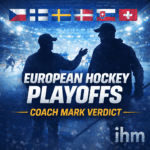
Coach Mark European Playoff Outlook 2026

Coach Mark European Playoff Outlook 2026

Date: March 16, 2026
By: Mark Lehtonen

Coach Mark European Playoff Outlook: Who Could Lift the 2026 League Titles

The playoff stage across Europe is always where structure, depth and discipline begin to outweigh regular season statistics. Systems tighten, space disappears, and the teams that survive are usually those that combine tactical identity with psychological resilience.

After studying the matchups, roster balance and playoff profiles across several European leagues, here are my verdicts on which clubs are best positioned to capture their respective championships this season.

Czech Extraliga - Pardubice

If we talk about roster balance and playoff readiness in Czech hockey this season, Pardubice stand out as the most complete team in the league.

They combine strong defensive structure with one of the most dangerous offensive transitions in the competition. What I particularly like about Pardubice is their ability to control pace through the neutral zone. They do not rush plays unnecessarily, but when they see space they accelerate quickly through the middle lane.

Another factor that becomes extremely important in playoff hockey is defensive zone discipline. Pardubice are very structured below the faceoff dots. Their defensemen close shooting lanes early and their forwards collapse quickly to support the slot area.

This makes them difficult to break down during tight playoff games where one goal often decides the outcome.

If they maintain composure and avoid unnecessary penalties, Pardubice have the structure required to win the Czech championship.

Danish Metal Ligaen - Herning Blue Fox

Herning Blue Fox are built almost perfectly for playoff hockey.

They play a very direct style built around strong forechecking pressure and physical puck retrieval. In playoff series, this kind of pressure gradually wears opponents down, especially over long seven-game matchups.

Herning are also extremely dangerous in transition. Their wingers attack quickly once possession is recovered and they create many scoring opportunities through fast entries rather than slow build-ups.

What separates them from other Danish teams is defensive responsibility from the entire lineup. Even offensive forwards are committed to backchecking and protecting the defensive zone.

Playoff hockey rewards teams that can stay patient, and Herning have shown throughout the season that they are comfortable playing low-scoring, disciplined games.

That profile makes them my choice to win the Danish championship.

Slovak Extraliga - Nitra

Nitra may not always dominate games territorially, but they are one of the most efficient teams in the Slovak league.

Efficiency is a critical trait in playoff hockey.

Nitra play with a very organized defensive zone structure. Their defenders protect the middle of the ice extremely well and force opponents to attack from the outside.

Offensively they rely heavily on opportunistic chances rather than constant pressure. This type of approach works well in playoffs because it reduces risk and forces opponents to overextend.

Another important factor is their goaltending stability. In tight playoff games, reliable goaltending often becomes the difference between advancing and elimination.

Nitra have the type of balanced, disciplined approach that can carry them through difficult playoff rounds.

Finnish Liiga - Tappara

Tappara remain one of the most tactically mature teams in European hockey.

Their system is built around structure, puck management and defensive patience. They rarely give opponents easy scoring chances because their defensive zone coverage is extremely organized.

One of the most impressive aspects of Tappara’s game is their ability to control momentum shifts.

Even when they face pressure, they stay calm with the puck and gradually reset the tempo of the game. That composure becomes invaluable in playoff situations where emotional swings often decide games.

Tappara also have excellent experience within their roster. Players who have already won championships understand how to manage long series and avoid unnecessary mistakes.

In a league known for its tactical discipline, Tappara still stand out as one of the most complete playoff teams.

Swedish SHL - Frölunda

Frölunda are always a dangerous playoff team because of the way they combine speed with structured defensive play.

Their system emphasizes quick puck movement and aggressive forechecking. When Frölunda establish offensive zone pressure, they force defenders into constant decision-making under pressure.

Another strength is their ability to generate offense from defensemen joining the attack. This creates additional layers of offensive pressure that many teams struggle to contain.

In playoff hockey, versatility is critical. Frölunda can win games through speed, through puck possession, or through disciplined defensive play.

That flexibility makes them one of the most difficult teams to prepare for in a playoff series.

DEL (Germany) - Kölner Haie

Kölner Haie have built a roster that looks extremely dangerous in playoff scenarios.

Their identity is based on strong physical engagement combined with structured defensive hockey. German playoff hockey often becomes extremely physical, and Köln are well prepared for that environment.

They also possess depth across their forward lines, allowing them to maintain pressure throughout games rather than relying on a single scoring line.

What stands out tactically is their defensive zone awareness. Their players stay compact and protect the slot effectively, forcing opponents to shoot from less dangerous areas.

If their goaltending remains stable during the playoffs, Köln have a realistic path to the championship.

Swiss National League - Fribourg-Gottéron

Fribourg are one of the most tactically disciplined teams in Switzerland.

They play a structured defensive game built around strong positioning and careful puck management. Swiss hockey often rewards teams that can combine structure with speed, and Fribourg execute that balance very well.

Their defensive pairings move the puck efficiently out of the zone, allowing the forwards to attack with speed through the neutral zone.

In the offensive zone they are patient. Rather than forcing plays, they create scoring opportunities through sustained pressure and intelligent puck movement.

Fribourg also benefit from strong leadership within their lineup. Experienced players often become decisive during difficult playoff games.

Because of their balance between defense, structure and experience, Fribourg are my verdict to win the Swiss championship this season.

Coach Mark Final Thoughts

Playoff hockey is a completely different environment from the regular season.

Systems tighten. Space disappears. Mistakes become far more expensive.

The teams that win championships usually share several key characteristics:

• defensive structure
• disciplined puck management
• reliable goaltending
• mental resilience under pressure

Each of the teams above has demonstrated those traits during the season.

Now the real test begins, because in playoff hockey, structure and composure always matter more than reputation.

Extended Q&A: Coach Mark European Playoff Outlook

Why does playoff hockey in Europe often look very different from the regular season?

Because the game compresses. In regular season play, teams can survive on rhythm, skill, or open-ice creativity for long stretches. In playoffs, those same teams suddenly face repeated matchups, stronger preparation, and far less free space through the middle. Coaches know opponent tendencies, lines are matched more carefully, and mistakes get replayed mentally after every game. That changes the entire style of hockey.

What is the most important trait for a European playoff team?

Structural discipline. Talent is important, but if a team cannot manage puck decisions, track back responsibly, and protect the slot under pressure, it will eventually break in a long series. Playoffs reward teams that can repeat good habits under stress.

Why did Pardubice stand out most in Czechia?

Because they have the right balance. They do not rely only on offense, and they do not sit back passively either. They control tempo through the neutral zone, defend with structure below the dots, and can punish teams quickly once space appears. That combination is extremely dangerous in playoff hockey.

What makes neutral-zone control so important in the Czech playoffs?

Czech playoff games often become tactical battles of entry denial and transition timing. A team that manages the neutral zone well can force dump-ins, reduce controlled entries against, and dictate whether the game becomes fast or slow. Pardubice do that at a very high level.

Why is Herning Blue Fox such a strong fit for the Danish playoff environment?

Because they pressure hard, retrieve pucks aggressively, and stay disciplined enough to avoid opening themselves up defensively. In long series, forechecking pressure becomes exhausting for opponents. When that pressure is tied to a responsible defensive structure, it becomes even harder to survive.

Does direct hockey work better in playoffs than possession-heavy hockey?

Not automatically. But direct hockey often becomes more effective when playoff pressure increases because defenders have less time and games become more physical. A team like Herning benefits from that environment because its style does not depend on perfect conditions.

Why was Nitra chosen in Slovakia despite not always dominating territorially?

Because territorial domination is not the only path to playoff success. Nitra are efficient, compact, and disciplined. They defend the middle well, rely on strong goaltending, and do not need constant offensive-zone time to stay dangerous. That profile travels well into playoff rounds.

What does “efficient” really mean in playoff hockey?

It means turning limited opportunities into meaningful offense while avoiding self-inflicted damage. Efficient teams do not need 40 shots to win. They create fewer but cleaner chances, and they avoid the kind of turnovers that hand momentum away.

Why is Tappara still viewed as one of the strongest playoff teams in Finland?

Because they remain one of the most tactically mature teams in Europe. Tappara understand how to reset games emotionally, how to defend without panic, and how to manage pressure when momentum shifts. In Liiga, those qualities become decisive very quickly.

What does tactical maturity look like from a coaching perspective?

It looks like a team that does not chase the game emotionally. It knows when to play simple, when to slow the pace, when to take away risk, and when to push. Mature teams do not confuse urgency with panic.

Why is Frölunda such a difficult team to prepare for in the SHL playoffs?

Because they can beat opponents in multiple ways. They can skate, forecheck, move pucks quickly, and get offense from the back end. That versatility makes game-planning harder because opponents cannot focus on just one threat pattern.

How important is blue-line activation in Swedish playoff hockey?

It is extremely important when executed with discipline. Defensemen who can join the attack force defensive coverage to stretch, which opens seams lower in the zone. Frölunda use that well without losing too much structure behind the play.

Why does Kölner Haie look like such a serious playoff team in Germany?

Because their identity matches the demands of DEL playoff hockey. They are physical, structured, and defensively compact. They can roll pressure through multiple forward lines and do not depend entirely on one scoring unit. That matters a lot in series where the physical toll accumulates.

What separates physical playoff hockey from undisciplined playoff hockey?

Controlled contact. Good playoff teams use physicality to close space, win pucks, and wear opponents down. Bad playoff teams mistake physicality for chaos and start giving away penalties or structure. Köln look much closer to the first category.

Why was Fribourg-Gottéron selected in Switzerland?

Because of balance. Fribourg have structure, pace, intelligent puck movement, and experienced leadership. They do not look rushed with the puck, and they rarely open themselves up unnecessarily. In Swiss playoff hockey, teams that combine patience with speed become very difficult to knock out.

How important is leadership in European playoff hockey?

Very important. Experienced players often calm benches after losses, stabilize shifts after goals against, and help younger players understand series momentum. Leadership is not only speeches. It is emotional control.

Do regular season standings always translate into playoff success?

No. Strong regular season teams often enter the playoffs with confidence, but not all of them are built for the same style of hockey once space tightens. Some clubs look excellent over 52 or 60 games and then struggle in a seven-game environment where every detail is magnified.

What kind of teams usually underperform in playoffs?

Teams that rely too heavily on rush offense without defensive recovery, teams that need too much open ice, and teams that become emotionally unstable after one bad game. Playoffs are not forgiving to fragile identities.

What kind of teams usually overperform in playoffs?

Teams with strong goaltending, clear defensive habits, mature puck decisions, and a willingness to win ugly. Those teams can steal series even against more talented opponents.

How much does goaltending influence a playoff verdict?

Enormously. Reliable goaltending can cover temporary offensive droughts and stabilize a team after mistakes. In every league, one hot goaltender can change a bracket. That is why teams with structure and stable goaltending are always dangerous.

What is the biggest mistake fans make when judging playoff teams?

They often assume the most entertaining regular season team is automatically the strongest playoff team. That is not always true. Playoffs reward patience, structure, and recovery habits just as much as skill.

Why does discipline matter more in playoff rounds?

Because every penalty carries more weight, and every emotional reaction can swing momentum across an entire series. Disciplined teams force opponents to beat them five-on-five instead of gifting them power-play chances.

Which of these league verdicts is based most heavily on system identity?

Tappara and Fribourg stand out there. Both teams have clear system identities that do not depend on wild game flow. That usually makes them more reliable over a long playoff path.

Which verdict is based most heavily on roster balance?

Pardubice. Their case is built on how complete they look rather than one superstar trait. They can defend, transition, manage pace, and survive tight games. That balance is one of the strongest foundations in playoff hockey.

Which verdict carries the most physical-series logic?

Kölner Haie. Their profile looks built for the type of heavy playoff environment that often defines long German postseason series.

Could any of these teams still fail early despite looking strongest on paper?

Of course. Playoffs are ruthless. A bad special teams stretch, a goalie swing, an injury, or one emotional collapse can flip a series quickly. A strong verdict does not mean certainty. It means strongest overall playoff profile.

Why is it important to analyze each European league separately rather than applying one universal model?

Because each league has its own rhythm, tactical tendencies, officiating culture, and playoff pressure points. The Czech playoffs do not feel exactly like Liiga. The SHL does not reward exactly the same patterns as the DEL. Good analysis respects those differences.

How should fans read Coach Mark’s league-by-league outlook?

As a structural playoff assessment. It is not based only on star names or standings. It is built around how each team’s identity projects into the kind of hockey that wins championships once the series start.

What is the clearest common thread linking all seven selected teams?

They all show some combination of defensive structure, mature puck management, reliable pressure habits, and emotional composure. That is the real playoff language in every league.


European Ice Hockey Leagues Ranking 2026: Popularity, Level, Attendance | IHM News

European Ice Hockey Leagues Ranking 2026: Popularity, Level, Attendance | IHM News

IHM NEWSROOM
European Hockey Hub

Ranking the European Ice Hockey Leagues 2026: Popularity, Level and Development Impact

Date: January 27, 2026
By: IceHockeyMan Editorial Team

For fans, analysts, and new viewers who want a clean, structured view of Europe’s hockey landscape. This is a tier ranking, not a one number fantasy list.


Introduction

Europe is not one hockey ecosystem. It is multiple ecosystems operating in parallel with different business models, talent pipelines, cultural weight, and competitive styles. That is why there is no single official ranking that everyone agrees on.

This IHM ranking is designed as a practical answer to real questions fans ask every season: which leagues are the biggest, which leagues are the strongest on the ice, which leagues develop the most NHL level talent, and where the fan culture is truly elite.

We use a tier system because a simple 1 to 30 list often hides what actually matters. Two leagues can be close in strength but very different in popularity, and some second divisions are development powerhouses even if they are not top leagues.


Methodology: How IHM Builds This Ranking

We evaluate leagues across a blended model. No single metric is allowed to dominate the ranking.

  • Popularity and fan culture including average attendance, arena demand, and local relevance
  • Player level roster quality, pace, structure, and elite experience
  • Development impact quality of youth pathways and NHL exports
  • Financial strength budgets, salaries, long term stability
  • Infrastructure arenas, training facilities, media production
  • Competitive balance depth of contenders and overall parity
  • International reputation perception among coaches, scouts, and agents

Important note: attendance numbers are one of the cleanest public indicators of league popularity, but attendance alone does not define on ice strength.


Tier 1: Elite European Leagues

SHL (Sweden)

Europe’s best development environment for pace, structure and skating. SHL remains one of the strongest pipelines for NHL ready players and modern tactical education.

Liiga (Finland)

A structured league known for disciplined systems and a development focused approach. It is an essential part of Europe’s coaching culture and youth progression.

DEL (Germany)

Europe’s attendance leader and a top tier professional product. Strong arenas, strong marketing, and a proven ability to turn hockey into a stable business. The league’s popularity profile is elite.

Czech Extraliga (Czechia)

Tradition, hockey IQ, and consistent local interest. The Czech league combines strong fan culture with real player development value, and top clubs draw elite crowds.

National League (Switzerland)

High salaries, modern infrastructure, and strong national interest. Swiss clubs attract elite European veterans and high skill imports, while maintaining top level crowd demand.

KHL (Eurasia based league, European audience focus)

On ice level and historical attendance strength remain high. At the same time, its international integration differs from most European league pathways, and it sits outside the Champions Hockey League ecosystem. For fans, it remains a major league, but its context is unique.


Tier 2: Strong Top Level Leagues

ICE Hockey League (ICEHL)

A multinational league with improving quality and a serious competitive core. It plays a key role in Central Europe’s pro pathway.

Slovak Extraliga (Slovakia)

Physical, emotional, and talent rich relative to its market size. The league remains important for national development and for players building their next move.


Tier 3: Established Regional Leagues With Real Market Value

  • EIHL (United Kingdom) growing crowds, strong event product in key markets
  • Metal Ligaen (Denmark) solid structure and improving development identity
  • Eliteserien (Norway) strong domestic base, regional relevance
  • Ligue Magnus (France) smaller scale but a clear national top tier with stable clubs
  • Polish Hockey League (Poland) local importance and a growing hockey footprint
  • Erste Liga (Hungary and region) multinational structure with development function
  • Alps Hockey League strong regional pathway league for Central Europe

Tier 4: Development Leagues and Second Divisions That Matter

Some of the most important development environments in Europe are not first divisions. These leagues deserve visibility because they feed the top leagues every season.

  • HockeyAllsvenskan (Sweden 2) one of the best development competitions in Europe
  • Mestis (Finland 2) key role for late bloomers and youth transitions
  • DEL2 (Germany 2) rapidly growing attendance and stable pro structure
  • Swiss League (Switzerland 2) important domestic pipeline
  • Oberliga (Germany 3) large regional footprint and strong grassroots pull
  • HockeyEttan (Sweden 3) massive development network

Quick Tier Summary

Tier 1: Czech Extraliga, Liiga, DEL, National League, SHL, KHL

Tier 2: ICEHL, Slovak Extraliga

Tier 3: EIHL, Metal Ligaen, Eliteserien, Ligue Magnus, Polish League, Erste Liga, AlpsHL

Tier 4: HockeyAllsvenskan, Mestis, DEL2, Swiss League, Oberliga, HockeyEttan


Comparative Table: Popularity and Hockey Value Snapshot

LeagueMain MarketPopularityPlayer LevelDevelopment ImpactNotes
DELGermanyEliteHighMediumEurope attendance leader, strong arenas
National LeagueSwitzerlandEliteHighMediumHigh salaries, strong club brands
SHLSwedenVery HighVery HighEliteBest development reputation
KHLEurasiaVery HighEliteMediumUnique ecosystem and context
Czech ExtraligaCzechiaHighHighHighStrong fan culture and tradition
LiigaFinlandHighHighEliteStructured systems, strong pipeline
ICEHLCentral EuropeMediumMedium HighMediumMultinational league, improving quality
Slovak ExtraligaSlovakiaMedium HighMedium HighMedium HighPhysical, talent dense market
EIHLUnited KingdomMedium HighMediumLow MediumEvent product and attendance spikes
Ligue MagnusFranceMediumMediumLow MediumGrowing structure, smaller scale
Metal LigaenDenmarkMediumMediumMediumStable domestic identity
EliteserienNorwayMediumMediumLow MediumRegional relevance
HockeyAllsvenskanSweden 2HighMedium HighVery HighDevelopment powerhouse
DEL2Germany 2RisingMediumMediumAttendance growth and stability

What This Ranking Tells You As a Fan

  • If you want the biggest European crowds and arena atmosphere, start with DEL and National League.
  • If you want the cleanest modern development pathway and tactical structure, focus on SHL and Liiga.
  • If you want a classic European hockey identity and strong club cultures, Czech Extraliga remains essential.
  • If you want underrated development value and hidden talent, explore HockeyAllsvenskan and Mestis.

Coach Mark Comment

To understand Europe, you must separate popularity from hockey value. A league can be a business giant with massive crowds, and another league can be a development factory that produces NHL level players. The best analysts learn both maps and know when each one matters.


Q&A: European Hockey Leagues

Which European hockey league has the highest average attendance?

In recent seasons, the German DEL has led Europe in average attendance, with Switzerland’s National League also among the top leaders.

Is SHL stronger than Liiga?

They are strong in different ways. SHL is often viewed as faster and more development oriented. Liiga is commonly associated with tighter structure and defensive discipline.

Is the Czech Extraliga underrated?

Often yes. Its top clubs, coaching culture, and fan intensity make it one of Europe’s most valuable leagues, even when global attention goes elsewhere.

What are the best European leagues for young player development?

SHL and Liiga lead the conversation, with HockeyAllsvenskan also playing a major role in Sweden’s talent pipeline.

What is the role of second divisions like DEL2 or Allsvenskan?

They function as high volume development environments. Many players and coaches build their next step there, and several clubs operate with strong regional fan bases.


Signature:
IceHockeyMan.com Editorial Team