Tag: nhl news

Stay updated with the latest NHL news, team updates, player transfers, injuries, and key highlights from the world’s top hockey league. Follow expert commentary and in-depth coverage of the National Hockey League.

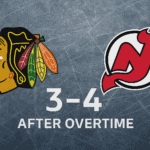
Chicago Blackhawks 3-4 New Jersey Devils (OT) - IHM Match Recap IHM

Chicago Blackhawks 3-4 New Jersey Devils (OT) – IHM Match Recap IHM

Chicago Blackhawks 3-4 New Jersey Devils (OT)

November 13, 2025 – Author: IHM News

Simon Nemec completed a statement night from the blue line with the overtime winner, lifting the New Jersey Devils to a 3-4 comeback victory over the Chicago Blackhawks.

In a game where Chicago held three separate one-goal leads, New Jersey’s puck pressure and blue-line production eventually overwhelmed the hosts. The Devils generated a heavy 20-37 advantage in shots on goal and leaned on their top skill to claw back in the third period before Nemec finished the job in overtime.

Connor Bedard opened the scoring late in the first period on a power play, but from there Chicago were forced to defend for long stretches. New Jersey’s forecheck and quick neutral-zone transitions (fast counter-attacks off turnovers) slowly tilted the ice, and the Blackhawks’ defensive structure started to crack under volume.

Game Flow

Chicago struck first at 18:35 of the opening frame. Bedard found a soft spot in the right circle on the man advantage and one-timed a feed from Teuvo Teravainen, beating the goalie high glove for a 1-0 lead.

The Devils answered late in the second period. After sustained zone time, Nemec jumped into a shooting lane at the top of the umbrella and wired a low shot through traffic to tie the game 1-1 at 19:45. That goal came after New Jersey had already piled up a big shot edge but repeatedly missed on second-chance looks.

The third period turned into trading punches. Luke Slaggert restored Chicago’s lead at 3:05, finishing a rebound at the top of the crease for 2-1. Dawson Mercer responded at 10:13 when Jack Hughes attacked the middle, kicked the puck wide and Mercer ripped a shot short side to make it 2-2.

Sam Lafferty pushed the Blackhawks in front again at 13:34, converting a net-drive play for 3-2, but New Jersey would not go away. Nemec struck for his second of the night at 16:13, walking the blue line and snapping a shot through a layered screen to level things at 3-3 and force overtime.

In the extra frame, the Devils controlled most of the 3-on-3 possession. On the winning sequence, Hughes and Jesper Bratt circled high in the zone to draw coverage, slipped the puck back to Nemec in stride and the defenseman hammered home the OT winner at 3:26 for a 3-4 New Jersey victory and a hat trick from the back end.

Numbers & IHM Performance Metrics

  • Shots on goal: Blackhawks 20, Devils 37
  • Shooting percentage: Blackhawks 15% (3/20), Devils 10.81% (4/37)
  • Blocked shots: Blackhawks 7, Devils 13
  • Goaltender saves: Blackhawks 33 on 37 shots, Devils 17 on 20 shots
  • Penalties: Blackhawks 1 minor (2 PIM), Devils 3 minors (6 PIM)
  • Special teams: Chicago struck on the power play; New Jersey generated key momentum and at least one goal with the extra skater.
  • Ice tilt: Long stretches of 5-on-5 zone time for New Jersey, especially from late first period onward.

Team Notes

For Chicago, the positive is the finishing touch from their top forwards in limited looks, but the concern is how quickly they were pushed back into a passive defensive shell. The Blackhawks protected the middle of the ice for most of two periods, only to sag deeper in the third and allow too many point shots with traffic.

New Jersey will be very happy with the response from the back end. Nemec’s three-goal night underlines how comfortable the Devils are letting their defensemen activate in a modern four-man rush (four skaters jumping into offense). Hughes quietly drove the attack with multiple primary setups, and the Devils’ forecheck kept Chicago changing in its own zone.

Coach Mark comment

Chicago played a brave game but could not handle the Devils’ pace for 60 plus minutes. When you get outshot this badly, every breakdown becomes costly. New Jersey trusted their structure, kept feeding pucks back to the blue line and eventually their quality on the back end decided the game.

Questions & Answers | IHM Performance Metrics

Q: Why did Chicago lose despite leading three times in the game?
A: The Blackhawks were heavily outshot 20-37 and spent long shifts in their own zone. As fatigue set in, they started giving up clean looks from the points and failed to clear rebounds, which New Jersey converted late in the third period and in overtime.

Q: What was the key tactical edge for the Devils?
A: Their aggressive 5-man attack with defensemen joining the rush. Nemec repeatedly found space at the top of the zone, and New Jersey’s forwards did a good job screening and recovering loose pucks to extend possessions.

Q: How did special teams influence the result?
A: Chicago’s early power-play goal gave them momentum, but the Devils’ discipline improved after the first period. New Jersey’s own power-play execution and the pressure it created helped tilt the shot count and kept the Blackhawks on the back foot.

Q: What do the IHM Performance Metrics say about goaltending in this game?
A: Chicago’s goalie faced the heavier workload, stopping 33 of 37 shots, while New Jersey’s netminder made 17 saves on 20 attempts. The quality of chances was higher against Chicago, especially with layered screens and back-door threats, so the stat line is harsher on the home goalie than the raw save percentage suggests.

Q: What is the main takeaway for both teams going forward?
A: Chicago must find a way to manage the puck better when holding a lead and avoid slipping into a passive box in their own zone. New Jersey can build confidence from a comeback win driven by their blue line and should continue to lean on this high-tempo, possession-based style.

More NHL news on IHM


Utah Mammoth 5-2 Buffalo Sabres - NHL Game Recap | IHM News

Utah Mammoth 5-2 Buffalo Sabres – NHL Game Recap | IHM News

Utah Mammoth 5-2 Buffalo Sabres | NHL Game Recap

Date: November 13, 2025 – Author: IHM News

Utah breaks through with a four-goal third period surge

The Mammoth overturned a 2-1 deficit with a dominant final frame, exploding for four unanswered goals to secure a 5-2 home victory over the Sabres. Utah’s depth scoring and their aggressive forecheck in the final 20 minutes completely shifted the momentum after Buffalo controlled long stretches of the first half. Despite Buffalo’s early structure and Rosen’s two-goal start, the Sabres could not withstand Utah’s transition pressure and rising shot volume.

Game Flow

1st Period – Buffalo sets the tone.
Isak Rosen opened the scoring just 5:33 into the game, finishing a clean net-drive sequence created by Quinn and Byram. Utah struggled with puck management early and took two penalties, allowing Buffalo to dictate possession and take a 0-1 lead into the break.

2nd Period – Both teams trade goals.
Rosen struck again at 06:42 after a defensive misread by Utah, doubling Buffalo’s advantage. The Mammoth finally responded midway through the period when Nick DeSimone jumped into the rush and buried a low wrister to cut the deficit to 1-2.

3rd Period – Utah takes over completely.
Utah delivered a statement period. JJ Peterka tied the game just 52 seconds in, sparking a complete shift in momentum. Crouse’s powerful drive off a feed from Peterka and McBain made it 2-3. Schmaltz extended the lead with a precise release at 10:09. Keller sealed the win with an empty-netter in the final seconds, capping a four-goal frame.

Numbers Box

  • Shots on goal: Utah 36, Buffalo 19
  • Power play: Utah 0/2, Buffalo 0/3
  • Blocked shots: Utah 13, Buffalo 7
  • Goaltending: Vejmelka (17 SV - 2 GA), Ellis (31 SV - 4 GA + EN)
  • Key performer: Keller (1 G, 1 A)
  • Streaks: Peterka – points in 3 straight

Coach Mark comment

Utah showed exactly how a structured team responds when trailing – pushing tempo, winning puck battles, and attacking with pace through the neutral zone. Their third-period forecheck overwhelmed Buffalo. Strong identity win for the Mammoth.

Questions & Answers | IHM Performance Metrics

Q: What was the turning point?
A: Peterka’s early third-period goal shifted full momentum to Utah.

Q: Why did Buffalo collapse late?
A: They were pinned in their zone and couldn’t exit cleanly under Utah’s aggressive pressure.

Q: Who was Utah’s most impactful player?
A: Keller – he drove offense and added the insurance marker.

Q: Which metric best highlights Utah’s edge?
A: Shot differential – 36 vs 19, with heavy tilt in the final frame.

More NHL news on IHM

Visit IHM News


Chicago Blackhawks vs New Jersey Devils - NHL Match Preview

Chicago Blackhawks vs New Jersey Devils – NHL Match Preview

Date: November 13, 2025 | Venue: United Center (Chicago, IL)

Tonight’s clash at the United Center features two teams on contrasting paths. The Chicago Blackhawks, who have found stability in their overall structure, look to build on their recent momentum. Their young core has developed confidence in transition play, and their puck support across all three zones has shown noticeable improvement in the past week.

New Jersey enters the contest looking to regain rhythm after a few inconsistent outings. Despite boasting one of the league’s most dynamic offensive rosters, the Devils have been prone to defensive lapses – particularly when under sustained forecheck pressure. Their puck management issues in the neutral zone have allowed opponents to generate clean entries and rebound opportunities.

Chicago’s success in recent games has been fueled by aggressive forechecking and quick counterattacks. The top line has been particularly effective in exploiting space between the dots, while the defensive core has tightened coverage in front of the net, limiting high-danger scoring chances against.

The Devils, on the other hand, remain dangerous on the rush. Their speed in transition and strong puck movement on the power play can shift momentum quickly. Maintaining discipline and limiting unnecessary penalties will be crucial for Chicago’s game plan tonight.

Both teams possess the offensive firepower to make this an exciting matchup, but the early minutes and control of the neutral zone could define the flow of the contest. Expect a high-tempo battle with plenty of emphasis on special teams and goaltending execution.

👉 To access Coach Mark’s full tactical breakdown and prediction for this matchup, join our Premium section today.

Seattle Kraken 1-2 Columbus Blue Jackets (SO) - Game Recap | IHM News

Seattle Kraken 1-2 Columbus Blue Jackets (SO) – Game Recap | IHM News

Seattle Kraken 1-2 Columbus Blue Jackets (SO)

Blue Jackets survive on special teams and win it in the shootout; Fantilli’s PPG forces overtime.

Nov. 12, 2025 – Author: IHM News

Columbus walked out of Seattle with two points, claiming a 2-1 victory after the shootout. The Blue Jackets erased an early deficit when Adam Fantilli struck on the power play late in the second, and then finished the job in the skills competition through Kirill Marchenko and Charlie Coyle. Seattle opened with a first-period punch but could not solve the Jackets’ structure again, despite a heavy block rate and a sterling performance in goal.

Game Flow

The Kraken landed first at 16:43 of the opening frame: Ryan Winterton drove inside space and finished a net-front touch from Ben Meyers and Jamie Oleksiak for 1-0. Seattle then leaned into a compact neutral-zone look and protected the middle.

Period two flipped on special teams. After a string of minors, Columbus leveled at 18:22 when Fantilli snapped home a left-dot feed on the man advantage, assisted by Kirill Marchenko and Sean Monahan. That sequence changed the tilt and sent the game tied into the third.

The third period was trench hockey: Seattle absorbed zone time (high block count) while Columbus funneled pucks from the points. Overtime brought controlled entries but no breakdowns, so it went to the shootout.

In the tiebreaker, Marchenko opened Columbus’ account and Coyle sealed it. Seattle’s attempts (including Jordan Eberle, Eeli Tolvanen, Kaapo Kakko) were turned away, giving the Jackets the road win.

Numbers Box

  • Shots on goal: Seattle 23, Columbus 34
  • Blocked shots: Seattle 21, Columbus 11
  • Goalkeeper saves: Seattle 33, Columbus 22
  • Save %: Seattle 97.06% (33/34), Columbus 95.65% (22/23)
  • Penalties: Seattle 4, Columbus 2
  • Power-play impact: Seattle 0 PPG, Columbus 1 PPG (Fantilli)

Team Notes

  • Seattle: Scored first but couldn’t add on; strong interior protection and high block volume kept it tight.
  • Columbus: Special-teams swing and cleaner exits in the third; confident finishes in the shootout.

Coach Mark comment

Columbus managed the middle better as the game wore on and trusted their power-play trigger. Seattle’s structure was fine, but they needed quicker weak-side activation to create second looks. In the shootout, the Jackets showed more deception and speed change.

Questions & Answers | IHM Performance Metrics

Q: What swung the game after Seattle’s first-period lead?
A: Penalties in the second created Columbus’ PPG and momentum; from there the Jackets drove more controlled entries.

Q: Why did Seattle lose despite elite goaltending numbers?
A: Low shot quality after the opener and limited interior touches; the shootout conversion gap finished it.

Q: Which micro-areas Columbus won late?
A: D-zone retrievals and first pass exits, plus better spacing on the PP half-wall sequence.

Q: Who decided the shootout?
A: Kirill Marchenko and Charlie Coyle scored for Columbus; Seattle’s attempts were denied.

More NHL news on IHM


Edmonton Oilers 5-4 Columbus Blue Jackets (OT) - Game Recap | IHM News

Edmonton Oilers 5-4 Columbus Blue Jackets (OT) – Game Recap | IHM News

Edmonton Oilers 5-4 Columbus Blue Jackets (OT)

Date: Nov. 11, 2025  |  Author: IHM News

Deck: Edmonton erased a two-goal deficit in the third; McDavid scored twice, Walman tied it shorthanded, and Roslovic finished the comeback 56 seconds into overtime.

At Rogers Place, the Oilers turned a frustrating night into a statement win, beating the Blue Jackets 5-4 in overtime. Columbus led 3-1 late in the second and 4-2 early in the third, but Connor McDavid delivered a captain’s push with two third-period goals. A clutch shorthanded strike from Jake Walman leveled the game with under a minute to play, and Jack Roslovic buried the winner on the first OT shift. Edmonton improves behind opportunistic finishing and late-game execution, while Columbus leaves with nothing after heavy shot-blocking and a disciplined structure for 50+ minutes.

Game Flow

1st period: Columbus struck first through Ivan Provorov (11:42). Edmonton answered at 17:28 via Jake Walman to make it 1-1.

2nd period: The Jackets took control. Sean Monahan finished at 1:39 and Boone Jenner extended the lead at 18:02 for 3-1.

3rd period: McDavid cut it to 3-2 just 58 seconds in, but Adam Fantilli restored the two-goal cushion at 4:19 (4-2). McDavid answered again at 13:39. With Columbus on the power play, Walman scored shorthanded at 19:02 to force OT.

Overtime: At 0:56, Roslovic finished a quick give-and-go (assist: Walman) to win it 5-4.

Special teams & turning points: Edmonton’s late penalty kill flipped momentum with Walman’s shorthanded equalizer; Columbus’ inability to close shifts after goals proved costly.

Numbers Box

  • Shots on goal: EDM 24, CBJ 19
  • Blocked shots: EDM 13, CBJ 27
  • Goalie saves: EDM 15, CBJ 19
  • Saves %: EDM 78.95% (15/19), CBJ 79.17% (19/24)
  • Penalties / PIM: EDM 5 / 13, CBJ 4 / 11
  • Notable: McDavid 2 G (both in 3rd), Walman GW assist + SHG, Roslovic OT winner

Team Notes

  • Edmonton: Leadership line drove the rally; transition entries sharpened late, with better weak-side support off the rush.
  • Columbus: Structure held for two periods (27 blocks) but breakouts faltered under pressure; special-teams leak at the worst time (SHGA).

Coach Mark Comment

Edmonton’s pace control in the third was the difference; McDavid created speed off controlled exits and middle-lane support. Columbus sat back in a 1-1-3 look and couldn’t handle Edmonton’s late width on entries.

Questions & Answers | IHM Performance Metrics

How did Edmonton flip the game?
They layered speed through the neutral zone, attacked off the pass, and won late possession chains; two elite finishes from McDavid sealed momentum.

What was the single biggest moment?
Walman’s shorthanded 4-4 with 58 seconds left-both a kill and a dagger that broke Columbus’ bench.

Why did Columbus’ defense crack late?
Exits under pressure deteriorated; fatigue plus Edmonton’s width stressed the weak-side defender and opened the slot.

Who stood out in the details?
Roslovic for the OT timing/read, Walman for situational impact (EV + SH), and McDavid for third-period pace control.

More NHL news on IHM


Carolina Hurricanes vs Washington Capitals - Match Preview - IHM

Carolina Hurricanes vs Washington Capitals – Match Preview

Date: 12.11.2025
Venue: Lenovo Center (Raleigh, NC)

The upcoming matchup in Raleigh brings together two teams, each carrying very different recent form and structural trends. Carolina continues to demonstrate one of the league’s most organized systems, relying on fast puck movement, strong retrieval habits, and high-quality offensive-zone rotations. Their play through the neutral zone has been especially sharp, allowing them to maintain territorial advantage for long stretches throughout recent games.

Washington approaches this meeting with several questions surrounding lineup stability and transition efficiency. In recent outings they have struggled with controlled exits, often being forced into dump-and-chase situations that limit their ability to sustain pressure. Defensive-zone rotations have also shown inconsistencies, particularly when opponents increase pace or attack through layered entries.

A key area to watch will be the midfield battle, where Carolina’s structured forecheck meets Washington’s attempts to generate speed through stretch outlets. Both teams have skaters capable of shifting momentum quickly, and special teams may play a significant role given the contrasting tactical approaches. Carolina tends to build pressure through cycling and inside-lane movement, while Washington continues to rely on perimeter puck control and point activation.

Goaltending matchups add another layer of intrigue. Carolina’s recent stability in net has contributed to their ability to close out tight periods, whereas Washington has faced inconsistency in rebound control and traffic management. With both teams playing on varied schedules, energy management and bench depth could influence the flow of the later stages.

In summary, this game offers an interesting clash between structural discipline and opportunistic playmaking. Both sides enter with distinct stylistic identities, and the tactical execution in the first 10-12 minutes may set the tone for the rest of the evening.


Note: our previous breakdown on the Anaheim game landed smoothly and without stress, as the team controlled the matchup from start to finish. Below is the full tactical analysis for tonight’s game, which you can review in detail here-


Tactical Breakdown

Anaheim approaches this matchup with their familiar layered 1-2-2 structure, a system built around disciplined puck support and rapid counterattacks. Their recent games show a strong emphasis on controlled exits, using their defensemen as the first activation point and attacking in waves through the neutral zone. The Ducks generate high-danger chances by rotating their wingers low and forcing opposing defenders into extended shifts.

Winnipeg enters with a more aggressive forecheck style, leaning heavily on their speed. Their 2-1-2 pressure has produced turnovers, but it also leaves gaps behind their forwards when the first wave is broken. Against Anaheim’s compact structure, these gaps could become liabilities in transition.
Advanced Metrics (Last 5 Games)

Anaheim Ducks: 5-0-0 record, allowing only 2.0 goals per game. Their expected goals against (xGA) is trending downward, sitting at 2.4 per 60. Offensive zone possession time increased by 11% over their previous 10-game average.
Winnipeg Jets: xG production remains respectable at 3.1 per 60, but their defensive numbers slipped, conceding 4+ goals in three of the last five. Their high-danger attempts allowed (HDCA) jumped noticeably due to inconsistent backchecking and fatigue on long shifts.

Line-Up & Usage Notes

Anaheim Injuries: Granlund (lower body), Gudas (lower body).
Winnipeg Injuries: Barron (injury), Perfetti (ankle), Samberg (wrist).
Anaheim’s first line continues to drive play with strong zone entries and effective east-west puck movement. Strome’s availability (questionable) will influence power-play structure. Ducks’ defensive core rotates efficiently, minimizing breakdowns.
Winnipeg relies on transition bursts but lacks depth support due to injuries. If their third line continues to struggle on defensive coverages, Anaheim’s forecheck may create sustained pressure.

Coach’s Verdict

This matchup brings together two teams on very different trajectories. Anaheim enters this game in strong form,
showing stability across all three zones and delivering consistent execution in transition play. Their recent stretch
of performances highlights excellent forecheck pressure and improved puck support, which reduces turnovers in the
neutral zone.

Winnipeg, despite sitting high in the standings earlier in the season, has recently shown vulnerability.
Their defensive structure has loosened, especially in the slot area, where they are allowing too many clean looks
on goal. Injuries to key depth players also affect their rotation and special teams efficiency.

Anaheim’s momentum, stronger current form (five consecutive wins), and home-ice advantage at Honda Center
make them the more reliable side here. Their offensive depth is balanced, and the team is creating a high number
of high-danger scoring chances.

Premium Pick - Anaheim Ducks - Win (Including Overtime)

Note: Our previous analysis on Philadelphia was extremely close, but the game slipped away in overtime - read yesterday’s recap for details.


Vancouver Falls 4-5 to Colorado in Overtime | NHL Recap | IHM News

Vancouver Falls 4-5 to Colorado in Overtime | NHL Recap | IHM News

Vancouver Canucks 4-5 Colorado Avalanche (OT)

Date: November 10, 2025
Author: IHM News

Vancouver Falls 4-5 to Colorado in Overtime | NHL Recap

Vancouver Falls 4-5 to Colorado in Overtime | NHL Recap | IHM News

The Colorado Avalanche escaped Rogers Arena with a 5-4 overtime win after a chaotic, momentum-swinging game that featured elite finishing, defensive breakdowns, and special-teams volatility. Vancouver erased a two-goal deficit twice, forcing overtime with a late power-play goal, but Colorado’s skill core delivered when it mattered most.

Nathan MacKinnon powered the Avalanche with a dominant performance, scoring twice in the first period – including a power-play blast – and adding multiple primary contributions across all zones. Vancouver responded with structured pressure and opportunistic scoring, solving Colorado’s defensive coverage in the second and third periods.

Game Flow

MacKinnon opened the scoring at 6:41 of the first period on a setup from Nichushkin and Makar, beating Lankinen cleanly from distance. He struck again at 8:10 on the power play, firing home a rebound after strong puck circulation from Olofsson and Nichushkin.

Vancouver cut the deficit to 2-1 at 11:47 when Leo Karlsson converted a rebound created by Hronek and Kane. Early in the second period, Kiefer Sherwood tied the game 2-2 at 1:44 by capitalizing on a loose puck around the crease.

Colorado regained the lead 3-2 at 0:28 of the third when Artturi Lehkonen cleaned up a rebound created through net-drive pressure from Burns and MacKinnon. Vancouver answered shorthanded at 7:26 when O’Connor jumped on a turnover and beat Blackwood to tie it 3-3.

Lehkonen struck again at 9:47 on the power play, finishing a crisp passing sequence from Necas and MacKinnon. But Vancouver refused to go away – Jake DeBrusk hammered home a power-play equalizer at 16:59, with Boeser and Hughes setting up a perfect shooting lane.

In overtime, Colorado sealed the win quickly. Gavin Brindley scored just 1:08 into the extra frame off a feed from Makar and MacKinnon, giving the Avalanche a hard-earned 5-4 victory on the road.

Numbers Box

  • Shots on Goal: VAN 33, COL 33
  • Shots off Target: VAN 22, COL 13
  • Blocked Shots: VAN 13, COL 18
  • Goalie Saves: Lankinen 28/33 (84.8%), Blackwood 29/33 (87.9%)
  • Penalties: VAN 3, COL 5
  • PIM: VAN 6, COL 10
  • Power Play: VAN 1/5, COL 2/3 (based on shown scoring events: MacKinnon PPG, Lehkonen PPG x2, DeBrusk PPG)
  • Notable: MacKinnon 2G, Lehkonen 2G (including PPG), DeBrusk SHG + PPG, Brindley OT winner

Coach Mark Comment

MacKinnon drove the entire game with pace and control. Colorado’s power-play puck movement was sharp, and Lehkonen’s timing around the crease created consistent problems. Vancouver showed real fight, but their defensive detail in overtime cost them.

Questions & Answers | IHM Performance Metrics

Why did Colorado control the key moments?

Their top line generated the highest-danger touches, and their puck retrievals on the power play kept pressure sustained. MacKinnon dictated tempo every shift.

How did Vancouver stay in the game despite defensive issues?

Their transition counters were efficient, and they capitalized on Colorado turnovers. The shorthanded goal was a major momentum swing.

What made Lehkonen so impactful?

His crease positioning and timing off MacKinnon’s entries created repeat scoring chances. He won most of the inside-lane battles.

What ultimately decided the OT?

Colorado won the opening faceoff, gained clean entry, and used a quick rotation to isolate space for Brindley. Vancouver never touched the puck.

More NHL news and updates on IHM.


Anaheim Ducks vs Winnipeg Jets - Match Preview

Anaheim Ducks vs Winnipeg Jets – Match Preview

Date: 10 November 2025 • Venue: Honda Center (Anaheim, CA)

Unfortunately, our previous analysis on the Flyers didn’t land. We were extremely close, but Philadelphia couldn’t finish it off in overtime. We move forward with today’s matchup, which promises a high-tempo and physical style from both sides.

Anaheim enters this game as one of the hottest teams in the league, riding an impressive winning streak and showing excellent structure in all phases of play. Their puck movement has been sharp, and their forecheck continues to be a major weapon against teams that struggle with controlled exits.

Winnipeg, meanwhile, has had a mixed run of form. After a strong early season, they’ve hit a rough stretch with defensive issues and several key injuries affecting their lineup depth. Their recent games show inconsistency in zone coverage and difficulties containing aggressive cycling teams.

The Honda Center atmosphere will add extra energy to Anaheim’s already confident group. Both teams possess dangerous offensive talent, but the contrasting forms and tactical tendencies set the stage for a fascinating contest. For the full premium analysis by Coach Mark Lehtonen, including the official pick, click below.

➡️ Read Full Premium Analysis


Flyers’ Fan Base Divided: Should Philadelphia Trade Matvei Michkov?

Flyers’ Fan Base Divided: Should Philadelphia Trade Matvei Michkov?

Date: November 9, 2025
Author: IHM Newsroom

Flyers’ Fan Base Divided: Should Philadelphia Consider Trading Matvei Michkov?

Flyers’ Fan Base Divided: Should Philadelphia Trade Matvei Michkov?

The conversation surrounding Matvei Michkov in Philadelphia has intensified to the point where the fan base now stands firmly split. On one side are supporters who fully endorse head coach Rick Tocchet’s uncompromising approach. On the other are fans who believe the team is mismanaging one of its brightest young talents. With the Flyers off to a competitive start yet still trying to shape a long-term identity, the question has resurfaced: would moving Michkov actually bring stability rather than chaos?

The Case from the “System First” Supporters

Among the group backing Tocchet, the belief is simple: the success of the overall structure outweighs any individual’s flair. With Philadelphia opening the season at 8-5-1 and playing one of its most disciplined brands of hockey in years, many of these fans argue the team finally has a foundation worth protecting. From this perspective, Michkov’s inconsistent minutes and occasional visits to the coach’s doghouse are more about expectations than punishment.

To them, trading Michkov wouldn’t be a desired outcome, but not a disaster either. The winger is talented, but if he struggles to fit into Tocchet’s identity-driven system, his value might be better translated into assets that strengthen the roster elsewhere. With a promising prospect pool already in place, headlined by 2025 sixth-overall pick Porter Martone, the idea of adding another haul through a Michkov trade feels like a practical route to securing a long-awaited playoff return.

For these fans, accountability is the driving principle. They view the potential move not as giving up on a high-skill forward, but as prioritizing a system that finally appears to be yielding results.

The View from the “Free Michkov” Faction

Then there is the other half of the fan base: those convinced that Michkov deserves a far bigger role than he’s been given. They point to the end of last season, when he thrived under interim coach Brad Shaw, producing at nearly a point-per-game pace in top-line usage. At 20 years old, they see him as a franchise centerpiece – not a passenger or rotational winger.

These fans also highlight inconsistencies that raise eyebrows. Travis Konecny continues to receive heavy minutes despite struggling through long stretches, while Michkov finds himself benched after strong performances. To them, it contradicts the supposed standards Tocchet preaches. They argue that Michkov’s creativity and offensive instincts are exactly the elements Philadelphia needs to elevate its ceiling.

Combined with concerns over Tocchet’s historical relationship with skilled Russian players, this side increasingly believes that the partnership may never work. And in their minds, trading Michkov wouldn’t be a relief – it would be a painful but necessary outcome that allows the young winger to flourish where he’s embraced, not contained.

The Larger Issue: A Fan Base in Two Realities

What makes this debate so charged is that both sides have compelling logic. Philadelphia is winning. But the path they’re taking to do so comes with unmistakable tension. Tocchet’s style is low-event and grinding, anchored more in structure than creativity. That approach can frustrate fans eager for excitement, especially during a multiyear Stanley Cup drought that has worn down patience across generations.

Meanwhile, the Flyers have leaned heavily on strong goaltending from Dan Vladař to mask their offensive limitations. If those performances regress, the calls for Michkov’s expanded role – or a trade that sends him somewhere he can thrive – will only grow louder.

Is a Trade Likely?

Despite the rising noise, there is no indication from the organization that Michkov wants out or that Philadelphia intends to move him. His skill level is undeniable, and the relationship does not appear damaged beyond repair.

Still, the scenario is intriguing because it represents something deeper than a simple trade rumor. It reflects a franchise at a crossroads, working to balance discipline and creativity, present success and long-term promise, and the expectations of a deeply passionate fan base.

Even if no trade ever materializes, the debate around Michkov has exposed a rare and fragile divide - and how the Flyers navigate it will help define the next stage of their identity.


Coach Mark’s Take

Coach Mark: Philadelphia is walking a tightrope. Tocchet’s structure is producing short-term success, but long-term growth requires unlocking young offensive talent. The next moves will reveal which path the organization values most.


IHM Performance Metrics Q&A

What is the core issue behind the Michkov debate?
The conflict centers on usage, development, and how Michkov fits – or doesn’t fit – within Tocchet’s defensive-first system.

Why do some fans support trading Michkov?
They value Tocchet’s structure and believe the Flyers could acquire major assets that better suit the coach’s style.

Why do others oppose a trade?
They believe Michkov is a future star being underused and that his skill set could dramatically raise the Flyers’ offensive ceiling.

Is a trade likely?
No current signs point to an impending move. Both sides appear committed to finding a solution internally.

What would Philadelphia gain from keeping him?
Elite scoring upside, long-term marketability, and a dynamic young core piece.

What risks come with keeping him?
If usage and development remain inconsistent, the tension between player, coach, and fan base may continue to escalate.


San Jose Extends Hot Streak as Celebrini Scores Again in 3rd Straight Win

San Jose Extends Hot Streak as Celebrini Scores Again in 3rd Straight Win

Date: November 9, 2025
Author: IHM Newsroom

Sharks Push Past Panthers 3-1 Behind Celebrini and a 38-Save Night From Askarov

San Jose Extends Hot Streak as Celebrini Scores Again in 3rd Straight Win

The San Jose Sharks keep stacking victories at SAP Center. Behind another goal from Macklin Celebrini and a brilliant 38-save performance from Yaroslav Askarov, San Jose defeated the Florida Panthers 3-1 on Saturday, earning their third straight home win and improving to 5-0-1 in their last six games.

Adam Gaudette and Alexander Wennberg also scored for the Sharks (7-6-3), while rookie forward Will Smith continued his impressive run with two assists. Smith is now riding a four-game point streak (2G, 4A), and Celebrini has matched him with points in three straight (3G, 3A).

Head coach Ryan Warsofsky praised the group for grinding out a win in a tight, physical matchup. “It’s the NHL – nothing is easy,” he said. “We worked, we battled, and we earned it. Not every game is going to be a masterpiece, but this one matters.”


Marchand Scores Again, But Panthers Continue Inconsistent Trend

For Florida (7-7-1), Brad Marchand provided the lone goal, continuing his red-hot finishing with five goals in his last four games and extending his overall point streak to seven straight outings (7G, 3A). Daniil Tarasov stopped 20 shots for the Panthers.

Despite generating strong offensive pressure and outshooting San Jose heavily in the final forty minutes, the Panthers once again slipped into their frustrating win-one, lose-one pattern. Head coach Paul Maurice didn’t hide his disappointment: “We created enough to win. We just didn’t finish. That part is frustrating.”


How the Game Was Won

✅ Celebrini Opens the Scoring (1-0, 17:25 1st)

San Jose struck late in the opening period when Smith fed Celebrini alone between the dots for his tenth goal of the season. The rookie duo continues to drive the Sharks’ top-six with confidence and chemistry.

✅ Gaudette Deflects Home Orlov’s Shot (2-0, 3:06 2nd)

Early in the second, veteran forward Adam Gaudette redirected a low, hard point shot from Dmitry Orlov to double the lead.

✅ Marchand Responds Immediately (2-1, 3:34 2nd)

Just 28 seconds later, Marchand pounced on his own rebound – a shot that knocked Askarov’s helmet loose – and cut the deficit in half.

✅ Wennberg Seals It (3-1, EN, 19:09 3rd)

With Florida pushing for the equalizer, Alexander Wennberg hit the empty net to lock down San Jose’s fifth win in six games.


Askarov’s Statement Performance

After giving up Florida’s lone goal, Yaroslav Askarov was nearly perfect. He stopped 32 of 33 shots in the final two periods and has now allowed two or fewer goals in each of his last three starts.

“That atmosphere was unreal,” Askarov said. “After the first goal the noise was crazy. Our guys fed off it. You can feel how much the group believes right now.”


IHM Verdict

San Jose Sharks:
A confident, structured team playing fast and connected hockey. Their young core is producing, their depth is active, and Askarov is heating up at the right time.

Florida Panthers:
Marchand is carrying the offense, but the inconsistency is becoming a pattern. Finishing chances is their biggest issue – not chance creation.


Questions & Answers | IHM Performance Metrics

Why are the Sharks suddenly winning consistently?

Their young core is driving the offense, their transition game is sharp, and Askarov has stabilized the back end. The balance between skill and structure makes them difficult to break down.

What explains Macklin Celebrini’s scoring surge?

He’s attacking space with confidence, getting top-six minutes, and building strong chemistry with Will Smith. His timing in the slot has noticeably improved.

Why did Florida fail to convert despite heavy pressure?

They generated volume, but failed to break San Jose’s layered defensive setup. Most of their shots came from the outside or under pressure.

Is Askarov becoming San Jose’s No. 1 goaltender?

His recent form – three straight starts with two or fewer goals allowed – is making a strong case. He’s calm, athletic, and reading plays faster than earlier in the season.