IHM Knowledge Center
What Is a Neutral-Zone Trap in Hockey?
How do teams slow down fast opponents before they even enter the offensive zone, and why is the neutral zone trap so difficult to break?
Editor: Coach Mark • Updated: April 19, 2026
Short Answer
A neutral-zone trap is a defensive system where players are positioned in the neutral zone to block passing lanes, limit speed, and force turnovers before the opponent can enter the offensive zone.
Full Explanation
The neutral zone trap is designed to control the middle of the ice and prevent clean zone entries. Instead of pressuring deep, teams set up a structured formation that slows the game down.
The system focuses on:
- Clogging passing lanes
- Forcing dump-ins instead of controlled entries
- Reducing speed through the neutral zone
- Creating turnovers for counterattacks
It is a control-based system, not a pressure-based one.
The 1-2-2 Trap Structure
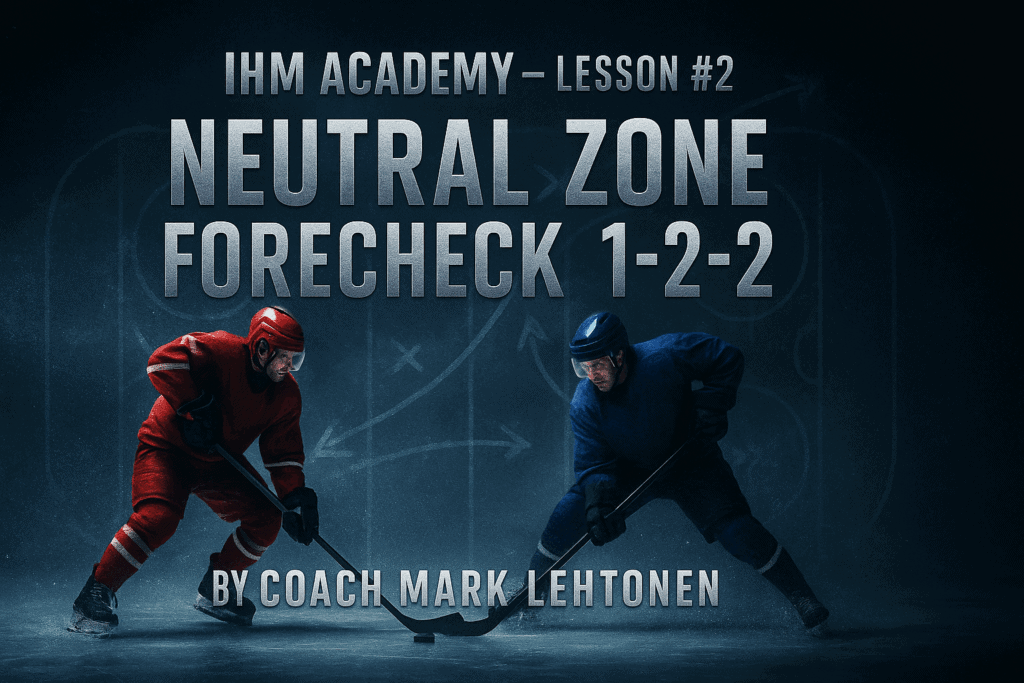
The most common neutral-zone trap is the 1-2-2 formation:
- 1 forward applies light pressure on the puck carrier
- 2 players form a line across the neutral zone to block passing lanes
- 2 defensemen stay deeper to protect against breakouts
This structure creates a layered defense that is difficult to penetrate.
How the Trap Disrupts Offense
The trap forces the attacking team into uncomfortable decisions:
- Carrying the puck becomes risky
- Passing lanes are limited
- Speed is reduced
As a result, teams are often forced to dump the puck into the offensive zone, giving up possession.
Trap vs Aggressive Forecheck
The neutral-zone trap is often compared to aggressive forechecking systems.
Trap: Focuses on control, positioning, and forcing mistakes.
Aggressive forecheck: Focuses on pressure and puck retrieval deep in the offensive zone.
Each system reflects a different coaching philosophy.
Why These Decisions Are Controversial
The neutral-zone trap is one of the most controversial systems in hockey.
Criticism includes:
- Slowing down the game
- Reducing offensive creativity
- Making games less entertaining
However, it is highly effective, especially against faster or more skilled opponents.
Edge Case: Breaking the Trap with Speed
A key edge case occurs when teams attempt to break the trap using speed.
This requires:
- Quick puck movement
- Support from multiple players
- Timing and spacing
If executed correctly, teams can bypass the trap and create odd-man rushes.
If executed poorly, they turn the puck over immediately.
IHM Signal System: Reading the Trap
To recognize a neutral-zone trap, focus on these signals:
- Layer signal: Are players positioned in lines across the ice?
- Pressure signal: Is pressure light or aggressive?
- Lane signal: Are passing lanes closed?
Trigger-level rule:
If the attacking team is forced into dump-ins repeatedly, the trap is working effectively.
IHM Insight: Why the Trap Still Works
Despite rule changes and faster gameplay, the trap remains effective because it targets fundamental weaknesses in puck control and spacing.
It forces teams to make decisions under pressure without giving them space to execute clean plays.
Even elite offensive teams struggle against well-executed trap systems.
Mini Q&A
What is a neutral-zone trap?
It is a defensive system used to control the neutral zone.
What is the most common trap formation?
The 1-2-2 formation.
Why is it effective?
It limits speed and blocks passing lanes.
How do teams beat the trap?
With speed, quick passing, and support.
Why is it controversial?
Because it slows the game down.
Why This Rule Exists
The neutral-zone trap exists as a tactical option that allows teams to control tempo and neutralize stronger opponents through structure and discipline.
Key Takeaways
- The trap controls the neutral zone and limits speed
- 1-2-2 is the most common structure
- It forces dump-ins and turnovers
- It prioritizes control over pressure
- Execution determines effectiveness