Tag: tactical breakdown

Boston Bruins vs Carolina Hurricanes - Match Preview 18.11.2025 - NHL

Boston Bruins vs Carolina Hurricanes – Match Preview 18.11.2025 – NHL

Boston Bruins vs Carolina Hurricanes – Match Preview

Date: 18 November 2025
League: NHL

Boston enters this matchup after maintaining a stable rhythm over the past couple of weeks. Their structure remains one of the most reliable in the Eastern Conference, driven by disciplined defensive layers and strong puck support through the neutral zone. Even when the game settles into heavier low-cycle phases, Boston’s ability to close space and limit slot penetration continues to be one of their defining strengths this season.

Carolina arrives with a contrasting dynamic. Their transition game remains among the fastest in the league, generating rush momentum and forcing opponents into uncomfortable defensive recoveries. However, the Hurricanes have also shown stretches of inconsistency tied to turnovers and extended defensive-zone shifts. When Carolina’s forecheck clicks, they dictate pace; when it doesn’t, their structure can be exposed.

Both teams come into this matchup with key injuries affecting depth rotations, which may influence how coaches manage situational minutes. Special-teams performance could also play an important role, as both clubs rely heavily on momentum swings generated through power-play entries and penalty-kill pressure.

This matchup adds intrigue following our recent results. Yesterday’s Florida vs Tampa Bay game resulted in a push (void), while today’s verdict from Mark on Chicago delivered successfully. The Bruins-Hurricanes game becomes the next high-profile contest in a strong November stretch.

To access Coach Mark’s full tactical breakdown, visit our Premium section.


Premium NHL Analysis - 31 Oct 2025 Ottawa Senators vs Calgary Flames

Ottawa Senators vs Calgary Flames – Match Preview

Ottawa hosts Calgary tonight at Canadian Tire Centre in a matchup of contrasting momentum and structure. The Senators have found rhythm with disciplined puck support, aggressive forechecking pressure, and confident puck movement through the middle lane.

Calgary continues to seek consistency after a challenging stretch, with defensive gaps and breakout instability creating problems under sustained pressure. Depth scoring remains a question, and system execution has fluctuated in recent outings.

Ottawa’s ability to generate layered offense and force turnovers in transition gives them a stability edge on home ice. Expect a high-tempo matchup with a strong focus on tactical execution.

Yesterday’s tactical breakdown on Boston was executed cleanly – another strong read from Coach Mark’s system.

Full breakdown & Coach Mark’s private verdict available in Premium.

Unlock Premium Access

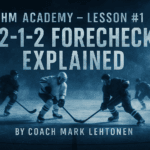
2-1-2 forecheck hockey system diagram - IHM Academy by Coach Mark Lehtonen.

IHM Academy – Lesson #1 By Coach Mark Lehtonen · IHM Academy

2-1-2 Forecheck Explained

The 2-1-2 forecheck is one of hockey’s most balanced and aggressive pressure systems. It’s designed to close time and space in the offensive zone, disrupt the opponent’s breakout, and immediately convert puck recovery into scoring opportunities.

Tactical diagram of the 2-1-2 forecheck system in ice hockey, showing F1 and F2 pressure, F3 coverage, and D1/D2 rotations - IHM Academy Coaching Edition by Coach Mark Lehtonen.

Structure of the System

The formation is simple on paper: two forwards deep (F1 and F2), one high forward (F3), and two defensemen (D1 and D2) holding the blue line. But the key lies in timing, rotation, and reading the play.

F1 drives in first to pressure the puck carrier immediately after a dump-in or turnover. His job is to force a rushed decision – ideally pushing the puck toward the boards or into a contested corner. F2 reads F1’s angle and closes the nearest passing lane, supporting from the opposite side. These two create the “2” in the 2-1-2 – a synchronized wave of forecheckers working below the goal line.

F3 remains high in the slot area, between the tops of the circles. This player is the safety valve – responsible for cutting off middle-lane exits, reacting to turnovers, and covering if a defenseman pinches. If F3 drifts too low, the team loses control of the neutral zone – a classic coaching mistake even at pro level.

Defensive Support and Rotation

Behind the forwards, both defensemen stay tight at the blue line, sealing the walls. When the puck is moved up one side, D1 has the green light to pinch aggressively and force a turnover along the boards. The moment that happens, F3 must rotate back to occupy D1’s vacated position – maintaining the “2-1-2” structure. This automatic rotation is what keeps the system stable even during chaos.

D2 shades toward the middle, ready to recover loose pucks or defend quick counters. The unit as a whole constantly shifts in small, controlled motions – think of it as a living net closing around the puck carrier.

Key Coaching Concepts

  • Layered Pressure: Each forechecker attacks on a different layer, preventing clean possession or stretch passes.
  • Controlled Aggression: Pinching is encouraged – but only when support is confirmed behind.
  • Communication: Talk dictates success. Without clear calls between F2, F3, and the pinching D, the system breaks instantly.
  • Transition Readiness: When a turnover occurs, F3 and D2 immediately activate – turning defense into offense within seconds.

Coach Mark Lehtonen says:

“A perfect 2-1-2 feels like a wave – first you force, then you trap, then you attack again. The best teams don’t just chase the puck – they close the ice, one decision at a time. Discipline from F3 is what separates an organized forecheck from chaos.”

Summary

The 2-1-2 forecheck remains a cornerstone of modern hockey because it combines relentless pressure with tactical security. It can be used after controlled dumps, on offensive face-offs, or even immediately after neutral-zone turnovers. When executed with proper spacing, timing, and communication, it traps opponents, exhausts their breakout patterns, and creates sustained offensive-zone dominance.

Explore more lessons in IHM Academy – including detailed breakdowns of power-play structures, neutral-zone traps, and transition systems used by professional coaches worldwide.