Tag: Milano Cortina 2026

NHL SHORT ICE Olympic Edition - Top 24 hrs Hockey Stories in Minutes | February 13, 2026 | IHM News

NHL SHORT ICE Olympic Edition - Top 24 hrs Hockey Stories in Minutes | February 13, 2026 | IHM News

IHM NHL SHORT ICE

🏒 NHL SHORT ICE - Olympic Edition | Top 24 hrs Hockey Stories in Minutes

February 13, 2026 | IHM News

Short hockey news for busy professionals who want to stay informed without reading long articles.

🔥 Top Results and Momentum

Nelson scores twice as United States pulls away from Latvia in opener
Team USA turned a competitive start into a controlled finish, with Brock Nelson scoring twice to power a statement win. The Americans tightened their five-man spacing, reduced Latvia’s clean entries, and stretched the game with depth execution once the forecheck began sealing the walls.

Germany handles Denmark behind Stutzle, Draisaitl, and Grubauer
Tim Stutzle scored twice as Germany opened with a composed, structured win. Leon Draisaitl added a goal and an assist, and Philipp Grubauer provided stability with 37 saves. Germany’s neutral-zone management and quick support on exits prevented Denmark from building sustained pressure.

McDavid sets Olympic tone as Canada finds rhythm with speed and layers
Connor McDavid drove early tempo in his long-awaited Olympic debut, impacting the game through pace and playmaking, finishing with three assists. Canada’s attack leaned on fast lane changes and weak-side options that forced defensive collapses and opened clean looks through the slot.

📰 Top Headlines

Hughes brothers and USA skill group control distribution lanes
Playmaking volume mattered as much as finishing. The Hughes brothers, Matthew Tkachuk, and Jack Eichel each collected two assists, repeatedly creating inside access through quick touch support and controlled secondary options.

Sweden’s lineup choices draw attention, veterans back the staff
Sweden’s selections became part of the conversation, but the messaging stayed consistent: team structure first. Filip Forsberg and Oliver Ekman-Larsson supported the coaching decisions publicly, reinforcing clarity and buy-in.

Keller embraces the Olympic stage despite early setback
Even in defeat, the Olympic environment delivered a clear reminder: the tournament punishes transition mistakes. Teams that protect line changes and manage puck routes are surviving the early rounds with fewer stress shifts.

🔁 Status Report and Tactical Notes

What is separating teams early
The first games have rewarded clean exits, layered neutral-zone tracking, and disciplined line changes. Star power helps, but structure under pressure is deciding momentum swings and limiting the underdog’s counterpunch chances.

IHM Tactical Take
Early Olympic hockey is being won by five-man units, not highlight plays. When teams compress the middle, deny controlled entries, and keep support close on retrievals, they tilt the ice without taking unnecessary risk. The nations that manage pace and spacing will control the group stage.


❓ IHM Q&A - NHL Short Ice (Olympic Edition) | 13 February 2026

Why did USA’s win over Latvia feel decisive late
Because Team USA tightened spacing and reduced Latvia’s clean entries. Once the Americans started sealing the walls and stacking the middle, the game became a controlled possession and depth battle.

What was the biggest driver for Germany vs Denmark
Structure plus goaltending. Germany managed the neutral zone well, and Grubauer held firm under volume, which allowed Germany to stay patient and strike on cleaner looks.

What did McDavid’s Olympic debut show in practical terms
Tempo control. He did not just create points, he forced defenders to react earlier, which opens weak-side options and makes secondary attacks more dangerous.

Why are lineup decisions becoming a storyline for Sweden
Because Olympic games compress time and margin for error. When a staff chooses a specific look, the team’s buy-in and messaging matter. Veteran support keeps the room aligned.

What is the most repeatable edge in the early Olympic round
Clean exits and disciplined line changes. Teams that avoid transition giveaways and protect the middle are limiting chaos and winning the momentum minutes.

Does early momentum matter in a short tournament
Yes. Early confidence often shapes game management, and game management is a major separator when pressure rises and opponents are unfamiliar.

What should fans watch beyond goals and assists
Neutral-zone posture and retrieval support. When defenders get quick help and forwards track back with purpose, the game becomes predictable and harder to steal.
Milano Cortina 2026 Men’s Hockey Opens: Best-on-Best Returns, Full Schedule, What to Watch | IHM News

Milano Cortina 2026 Men’s Hockey Opens: Best-on-Best Returns, Full Schedule, What to Watch | IHM News

Milano Cortina 2026 Men’s Hockey Opens: Best-on-Best Returns, Full Schedule, What to Watch | IHM News


By IceHockeyMan Newsroom | Date: February 7, 2026


The Milano Cortina 2026 men’s tournament is finally here, and it opens with Slovakia facing Finland at the Milano Santagiulia Ice Hockey Arena. The gold medal game is set for February 22, closing a two-week sprint where momentum can flip fast and reputations do not protect anyone.

For the players, this is not “just another international event.” It is the Olympics. Many have waited their entire careers for this window, especially after multiple cycles where participation did not align with the pro calendar. The emotion is real, and it matters, because short tournaments are won by teams that handle pressure, travel, and nerves as well as they handle the puck.

Elite pro participation has shaped five Olympic cycles in the modern era, and when the world’s top talent shows up, the men’s tournament becomes a headline event across the entire Games. But the path back to this moment has been complicated, driven by the realities of pausing a season, long-haul logistics, and the lessons learned from recent global disruption that reshaped calendars across sports.

The blueprint going forward is clear: a regular best-on-best rhythm, alternating global tournaments on a predictable cycle. Last season’s four-nation best-on-best event proved there is still massive appetite for national-team hockey played at full speed, with real stakes, real structure, and real edge. Milano Cortina is the next step, and the attention it draws will not end when the final horn sounds.

There is also an Olympic culture element players genuinely care about: living the athlete experience, sharing the village routine, and representing their country in the same environment as the world’s best winter athletes. The atmosphere is part of the story, and it often becomes part of performance, especially for first-time Olympians learning how to manage everything off the ice.

One key competitive note remains unavoidable: Russia is not part of the field, which changes bracket dynamics and compresses medal probability into a tighter cluster of contenders. At the same time, countries with fewer star players lean harder on the ones they do have, and that can elevate the pressure on individuals in ways the pro season rarely does.

For the sport itself, this tournament is a global showcase. New fans who discover hockey through the Olympics often stay for the pro stretch run afterward. That is why Milano Cortina matters beyond medals: it is a bridge between international peak moments and the club competition that dominates the calendar.


How the tournament works

Each team plays three group games, and then the entire field moves into single-elimination. That format raises volatility: one bad special-teams sequence, one soft change that turns into an odd-man rush, or one goaltending swing can end a medal run immediately. For tournament format basics, see our Knowledge Center hub: Rules of Ice Hockey.


Olympic ice hockey began 106 years ago

Olympic ice hockey debuted in 1920 in Antwerp, with Canada’s Winnipeg Falcons capturing the first gold medal in a tournament that also doubled as the sport’s first official world championship. The sport later shifted into the Winter Games in 1924, and the modern era evolved into the high-speed, high-skill version we recognise today.

Early Olympic hockey looked nothing like the modern game. Formats, rules, and even the number of players on the ice were different. Over time, international hockey became fiercely competitive, and the arrival of elite pro participation turned Olympic hockey into a true best-on-best stage where structure and execution decide everything.

Canada’s historical arc is a story of dominance, shocks, and resurgence, with long gaps between gold medals across certain decades. The modern best-on-best era, when elite rosters are present, has consistently produced the highest level of Olympic hockey.


Men’s tournament schedule

All times shown are local to the host schedule used for IHM publishing.

Wednesday, Feb. 11

  • Group B: Slovakia vs Finland, 16:40, Santagiulia Arena
  • Group B: Sweden vs Italy, 21:10, Santagiulia Arena

Thursday, Feb. 12

  • Group A: Switzerland vs France, 12:10, Santagiulia Arena
  • Group A: Czechia vs Canada, 16:40, Santagiulia Arena
  • Group C: Latvia vs United States, 21:10, Santagiulia Arena
  • Group C: Germany vs Denmark, 21:10, Rho Arena

Friday, Feb. 13

  • Group B: Finland vs Sweden, 12:10, Santagiulia Arena
  • Group B: Italy vs Slovakia, 12:10, Rho Arena
  • Group A: France vs Czechia, 16:40, Santagiulia Arena
  • Group A: Canada vs Switzerland, 21:10, Santagiulia Arena

Saturday, Feb. 14

  • Group B: Sweden vs Slovakia, 12:10, Santagiulia Arena
  • Group B: Finland vs Italy, 16:40, Santagiulia Arena
  • Group C: Germany vs Latvia, 12:10, Rho Arena
  • Group C: United States vs Denmark, 21:10, Santagiulia Arena

Sunday, Feb. 15

  • Group A: Switzerland vs Czechia, 12:10, Santagiulia Arena
  • Group A: Canada vs France, 16:40, Santagiulia Arena
  • Group C: Denmark vs Latvia, 19:10, Santagiulia Arena
  • Group C: United States vs Germany, 21:10, Santagiulia Arena

Tuesday, Feb. 17

  • Qualification playoff: 12:10, Santagiulia Arena
  • Qualification playoff: 12:10, Rho Arena
  • Qualification playoff: 16:40, Santagiulia Arena
  • Qualification playoff: 21:10, Santagiulia Arena

Wednesday, Feb. 18

  • Quarterfinal: 12:10, Santagiulia Arena
  • Quarterfinal: 16:40, Santagiulia Arena
  • Quarterfinal: 18:10, Rho Arena
  • Quarterfinal: 21:10, Santagiulia Arena

Friday, Feb. 20

  • Semifinal: 16:40, Santagiulia Arena
  • Semifinal: 21:10, Santagiulia Arena

Saturday, Feb. 21

  • Bronze medal game: 20:40, Santagiulia Arena

Sunday, Feb. 22

  • Gold medal game: 14:10, Santagiulia Arena

Coach Mark Comment

This is the kind of tournament where coaching details become a weapon. Three group games are not enough time to build rhythm if your identity is unclear. Teams that arrive with a defined forecheck plan, clean zone exits, and disciplined change management will look sharper immediately, and that early sharpness often carries into elimination.

Single-elimination hockey compresses margins. The best rosters do not win by talent alone, they win by reducing “free chances” that come from avoidable penalties, failed clears, and broken coverage on the second layer. In international play, one soft turnover at the offensive blue line can turn into a two-on-one in seconds because everyone can skate.

Goaltending is the tournament hinge. In a seven-game playoff series you can survive one rough night. Here, you cannot. A goalie who tracks pucks through traffic, controls rebounds, and settles the bench after a chaotic sequence can quietly win a medal before the public notices.

Special teams are not just about the power play. The penalty kill defines momentum in short tournaments. A kill that holds structure, denies the seam, and clears with purpose does more than prevent goals, it breaks the opponent’s belief that “the next one is coming.”

Finally, chemistry will matter in unexpected ways. Players used to being first-line drivers must accept role shifts quickly. The teams that buy into role clarity, line balance, and five-man responsibility will survive the chaos that eliminates more talented groups every Olympic cycle.


Q&A: Milano Cortina 2026 Men’s Hockey

Q: Why do short tournaments feel more unpredictable than playoffs?
A: There is no time to recover from a single bad game. One mistake can end a medal run immediately.

Q: What decides medal outcomes most often?
A: Goaltending stability, special teams execution, and disciplined five-man structure.

Q: Do group games matter if everyone advances?
A: Yes. Seeding affects matchups, and early confidence can shape elimination performance.

Q: What is the biggest tactical adjustment players face?
A: Role clarity. Stars must adapt to international lines, matchups, and ice-time distribution quickly.

Q: What should casual fans watch for?
A: Pace through the neutral zone, defense activation, and how teams manage shifts after turnovers.


Milano Cortina 2026 Hockey Expert Outlook by Coach Mark: Editorial Outlook Leans Toward Canada, Sees USA as Gold Contender | IHM News

Milano Cortina 2026 Hockey Expert Outlook by Coach Mark: Staff Favors Canada, Backs USA Gold | IHM News

Date: February 5, 2026
By IceHockeyMan Newsroom | Updated: February 5, 2026


The Milano Cortina 2026 Olympic men’s hockey tournament marks the return of NHL-level rosters to the Olympic stage for the first time in more than a decade. With elite talent concentrated across all twelve participating nations, the competitive balance is tighter than ever.

The tournament format amplifies volatility: each team plays three group-stage games before advancing into a single-elimination playoff. In this structure, one poor period, one special-teams lapse, or one goaltending swing can completely reshape the medal picture.

As the tournament opens, the early medal outlook centers around three nations: Canada, the United States, and Sweden. Each enters with a distinct roster profile, tactical identity, and path to the podium.


Group Outlook

Group A - Canada

Canada enters Group A with its traditional strengths intact: elite forward depth, championship-tested leadership, and an ability to control games through puck possession and transition speed. Their challenge will not be talent, but margin management in short-form competition.

Group B - Sweden

Sweden remains one of the most structurally reliable teams in international hockey. Defensive layers, five-man connectivity, and disciplined neutral-zone play make them exceptionally difficult to break down over sixty minutes.

Group C - United States

The United States brings arguably its most complete Olympic roster in decades. High-tempo transition play, mobile defensemen, and multiple scoring lines give this group matchup flexibility against any opponent in the field.


Medal Outlook

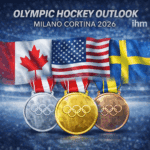
  • Gold Medal: United States
  • Silver Medal: Sweden
  • Bronze Medal: Canada

Coach Mark Lehtonen Verdict

From a coaching perspective, this Olympic tournament is not about reputation, but adaptability. Canada remains the deepest roster on paper, but short tournaments punish predictability. Their success will depend on how quickly they adjust to elimination pressure.

The United States, however, enters with the most adaptable profile. Their ability to attack through pace, activate the blue line, and maintain defensive recovery speed gives them answers in multiple game states. This is the most structurally balanced U.S. Olympic team in modern history.

Sweden’s medal projection is rooted in execution. They may not overwhelm opponents with raw offense, but their consistency in defensive zone exits, layered coverage, and situational discipline makes them exceptionally dangerous in knockout games.

Canada’s placement on the podium remains highly likely, but the margin between gold and bronze is thinner than at any previous Olympic cycle. Goaltending performance and special teams efficiency will ultimately define their ceiling.

Overall, Milano Cortina 2026 sets up as one of the most open Olympic hockey tournaments on record. The United States holds the highest tactical ceiling, Sweden offers the safest structural floor, and Canada remains the ultimate test of championship execution under pressure.


Q&A: Milano Cortina 2026 Olympic Hockey

Q: Why is the tournament considered wide open?
A: All teams advance to elimination rounds, reducing the margin for error and amplifying game-to-game variance.

Q: What gives the United States an edge?
A: Depth across all four lines, mobile defensemen, and transition speed.

Q: Can Sweden realistically win gold?
A: Yes. Their structure and discipline translate extremely well in short tournaments.

Q: Is Canada still a favorite?
A: Canada remains a top contender, but execution will matter more than pedigree.

Q: What will decide medal outcomes?
A: Goaltending consistency, special teams efficiency, and situational discipline.