Tag: NHL Playoffs

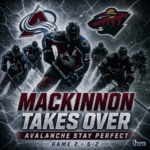
Avalanche outlast Wild in 9-6 Game 1 thriller

Avalanche outlast Wild in 9-6 Game 1 thriller

Avalanche Outlast Wild in 9-6 Chaos, Makar Takes Over

Date: May 4, 2026
By IceHockeyMan Newsroom


Game Overview

Game 1 between the Colorado Avalanche and Minnesota Wild delivered one of the most explosive offensive battles of the 2026 playoffs, with Colorado securing a 9-6 win after surviving multiple momentum swings.

This wasn’t structured playoff hockey. This was chaos – speed, turnovers and elite skill deciding everything.


Turning Point – Makar Takes Control

With the game tied deep into the third period, Cale Makar stepped in and completely shifted the outcome.

  • 2 goals in the third period
  • 1 assist
  • Game-defining puck control and tempo shifts

After leaving early in the first period due to a hit, Makar returned and dominated – a classic elite-defenseman playoff takeover.


Momentum Swings

Colorado started strong, building a 3-0 lead, but the Wild responded aggressively:

  • Minnesota scored 5 goals across second-period stretches
  • Wild even took a 5-4 lead on a short-handed breakaway
  • Game tied 5-5 heading into the third period

From that point, Colorado’s top-end talent made the difference.


Offensive Leaders

  • Cale Makar: 2G, 1A
  • Nathan MacKinnon: 1G, 2A
  • Devon Toews: 1G, 3A
  • Martin Necas: 3A

Minnesota responded with balanced scoring, including goals from:

  • Quinn Hughes (1G, 2A)
  • Tarasenko, Hartman, Johansson, Zuccarello

IHM Tactical Breakdown

This game exposed a critical playoff contrast:

  • Colorado: Elite transition speed and high-end finishing ability
  • Minnesota: Strong pressure but defensive instability in open ice

Key factor:

When the game opened up, Colorado’s skill advantage became overwhelming.


Key Signals

  • High-event hockey favors Colorado heavily
  • Minnesota dangerous when forecheck is structured
  • Special teams and transition defense will decide this series

Goaltending Reality

Both goaltenders struggled to control the game flow:

  • Wallstedt allowed 9 goals
  • Wedgewood allowed 6

This was not a goalie game – this was a breakdown of defensive layers on both sides.


What This Means

Colorado takes a 1-0 series lead, but the bigger takeaway:

If this series continues at this pace, it becomes a scoring war – and that favors the Avalanche.

Minnesota must slow the game down or risk being overwhelmed.


Coach Mark Comment

This game shows the danger of losing structure against a team like Colorado. When the game becomes open ice, they don’t just play fast, they play faster than your system can recover. Minnesota had momentum, but they didn’t control the pace. That’s why they lost.


Fan Pulse

Can Minnesota survive this series if games stay high-scoring?


Q&A: Avalanche vs Wild Game 1

Final score?
Colorado Avalanche 9-6 Minnesota Wild.

Who dominated?
Cale Makar in the third period.

Biggest issue for Minnesota?
Defensive structure in transition.

Series outlook?
Depends on pace - fast favors Colorado.

Key takeaway?
Elite skill beats chaos hockey.


Canadiens survive Game 7 shock vs Lightning

Canadiens survive Game 7 shock vs Lightning

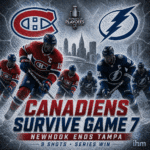
Canadiens Survive Game 7 Chaos, Eliminate Lightning

Date: May 4, 2026
By IceHockeyMan Newsroom


Game Context

The Montreal Canadiens delivered one of the most unusual Game 7 victories in modern NHL playoff history, defeating the Tampa Bay Lightning 2-1 despite generating only 9 total shots on goal.

This was not dominance. This was survival hockey at its purest level - structure, patience and one decisive moment.


Decisive Moment

With the game tied 1-1 in the third period, Alex Newhook produced the defining play of the series.

Positioned behind the net, he reacted to a rebound off the boards and redirected the puck off Andrei Vasilevskiy and into the net at 11:07 - a chaotic, instinct-driven goal that ultimately ended Tampa’s season.

It wasn’t pretty. It wasn’t clean. But it was playoff hockey.


Game Flow Breakdown

  • 1st Period: Montreal opens scoring through Nick Suzuki
  • 2nd Period: Canadiens record ZERO shots, Lightning dominate possession
  • PP Goal: Tampa ties via Dominic James
  • 3rd Period: Newhook delivers the series winner

Montreal went 26:55 without a shot on goal, including an entire shotless second period - something never seen before in franchise playoff history.


IHM Tactical View

This game is a textbook example of playoff compression:

  • Montreal collapsed defensively and protected the slot
  • Tampa controlled puck possession but struggled to generate elite finishing chances
  • Game shifted from skill execution to moment execution

When space disappears, volume becomes irrelevant. Timing decides everything.


Coach Factor

Head coach Martin St. Louis played a critical psychological role.

After a lifeless second period, his intermission reset reframed the situation: a 1-1 Game 7, nothing more, nothing less. That mental reset allowed Montreal to stabilize and survive the final stretch.

Postgame, his emotional locker room speech reflected a team that believes it is ahead of schedule.


Goaltending Layer

Despite the loss, Andrei Vasilevskiy was not the problem.

The difference came down to one unpredictable bounce - the type that often defines playoff elimination games.

Montreal, meanwhile, managed the game in front of their goaltender with disciplined defensive layers and shot blocking.


What This Means

Montreal advances to face the Buffalo Sabres in the Eastern Conference Second Round.

Key takeaway:

  • They can win without offense
  • They trust their structure under pressure
  • They are extremely dangerous in low-event hockey

But this approach carries risk - against Buffalo, they will need more puck control and offensive generation.


Coach Mark Comment

This is not luck. This is playoff discipline. People will say Montreal got lucky with nine shots, but what they actually did was control the type of game. They forced Tampa into a structure battle, not a skill game. When you do that, one bounce is enough. That’s playoff hockey.


Fan Pulse

Was this Montreal win elite playoff execution or pure luck?


Q&A: Canadiens vs Lightning Game 7

How many shots did Montreal have?
Only 9 shots on goal.

Who scored the game-winner?
Alex Newhook.

Why is this game unusual?
A team rarely wins Game 7 with such low shot volume.

Who do Canadiens face next?
Buffalo Sabres.

Biggest takeaway?
Playoff hockey is decided by moments, not volume.


Sabres Break 19-Year Drought | IHM

Sabres Break 19-Year Drought | IHM

Sabres Break 19-Year Drought and Send a Message to the League

Date: May 2, 2026
By IceHockeyMan Newsroom

This was not just a series win. This was a psychological reset for an entire franchise.

Buffalo eliminated Boston with a 4-1 Game 6 victory, securing their first playoff series win since 2007 and proving that this team is no longer rebuilding. It is arriving.


🏆 MORE THAN A WIN - A SHIFT IN IDENTITY

For nearly two decades, the Sabres existed in the same space: potential, frustration and missed opportunities.

That changed in Boston.

They controlled the game early, built a lead and never allowed pressure to dictate their decisions.

  • Fast start
  • Composed puck management
  • No panic after Bruins push

IHM Signal:
The moment a team learns how to close a series, it stops being a young team and becomes a playoff team.


🔥 EARLY CONTROL DECIDED THE GAME

Buffalo removed uncertainty immediately. They scored early and doubled the lead before Boston could establish rhythm.

That mattered more than any individual highlight.

  • First goal within minutes
  • Second goal kills momentum
  • Crowd neutralized early

Boston never fully recovered from that start.

IHM Insight:
In elimination games, early goals are not just points. They are control over emotion.


⚔️ RESPONSE TO PRESSURE - NO COLLAPSE MOMENT

The Bruins pushed back. Pastrnak scored. The building came alive. The pressure returned.

In previous years, this is where Buffalo would have broken.

They did not.

They absorbed the push, stayed structured and waited for the next opportunity instead of forcing plays.

IHM Signal:
Playoff maturity is measured by how a team reacts after conceding momentum.


🧠 LEADERSHIP CORE STEPPING FORWARD

This was not carried by one player. It was driven by a group that has grown together.

  • Tage Thompson setting tone
  • Rasmus Dahlin driving play
  • Alex Tuch reinforcing mentality

These players have lived through losing seasons. That experience showed in how they handled the moment.

IHM Insight:
Teams that suffer together often close better together when the opportunity comes.


📉 BRUINS - MISSED WINDOW MOMENT

Boston had chances, especially in Game 5 and stretches of Game 6, but failed to convert when it mattered most.

  • Turnovers in key moments
  • Inability to sustain offensive pressure
  • Loss of control after early goals

This was not a collapse. It was a failure to finish.

IHM Signal:
Playoff exits are rarely about one mistake. They are about moments not taken.


🚨 WHAT COMES NEXT - REAL TEST BEGINS NOW

Buffalo advances, but the challenge changes completely in Round 2.

They will face either:

  • Tampa Bay Lightning
  • Montreal Canadiens

Both present different problems:

  • Tampa = experience and elite goaltending
  • Montreal = structure and discipline

IHM Projection:
Buffalo’s next step is proving this was not a moment, but a level.


📊 WHY THIS SERIES MATTERS LONG-TERM

This win changes how Buffalo operates moving forward:

  • Confidence increases
  • Expectations rise
  • Pressure becomes internal, not external

This is how contender cycles begin.


🧠 Coach Mark Comment

This is one of the most important wins of the entire first round. Not because of tactics, but because of psychology. Buffalo proved they can handle pressure, close a series and control momentum. Now the real question starts. Can they repeat it against a stronger opponent?


🔥 Fan Pulse

Is this the start of a real Sabres playoff run, or just one breakthrough moment?


❓ Q&A: Sabres Playoff Breakthrough

When was the last time Buffalo won a series?
2007.

What decided Game 6?
Early goals and controlled game management.

What changed for Buffalo?
Mental composure in pressure situations.

Who do they face next?
Lightning or Canadiens.

Why is this important long-term?
It shifts the franchise from rebuilding to competing.


NHL Projected Lineups Apr 30 2026 | IHM

NHL Projected Lineups Apr 30 2026 | IHM

NHL Projected Lineups - Game Day April 30, 2026

Date: April 29, 2026
By IceHockeyMan Newsroom

Final update: All projected lineups for today have been added.

Matchup: Tampa Bay Lightning vs Montreal Canadiens

Faceoff: 01:00 CET

Tampa Bay Lightning - Projected lineup

Forwards
Gage Goncalves - Brayden Point - Nikita Kucherov
Brandon Hagel - Anthony Cirelli - Jake Guentzel
Zemgus Girgensons - Yanni Gourde - Nick Paul
Corey Perry - Dominic James - Scott Sabourin

Defense
J.J. Moser - Darren Raddysh
Ryan McDonagh - Erik Cernak
Declan Carlile - Emil Lilleberg

Goalies
Andrei Vasilevskiy
Jonas Johansson

Scratched: -
Injured: Charle-Edouard D’Astous (DTD), Pontus Holmberg (OUT), Victor Hedman (IR-LT)

IHM Lineup Note:
Tampa enters with Vasilevskiy confirmed, which instantly raises their floor. However, without Hedman, their breakout structure and defensive calm are still slightly compromised, especially under heavy forecheck pressure.

IHM Tactical Signals:
Forecheck Signal: Tampa must dictate early physical tone to avoid Montreal gaining confidence.
Transition Signal: Kucherov and Point remain elite decision-makers under pressure.
Blue Line Signal: Lack of Hedman reduces high-end puck distribution from the back end.
Goalie Stability Signal: Vasilevskiy is still the most reliable goalie in this matchup.
X-Factor Signal: Tampa must dominate special teams to fully exploit their experience edge.

Montreal Canadiens - Projected lineup

Forwards
Cole Caufield - Nick Suzuki - Juraj Slafkovsky
Alexandre Texier - Alex Newhook - Ivan Demidov
Zachary Bolduc - Oliver Kapanen - Kirby Dach
Jake Evans - Phillip Danault - Josh Anderson

Defense
Mike Matheson - Alexandre Carrier
Kaiden Guhle - Lane Hutson
Jayden Struble - Arber Xhekaj

Goalies
Jakub Dobes
Jacob Fowler

Scratched: -
Injured: Noah Dobson (OUT), Patrik Laine (IR)

IHM Lineup Note:
Montreal continues to play fearless hockey with a young core driving pace and creativity. Demidov and Hutson give them high-end offensive unpredictability, but defensive consistency remains a concern without Dobson.

IHM Tactical Signals:
Forecheck Signal: Montreal should stay aggressive and not fall into passive defensive play.
Transition Signal: Suzuki and Demidov are key to clean entries and tempo control.
Blue Line Signal: Hutson creates offense but requires strong support structure behind him.
Goalie Stability Signal: Dobes must handle high-danger chances consistently.
X-Factor Signal: Montreal’s speed can destabilize Tampa if they maintain pressure pace.

IHM Match Pressure Index:
Offensive Pressure: Lightning edge
Transition Edge: Even
Defensive Stability: Lightning slight edge
Goaltending Edge: Lightning edge
Game Control Projection: Tampa projects to control structure, while Montreal must win through speed and unpredictability.

Matchup: Philadelphia Flyers vs Pittsburgh Penguins

Faceoff: 01:30 CET

Philadelphia Flyers - Projected lineup

Forwards
Tyson Foerster - Trevor Zegras - Owen Tippett
Travis Konecny - Christian Dvorak - Porter Martone
Denver Barkey - Noah Cates - Matvei Michkov
Luke Glendening - Sean Couturier - Garnet Hathaway

Defense
Travis Sanheim - Rasmus Ristolainen
Cam York - Jamie Drysdale
Nick Seeler - Alex Bump

Goalies
Dan Vladar
Samuel Ersson

Scratched: -
Injured: Nikita Grebenkin (OUT), Ty Murchison (OUT), Rodrigo Abols (IR)

IHM Lineup Note:
Flyers continue to lean into speed and pressure. Their ability to force turnovers and attack quickly remains their biggest advantage over Pittsburgh’s slower defensive reactions.

IHM Tactical Signals:
Forecheck Signal: Flyers must maintain relentless pressure.
Transition Signal: Zegras and Tippett drive speed.
Blue Line Signal: Needs discipline under pressure.
Goalie Stability Signal: Vladar confirmed provides stability but not dominance.
X-Factor Signal: Flyers speed vs Penguins experience is the key battle.

Pittsburgh Penguins - Projected lineup

Forwards
Egor Chinakhov - Sidney Crosby - Bryan Rust
Tommy Novak - Rickard Rakell - Evgeni Malkin
Elmer Soderblom - Ben Kindel - Anthony Mantha
Connor Dewar - Blake Lizotte - Noel Acciari

Defense
Parker Wotherspoon - Erik Karlsson
Samuel Girard - Kris Letang
Ryan Shea - Connor Clifton

Goalies
Arturs Silovs
Stuart Skinner

Scratched: -
Injured: P. Kettles (OUT), Filip Hallander (IR), Caleb Jones (IR)

IHM Lineup Note:
Penguins rely heavily on experience and structure. Crosby and Malkin remain central to their offensive control, but pace mismatch remains a concern.

IHM Tactical Signals:
Forecheck Signal: Must support puck battles better.
Transition Signal: Karlsson and Letang drive exits.
Blue Line Signal: Strong offensively, weaker defensively.
Goalie Stability Signal: Silovs confirmed provides clarity.
X-Factor Signal: Penguins must slow the game.

IHM Match Pressure Index:
Offensive Pressure: Even
Transition Edge: Flyers slight edge
Defensive Stability: Penguins slight edge
Goaltending Edge: Even
Game Control Projection: Flyers push pace, Penguins rely on structure.

Matchup: Utah Mammoth vs Vegas Golden Knights

Faceoff: 04:00 CET

Vegas Golden Knights - Projected lineup

Forwards
Ivan Barbashev - Jack Eichel - Mark Stone
Brett Howden - Mitch Marner - Pavel Dorofeyev
Reilly Smith - Tomas Hertl - Keegan Kolesar
Cole Smith - Nic Dowd - Colton Sissons

Defense
Brayden McNabb - Shea Theodore
Noah Hanifin - Rasmus Andersson
Jeremy Lauzon - Kaedan Korczak

Goalies
Carter Hart
Adin Hill

Scratched: -
Injured: William Karlsson (IR-LT), Alex Pietrangelo (IR-LT)

IHM Lineup Note:
Vegas remains the most structured team in this matchup. Their depth and tactical discipline make them extremely difficult to break down.

IHM Tactical Signals:
Forecheck Signal: Structured pressure.
Transition Signal: Eichel and Marner control tempo.
Blue Line Signal: Still elite depth.
Goalie Stability Signal: Hart confirmed.
X-Factor Signal: Discipline and structure win games.

Utah Mammoth - Projected lineup

Forwards
Clayton Keller - Logan Cooley - Dylan Guenther
Kailer Yamamoto - Nick Schmaltz - Lawson Crouse
JJ Peterka - Alexander Kerfoot - Michael Carcone
Liam O’Brien - Kevin Stenlund - Brandon Tanev

Defense
Mikhail Sergachev - MacKenzie Weegar
Nate Schmidt - John Marino
Ian Cole - Sean Durzi

Goalies
Karel Vejmelka
Vitek Vanecek

Scratched: -
Injured: Barrett Hayton (OUT)

IHM Lineup Note:
Utah still has enough speed and offensive tools but must significantly improve execution and reduce defensive mistakes.

IHM Tactical Signals:
Forecheck Signal: Must increase pressure.
Transition Signal: Cooley and Keller lead pace.
Blue Line Signal: Good puck movement.
Goalie Stability Signal: Vejmelka confirmed.
X-Factor Signal: Needs pace game.

IHM Match Pressure Index:
Offensive Pressure: Vegas edge
Transition Edge: Vegas slight edge
Defensive Stability: Vegas edge
Goaltending Edge: Even
Game Control Projection: Vegas controls structure, Utah must push tempo.

Q&A: Projected Lineups and Starting Goalies

What are NHL projected lineups?
Projected lineups show expected forward lines, defense pairs, and goalies before official confirmation.

How accurate are projected lineups?
They are usually very close but can change due to late scratches or coaching decisions.

Why do playoff lineups matter more?
Because matchups, structure, and goalie performance have a much bigger impact.

What should you focus on first?
Center depth, defense structure, and starting goalie.

Why are goalies critical?
They determine stability and can decide entire series.

Why include power play units?
They reveal offensive hierarchy and key scoring options.

What is a healthy scratch?
A player available but not selected for tactical reasons.

Why do teams keep same lineup after wins?
To maintain chemistry and momentum.

How important are injuries?
Extremely important, especially top players.

What is IHM Match Pressure Index?
A breakdown of pressure, transition, defense, goalie edge, and control projection.

When are final lineups confirmed?
Usually during warmups.

What to watch after posting?
Goalie confirmations and last-minute lineup changes.

NHL Projected Lineups Apr 19-20 2026 | IHM

NHL Projected Lineups Apr 19-20 2026 | IHM

NHL Projected Lineups – Game Day April 19-20, 2026

Date: April 19, 2026
By IceHockeyMan Newsroom

Final update: All projected lineups for today have been added.

Matchup: Colorado Avalanche vs Los Angeles Kings

Faceoff: 21:00 CET

Colorado Avalanche – Projected lineup

Forwards
Artturi Lehkonen – Nathan MacKinnon – Martin Necas
Parker Kelly – Brock Nelson – Valeri Nichushkin
Gabriel Landeskog – Nazem Kadri – Nicolas Roy
Joel Kiviranta – Jack Drury – Logan O’Connor

Defense
Brett Kulak – Cale Makar
Devon Toews – Sam Malinski
Josh Manson – Brent Burns

Goalies
Scott Wedgewood
Mackenzie Blackwood

Scratched: Ross Colton, Nick Blankenburg, Zakhar Bardakov
Injured: None

IHM Lineup Note:
Colorado enters Game 1 with its core structure restored, and that changes the entire ceiling of this matchup. Makar, MacKinnon, Toews, Nichushkin, Nelson, Landeskog, and Kadri give the Avalanche elite puck-carrying, blue-line activation, and layered offensive pressure.

IHM Tactical Signals:
Forecheck Signal: Colorado can attack with more second-wave pressure than Los Angeles through quick recoveries and inside support.
Transition Signal: MacKinnon and Makar remain the main speed and possession engines in open ice.
Blue Line Signal: The Avalanche have a major puck-moving edge with Makar and Toews driving the back end.
Goalie Stability Signal: Wedgewood getting the confirmed start brings clarity, though not a huge individual edge over Kuemper-level competition.
X-Factor Signal: Kadri and Manson returning raises Colorado’s matchup strength and playoff bite significantly.

Los Angeles Kings – Projected lineup

Forwards
Artemi Panarin – Anze Kopitar – Adrian Kempe
Trevor Moore – Quinton Byfield – Alex Laferriere
Joel Armia – Scott Laughton – Jared Wright
Mathieu Joseph – Samuel Helenius – Jeff Malott

Defense
Mikey Anderson – Drew Doughty
Joel Edmundson – Brandt Clarke
Brian Dumoulin – Cody Ceci

Goalies
Anton Forsberg
Darcy Kuemper

Scratched: Jacob Moverare, Taylor Ward
Injured: Alex Turcotte, Andrei Kuzmenko, Kevin Fiala

IHM Lineup Note:
The Kings still bring strong veteran intelligence through Kopitar, Doughty, Anderson, and Panarin, but the missing finishing power from Fiala lowers the offensive ceiling. Los Angeles must lean on structure, matchup discipline, and controlled defensive-zone work to survive Colorado’s speed.

IHM Tactical Signals:
Forecheck Signal: Los Angeles can pressure smartly, but it cannot allow the game to become too open or rush-heavy.
Transition Signal: Panarin and Kempe are the main chance-creators off clean entries.
Blue Line Signal: Doughty and Anderson must absorb the most difficult defensive reads against Colorado’s top wave.
Goalie Stability Signal: Kuemper offers strong playoff-caliber calm if he gets the crease.
X-Factor Signal: The Kings need clean neutral-zone layers and must limit broken-play chances against MacKinnon.

IHM Match Pressure Index:
Offensive Pressure: Avalanche edge
Transition Edge: Avalanche clear edge
Defensive Stability: Avalanche slight edge
Goaltending Edge: Even
Game Control Projection: Colorado projects to control the most dangerous parts of the game through pace, blue-line support, and star-driven offensive pressure, while Los Angeles needs a compact, low-mistake playoff road script.

Matchup: Tampa Bay Lightning vs Montreal Canadiens

Faceoff: 23:45 CET

Tampa Bay Lightning – Projected lineup

Forwards
Gage Goncalves – Brayden Point – Nikita Kucherov
Brandon Hagel – Anthony Cirelli – Jake Guentzel
Zemgus Girgensons – Yanni Gourde – Nick Paul
Corey Perry – Dominic James – Oliver Bjorkstrand

Defense
J.J. Moser – Darren Raddysh
Ryan McDonagh – Erik Cernak
Charle-Edouard D’Astous – Emil Lilleberg

Goalies
Andrei Vasilevskiy
Jonas Johansson

Scratched: Conor Geekie, Scott Sabourin, Declan Carlile, Max Crozier, Brandon Halverson
Injured: Pontus Holmberg (upper body), Victor Hedman (personal leave)

IHM Lineup Note:
Tampa Bay still brings one of the most dangerous playoff offensive cores in the league. Kucherov, Point, Hagel, Guentzel, Cirelli, Gourde, and Vasilevskiy create a lineup that can win through skill, details, or experience even without Hedman available.

IHM Tactical Signals:
Forecheck Signal: Tampa can alternate between controlled pressure and selective strike hockey depending on game flow.
Transition Signal: Kucherov and Point remain elite at turning neutral-zone control into high-danger entries.
Blue Line Signal: Missing Hedman matters, but McDonagh and Cernak still provide defensive intelligence and playoff calm.
Goalie Stability Signal: Vasilevskiy is the strongest goaltending presence on this part of the slate.
X-Factor Signal: Tampa’s power-play and late-game execution remain major playoff separators.

Montreal Canadiens – Projected lineup

Forwards
Cole Caufield – Nick Suzuki – Juraj Slafkovsky
Alexandre Texier – Alex Newhook – Ivan Demidov
Zachary Bolduc – Oliver Kapanen – Kirby Dach
Jake Evans – Phillip Danault – Josh Anderson

Defense
Mike Matheson – Alexandre Carrier
Kaiden Guhle – Lane Hutson
Jayden Struble – Arber Xhekaj

Goalies
Jakub Dobes
Jacob Fowler

Scratched: Brendan Gallagher, Joe Veleno, Adam Engstrom, David Reinbacher
Injured: Patrik Laine (lower body), Noah Dobson (upper body)

IHM Lineup Note:
Montreal has enough young skill and internal pace to make this series interesting, especially through Suzuki, Caufield, Slafkovsky, and Demidov. The problem in Game 1 is whether that group can sustain enough structure against a far more playoff-tested Tampa core.

IHM Tactical Signals:
Forecheck Signal: Montreal must pressure aggressively and make Tampa defend before the Lightning settle into their puck-control rhythm.
Transition Signal: Suzuki is the main tempo organizer, while Demidov adds a wildcard element.
Blue Line Signal: Without Dobson, the Canadiens lose some back-end control and clean breakout comfort.
Goalie Stability Signal: Montreal’s crease setup is talented but less proven under playoff-level pressure.
X-Factor Signal: Montreal needs its young skill to convert quickly because the longer the structure battle lasts, the more it favors Tampa.

IHM Match Pressure Index:
Offensive Pressure: Lightning edge
Transition Edge: Lightning slight edge
Defensive Stability: Lightning edge
Goaltending Edge: Lightning clear edge
Game Control Projection: Tampa Bay projects to control the more repeatable playoff phases of the game, while Montreal needs speed, courage, and efficient finishing on limited windows to steal momentum.

Matchup: Buffalo Sabres vs Boston Bruins

Faceoff: 01:30 CET

Buffalo Sabres – Projected lineup

Forwards
Peyton Krebs – Tage Thompson – Alex Tuch
Jason Zucker – Ryan McLeod – Jack Quinn
Zach Benson – Josh Norris – Josh Doan
Jordan Greenway – Josh Dunne – Beck Malenstyn

Defense
Rasmus Dahlin – Mattias Samuelsson
Bowen Byram – Owen Power
Logan Stanley – Connor Timmins

Goalies
Ukko-Pekka Luukkonen
Alex Lyon

Scratched: Colten Ellis, Michael Kesselring, Tyson Kozak, Josh Dunne, Tanner Pearson, Luke Schenn
Injured: Sam Carrick, Noah Ostlund, Jiri Kulich, Justin Danforth

IHM Lineup Note:
Buffalo carries an impressive modern top-four on defense and enough scoring depth to pressure Boston across multiple waves. Dahlin, Power, Byram, Thompson, Tuch, and Norris give the Sabres one of the more dynamic control profiles in the Eastern bracket.

IHM Tactical Signals:
Forecheck Signal: Buffalo can attack Boston’s retrievals through speed and second-man pressure rather than pure weight alone.
Transition Signal: Dahlin and Power give the Sabres strong puck-transport advantage from the back end.
Blue Line Signal: The Sabres’ defense can both defend and extend offensive-zone time efficiently.
Goalie Stability Signal: Luukkonen gives Buffalo a solid foundation, with Lyon returning as depth support.
X-Factor Signal: Buffalo’s ability to attack off quick regains could be the key to breaking Boston’s structure.

Boston Bruins – Projected lineup

Forwards
Morgan Geekie – Elias Lindholm – David Pastrnak
Casey Mittelstadt – Pavel Zacha – Viktor Arvidsson
James Hagens – Fraser Minten – Marat Khusnutdinov
Tanner Jeannot – Sean Kuraly – Mark Kastelic

Defense
Jonathan Aspirot – Charlie McAvoy
Hampus Lindholm – Mason Lohrei
Nikita Zadorov – Andrew Peeke

Goalies
Jeremy Swayman
Joonas Korpisalo

Scratched: Alex Steeves, Jordan Harris, Henri Jokiharju, Lukas Reichel, Michael Eyssimont
Injured: None

IHM Lineup Note:
Boston may not have Buffalo’s blue-line mobility, but the Bruins still bring a very serious playoff spine through McAvoy, Lindholm, Pastrnak, and Swayman. This team can win ugly, protect the interior, and force Buffalo into harder offensive work.

IHM Tactical Signals:
Forecheck Signal: Boston applies heavier, playoff-style pressure and can wear on Buffalo’s defensive retrievals over time.
Transition Signal: The Bruins are less explosive overall, but Pastrnak can change games on a single rush or broken play.
Blue Line Signal: McAvoy remains the most important defensive stabilizer in the series opener.
Goalie Stability Signal: Swayman is a proven big-game piece and one of the main reasons Boston can steal road control.
X-Factor Signal: If Boston turns the game into a wall battle and slot war, the matchup becomes much more even than pure talent suggests.

IHM Match Pressure Index:
Offensive Pressure: Sabres slight edge
Transition Edge: Sabres edge
Defensive Stability: Bruins slight edge
Goaltending Edge: Bruins slight edge
Game Control Projection: Buffalo projects to carry more of the puck and more of the offensive initiative, while Boston’s clearest path is to compress the game into a playoff-style structure battle anchored by Swayman and McAvoy.

Matchup: Vegas Golden Knights vs Utah Mammoth

Faceoff: 04:00 CET

Vegas Golden Knights – Projected lineup

Forwards
Mitch Marner – Jack Eichel – Mark Stone
Ivan Barbashev – Brett Howden – Pavel Dorofeyev
Reilly Smith – Tomas Hertl – Keegan Kolesar
Cole Smith – Nic Dowd – Colton Sissons

Defense
Brayden McNabb – Shea Theodore
Noah Hanifin – Rasmus Andersson
Jeremy Lauzon – Kaedan Korczak

Goalies
Carter Hart
Adin Hill

Scratched: Ben Hutton, Brandon Saad, Akira Schmid
Injured: William Karlsson (lower body), Jonas Rondbjerg (lower body)

IHM Lineup Note:
Vegas enters Game 1 with a heavy, experienced, and tactically intelligent lineup. Eichel, Marner, Stone, Hertl, Theodore, Hanifin, and Andersson give the Golden Knights elite control potential in both the neutral zone and offensive-zone support game.

IHM Tactical Signals:
Forecheck Signal: Vegas can pressure with size, route discipline, and strong wall control across all four lines.
Transition Signal: Eichel and Marner create elite entry quality and delay-game creation through the middle.
Blue Line Signal: Theodore, Hanifin, and Andersson give Vegas one of the most stable and mobile playoff back ends in the conference.
Goalie Stability Signal: Hill and Hart give Vegas strong crease options, with Hill the more proven playoff calm.
X-Factor Signal: Vegas can control the game simply by owning the walls, the middle lane, and the second effort battles.

Utah Mammoth – Projected lineup

Forwards
Clayton Keller – Nick Schmaltz – Lawson Crouse
Kailer Yamamoto – Logan Cooley – Dylan Guenther
JJ Peterka – Alexander Kerfoot – Michael Carcone
Liam O’Brien – Kevin Stenlund – Brandon Tanev

Defense
Mikhail Sergachev – MacKenzie Weegar
Nate Schmidt – John Marino
Ian Cole – Nick DeSimone

Goalies
Karel Vejmelka
Vitek Vanecek

Scratched: Daniil But, Kevin Rooney, Dmitri Simashev, Matt Villalta
Injured: Sean Durzi (upper body), Barrett Hayton (upper body), Jack McBain (lower body)

IHM Lineup Note:
Utah is not an easy opening-round opponent because the Mammoth still bring real pace, strong two-way defensemen, and competitive structure through Keller, Cooley, Sergachev, Weegar, and Vejmelka. The challenge is whether they can match Vegas’ playoff maturity and depth.

IHM Tactical Signals:
Forecheck Signal: Utah can pressure effectively, but it must avoid getting trapped in long-zone shifts against Vegas’ heavier support game.
Transition Signal: Cooley, Keller, and Guenther are the main engines for Utah’s pace-based attack.
Blue Line Signal: Sergachev and Weegar give Utah enough quality to challenge Vegas if the breakout remains clean.
Goalie Stability Signal: Vejmelka can absolutely keep Utah alive if the defensive layers stay disciplined.
X-Factor Signal: Utah must win the rush battle and avoid letting Vegas turn the game into a grinding half-ice series.

IHM Match Pressure Index:
Offensive Pressure: Golden Knights edge
Transition Edge: Even to slight Golden Knights edge
Defensive Stability: Golden Knights edge
Goaltending Edge: Even
Game Control Projection: Vegas projects to control the more repeatable playoff details through depth, structure, and experience, while Utah needs a pace-driven game with strong Vejmelka support to turn Game 1 into a true swing battle.

Q&A: Projected Lineups and Starting Goalies

What are NHL projected lineups?
Projected lineups are expected forward lines, defense pairs, and goalies based on team reports, skates, and coaching decisions before official warmup confirmation.

How accurate are projected lineups?
They are usually close to final, but late scratches, maintenance calls, and playoff adjustments can still change the setup.

Why do playoff lineups matter even more?
Because playoff hockey is more matchup-driven, more structured, and more sensitive to depth, special teams, and goalie performance.

Why are starting goalies so important in Game 1?
They can define early series momentum, absorb pressure swings, and shape how aggressive each team can play.

What does a healthy scratch mean in the playoffs?
It means a player is available but left out for tactical, matchup, or performance reasons.

Why do coaches adjust lines before Game 1?
To optimize matchups, rebalance chemistry, protect injured players, or prepare for the opponent’s style.

What should readers focus on first in a projected lineup?
Center depth, top-four defense quality, starting goalie strength, and whether the lineup supports the team’s normal playoff identity.

How important are injuries in a playoff opener?
Very important, because missing one top defenseman, scorer, or center can alter the entire series structure.

Can line combinations reveal playoff strategy?
Yes. They often show whether a coach wants more speed, heavier forecheck, tighter defense, or more matchup control.

Why does IHM add tactical notes to playoff lineups?
Because names alone do not explain how a lineup may function under playoff pace, pressure, and matchup conditions.

When are final playoff lineups usually confirmed?
Most often during warmups or shortly before puck drop.

What should readers watch for after publication?
Late goalie confirmations, true Game 1 scratches, and any final matchup tweaks that change the tactical balance.

NHL Playoffs 2026 Elite Tactical Breakdown

NHL Playoffs 2026 Elite Tactical Breakdown

NHL Playoffs 2026 Elite Tactical Breakdown from First Round to Stanley Cup

Date: April 2026
By IceHockeyMan Newsroom

Most playoff predictions fail for one reason: they analyze teams, not systems.

This bracket is not based on talent or standings. It is based on how each system reacts under pressure, how coaches adjust after Game 2, and which teams can force opponents out of their structure.

If you understand this, you understand the playoffs.

This is a full playoff intelligence breakdown. Every series is analyzed through structure, tempo control, system pressure and coaching adaptation.

Playoffs are not about who plays better. They are about who forces the opponent to stop playing their game.

Western Conference - First Round

Colorado Avalanche vs Los Angeles Kings

Series Flow Projection

  • Game 1-2: Colorado sets high tempo and forces defensive movement
  • Game 3-4: LA tries to slow pace through neutral zone structure
  • Game 5: Colorado breaks structure through transition overload
  • Late Series: LA defense fatigues under continuous pressure

Los Angeles builds its identity on structured defensive layers and controlled neutral zone play.

Colorado breaks structure through speed and continuous motion.

IHM Zone Analysis

  • Neutral Zone: Colorado uses multi-layer entries, LA prefers stand-up blue line
  • Offensive Zone: Colorado rotates constantly, LA defends zones statically
  • Defensive Zone: LA strong, but forced into extended shifts

Duel of Systems

Static defense vs dynamic offense

IHM Match Pressure Index

  • Offensive Pressure: Colorado
  • Defensive Structure: LA
  • Transition Edge: Colorado
  • Energy Drain Factor: Colorado
  • Series Control Projection: Colorado

Verdict: Colorado advances

Minnesota Wild vs Dallas Stars

Series Flow Projection

  • Game 1-2: Physical battles dominate tempo
  • Game 3-4: Minnesota increases pressure on boards and neutral zone
  • Game 5: Dallas struggles to exit defensive zone cleanly
  • Late Series: Minnesota controls rhythm through physical dominance

Minnesota is built for playoff physicality. Dallas depends on structured puck flow.

IHM Zone Analysis

  • Neutral Zone: Dallas controlled, Minnesota disrupts entries
  • Boards: Minnesota dominant
  • Slot Protection: Minnesota more aggressive

Duel of Systems

Physical disruption vs structured possession

IHM Match Pressure Index

  • Offensive Pressure: Dallas
  • Physical Pressure: Minnesota
  • Turnover Creation: Minnesota
  • Game Tempo: Minnesota
  • Series Control Projection: Minnesota

Verdict: Minnesota advances

Vegas Golden Knights vs Utah

Series Flow Projection

  • Game 1-2: Vegas establishes structured control and limits space
  • Game 3-4: Utah increases pace and attempts to stretch defensive coverage
  • Game 5: Vegas stabilizes neutral zone and reduces transition chances
  • Late Series: Utah struggles against disciplined defensive layers

Vegas plays one of the cleanest playoff systems in hockey.

IHM Zone Analysis

  • Neutral Zone: layered and compact
  • Defensive Zone: low mistakes
  • Forecheck: structured pressure

Duel of Systems

Discipline vs volatility

Verdict: Vegas advances

Edmonton Oilers vs Anaheim Ducks

Series Flow Projection

  • Game 1-2: Edmonton controls tempo through aggressive transition and offensive pressure
  • Game 3-4: Anaheim attempts to slow the game and reduce rush opportunities
  • Game 5: Edmonton exploits defensive gaps through speed and skill advantage
  • Late Series: Anaheim struggles to maintain defensive structure under sustained pressure

Break Point: Once Edmonton establishes consistent neutral zone speed, Anaheim is forced into reactive defense and loses positional discipline.

Edmonton generates offense even without structure.

IHM Zone Analysis

  • Rush Chances: Edmonton elite
  • Broken Plays: Edmonton converts
  • Defensive Structure: weak but compensated by scoring

Duel of Systems

Edmonton relies on explosive transition, individual skill and high-event hockey. Anaheim attempts to stabilize the game through defensive structure and controlled pace.

Verdict: Edmonton advances

Eastern Conference - First Round

Buffalo Sabres vs Boston Bruins

Series Flow Projection

  • Game 1-2: Buffalo sets a high tempo and creates pressure through fast transitions
  • Game 3-4: Boston adjusts structure and slows neutral zone entries
  • Game 5: Key turning game where discipline and execution decide momentum
  • Late Series: Experience and game control begin to outweigh raw speed

Break Point: The series shifts when Buffalo is forced to play in a controlled, low-tempo environment and cannot generate clean transition chances.

Buffalo plays fast transition hockey. Boston prefers structure.

IHM Zone Analysis

  • Neutral Zone: Buffalo faster
  • Transition Speed: Buffalo
  • Defensive Recovery: Boston slower

Duel of Systems

Buffalo relies on aggressive transition, pace and offensive pressure to overwhelm opponents. Boston relies on structured positioning, defensive discipline and tempo control to neutralize speed.

Verdict: Buffalo advances

Tampa Bay Lightning vs Montreal Canadiens

Series Flow Projection

  • Game 1-2: Tampa establishes controlled pace and limits high-risk situations
  • Game 3-4: Montreal increases physical pressure and attempts to disrupt rhythm
  • Game 5: Tampa adapts and exploits structural gaps through controlled entries
  • Late Series: Montreal struggles to maintain discipline under sustained pressure

Break Point: The series shifts when Montreal is forced out of structured defensive positioning and begins chasing the game.

Tampa dominates situational hockey.

Duel of Systems

Tampa Bay relies on controlled tempo, structured puck movement and elite situational awareness. Montreal relies on energy, physical play and attempts to disrupt flow rather than dictate it.

IHM Zone Analysis

  • Neutral Zone: controlled pace
  • Special Teams: Tampa edge
  • Decision Making: elite

Verdict: Tampa advances

Carolina Hurricanes vs Ottawa Senators

Series Flow Projection

  • Game 1-2: Carolina establishes aggressive forecheck and sustained zone pressure
  • Game 3-4: Ottawa attempts to increase pace and create transition chances
  • Game 5: Carolina limits neutral zone space and reduces offensive opportunities
  • Late Series: Ottawa struggles under continuous pressure and loses structural consistency

Break Point: The series shifts when Ottawa is forced into repeated defensive zone sequences and cannot generate clean exits.

Carolina is system-driven.

IHM Zone Analysis

  • Forecheck: Carolina elite
  • Puck Control: Carolina
  • Zone Pressure: constant

Duel of Systems

Carolina relies on one of the most structured systems in hockey, built on forecheck pressure, puck control and positional discipline. Ottawa relies on speed, individual plays and transition opportunities rather than full system control.

Verdict: Carolina advances

Pittsburgh Penguins vs Philadelphia Flyers

Series Flow Projection

  • Game 1-2: Pittsburgh controls tempo through structured play and efficient puck movement
  • Game 3-4: Philadelphia increases physical pressure and attempts to disrupt rhythm
  • Game 5: Pittsburgh stabilizes play and limits high-risk situations
  • Late Series: Philadelphia struggles to maintain discipline and structure under pressure

Break Point: The series shifts when Philadelphia is forced to play in a structured environment and cannot sustain chaos-driven pressure.

Pittsburgh simplifies game under pressure.

Duel of Systems

Pittsburgh relies on structured play, controlled puck movement and experience in managing game situations. Philadelphia relies on physicality, energy and attempts to disrupt structure rather than maintain it.

Verdict: Pittsburgh advances

Second Round

Colorado vs Minnesota

Series Flow Projection

  • Game 1-2: Colorado establishes high tempo and forces defensive movement
  • Game 3-4: Minnesota increases physical pressure and slows the pace
  • Game 5: Colorado adapts by accelerating transition and avoiding board battles
  • Late Series: Minnesota struggles to maintain physical intensity against continuous motion

Break Point: The series shifts when Minnesota can no longer control physical battles consistently and is forced into chasing Colorado’s pace.

Duel of Systems

Colorado relies on high-speed transition, constant motion and layered offensive support. Minnesota relies on physical control, board battles and slowing the game into structured contact situations.

IHM Pressure Index

  • Tempo: Colorado
  • Physical Play: Minnesota
  • Transition: Colorado
  • Fatigue Factor: Colorado advantage

Verdict: Colorado advances

Vegas vs Edmonton

Series Flow Projection

  • Game 1-2: Vegas controls structure, limits space and reduces high-danger chances
  • Game 3-4: Edmonton increases tempo and creates offense through broken plays
  • Game 5: High-event game shifts momentum through individual skill execution
  • Late Series: Defensive structure begins to break under continuous offensive pressure

Break Point: The series shifts when Vegas can no longer fully control neutral zone structure and Edmonton begins generating consistent transition chances.

Duel of Systems

Vegas relies on disciplined structure, layered defense and controlled puck management. Edmonton relies on explosive transition, individual skill and high-event offensive hockey.

IHM Pressure Index

  • Defense: Vegas
  • Offense: Edmonton
  • Game Break Factor: Edmonton

Verdict: Edmonton advances

Break Point: The moment this series flips is when one team loses control of neutral zone transitions and is forced into reactive hockey.

Tampa vs Carolina

Series Flow Projection

  • Game 1-2: Carolina establishes system pressure through aggressive forecheck and puck control
  • Game 3-4: Tampa adjusts neutral zone structure and reduces sustained pressure
  • Game 5: Key adjustment game where Tampa disrupts Carolina’s rhythm
  • Late Series: Carolina struggles to maintain system dominance as Tampa adapts to pressure

Break Point: The series shifts when Tampa neutralizes Carolina’s forecheck and forces them into reactive play.

Duel of Systems

Carolina relies on one of the most structured systems in hockey, built on forecheck pressure, puck control and constant zone pressure. Tampa Bay relies on adaptability, situational awareness and the ability to control key moments within a game.

Verdict: Tampa advances

Buffalo vs Pittsburgh

Series Flow Projection

  • Game 1-2: Buffalo pushes high tempo and creates pressure through transition
  • Game 3-4: Pittsburgh slows the game and reduces neutral zone space
  • Game 5: Control game where structure and discipline define momentum
  • Late Series: Experience and game management begin to dictate pace

Break Point: The series shifts when Buffalo is forced into a controlled, low-tempo environment and cannot consistently generate clean transition entries.

Duel of Systems

Buffalo relies on speed, aggressive transition and offensive pressure to overwhelm opponents. Pittsburgh relies on structured play, controlled puck movement and experience in managing game situations.

Verdict: Pittsburgh advances

Break Point: The moment this series flips is when one team loses control of neutral zone transitions and is forced into reactive hockey.

Conference Finals

Colorado vs Edmonton

Series Flow Projection

  • Game 1-2: Edmonton creates high-event hockey and generates scoring through transition and skill
  • Game 3-4: Colorado stabilizes structure and limits rush opportunities
  • Game 5: Key turning game where Colorado controls tempo and reduces chaos
  • Late Series: Edmonton struggles to generate offense without open ice and transition speed

Break Point: The series shifts when Colorado consistently limits Edmonton’s transition game and forces them into structured offensive zone play.

IHM Pressure Index

  • Offense: Edmonton
  • Structure: Colorado
  • Control: Colorado
  • Energy: Colorado

Duel of Systems

Colorado relies on structured speed, controlled transition and layered offensive support. Edmonton relies on explosive skill, individual plays and high-event offensive hockey.

Verdict: Colorado advances

Tampa vs Pittsburgh

Series Flow Projection

  • Game 1-2: Tight, low-event games with both teams prioritizing structure and control
  • Game 3-4: Tactical adjustments define matchups and shift momentum
  • Game 5: Key control game where execution in critical moments creates separation
  • Late Series: Experience and decision-making under pressure determine the outcome

Break Point: The series shifts when one team gains control over tempo and forces the opponent into reactive decision-making.

Tampa dictates pace.

Duel of Systems

Tampa Bay relies on elite game management, adaptability and control of key moments within a game. Pittsburgh relies on structured play, disciplined positioning and experience in minimizing risk.

Verdict: Tampa advances

Break Point: The moment this series flips is when one team loses control of neutral zone transitions and is forced into reactive hockey.

Stanley Cup Final Colorado vs Tampa Bay

This Final represents a clash between two elite playoff systems built on completely different principles of control.

Colorado imposes pace and forces continuous movement. Tampa Bay absorbs pressure and controls structure through positioning and decision-making.


Series Dynamics Projection

  • Early Series: Tampa slows tempo, compresses neutral zone space and limits transition opportunities
  • Mid Series: Colorado increases pace, stretches defensive coverage and forces continuous movement
  • Game 5 Turning Point: The moment where tempo control begins to shift under sustained pressure
  • Late Series: Accumulated fatigue and decision delays begin to break structured defensive positioning

Break Point: The series shifts when Tampa can no longer consistently control neutral zone pace and is forced into extended defensive sequences.

Championship Factor: Colorado’s ability to play at multiple speeds forces Tampa into uncomfortable situations over time.


Duel of Systems

Colorado System: dynamic, pace-driven, built on transition and layered offensive support

Tampa System: controlled, structure-based, built on positioning and game management

This creates a fundamental conflict:

  • Colorado forces movement and continuous decision-making
  • Tampa relies on stability and controlled positioning

Over a long series, movement places increasing stress on structure, especially under fatigue.


Zone Control Reality

  • Neutral Zone: Colorado stretches the ice and generates speed entries, Tampa compresses space and slows buildup
  • Offensive Zone: Colorado creates pressure through rotation and motion, Tampa focuses on efficiency and shot selection
  • Defensive Zone: Tampa protects the slot effectively early, but can be stretched under sustained movement

Tempo and Pressure Evolution

The defining layer of this Final is not scoring, but tempo control over time.

  • Tampa reduces pace to maintain structure and conserve energy
  • Colorado increases pace to create decision fatigue and force errors

As the series progresses, this creates compounding effects:

  • Longer defensive shifts
  • Delayed reads and reactions
  • Gradual breakdown of positioning

IHM Final Pressure Index

  • Offense: Colorado
  • Defense: Tampa
  • Transition: Colorado
  • Experience: Tampa
  • Game Control (Early Series): Tampa
  • Game Control (Late Series): Colorado
  • Series Control: Colorado

Critical Insight

Colorado’s advantage is not just speed, but the ability to sustain structure at high pace. Tampa’s advantage is not just defense, but the ability to control decisions under pressure.

However, when pace exceeds reaction time, even elite decision-making begins to slow.

That is where Colorado gains the decisive edge.

Colorado wins the Stanley Cup due to superior transition control, system flexibility and the ability to impose tempo across a full series.

Final Verdict

Stanley Cup Winner: Colorado Avalanche

Coach Mark - Deep Playoff Intelligence Comment

Playoff hockey is not about playing better hockey. It is about forcing the opponent to stop playing their hockey.

Every team enters the playoffs with identity. Structure, tempo, roles, habits. Over the first two games, that identity still exists. Systems are intact, players are comfortable, execution is clean.

Then the series changes.

Adjustments begin. Space disappears. Time disappears. Players stop making instinctive decisions and start reacting to pressure. That is the exact moment where most teams lose control.

The biggest misconception about playoffs is that they are about intensity. They are not. Regular season games can be intense. Playoffs are about control under pressure.

There are three levels of playoff teams:

  • Teams that play their system
  • Teams that adapt their system
  • Teams that break opponent systems

Only the third type wins the Stanley Cup.

Colorado belongs to that third category. They do not just execute. They force reactions. Their speed is not just speed. It is structured speed. Their offense is not just skill. It is layered pressure.

When you defend against Colorado, you are not defending a play. You are defending a sequence of decisions. And eventually, you make a mistake.

Tampa represents a different philosophy. They do not force chaos. They absorb it. They control moments. They slow the game when needed and accelerate only in controlled situations.

That is why Tampa is always dangerous. They never lose control of themselves.

But there is a limit to controlled hockey.

When the opponent can shift tempo at will, control becomes reactive. And once you react instead of dictate, you are already behind.

In a seven-game series, fatigue is not just physical. It is cognitive. Decision-making slows. Reads become delayed. Systems start to break not because they are bad, but because they cannot keep up.

That is where Colorado separates.

They force you to think faster than your system allows.

And in playoffs, that is the difference between competing and winning.

For deeper understanding of playoff mechanics, systems and rules: → IHM Knowledge Center - Full Hockey Rules and Systems Breakdown

Q&A - Advanced Playoff Intelligence Layer

What actually wins a playoff series in modern hockey?

Not talent. Not even structure alone. What wins is the ability to adjust your structure while forcing the opponent out of theirs.

Why do strong regular season teams fail in playoffs?

Because their system depends on rhythm. In playoffs, rhythm is constantly broken. If a team cannot recreate structure under disruption, it collapses.

What is the most important zone in playoff hockey?

The neutral zone. It dictates tempo. Teams that control entries and deny clean transitions control the entire game flow.

Why is transition hockey so important in playoffs?

Because it creates offense before defensive structure is set. Structured teams are strongest when organized. Transition attacks them before they are ready.

What is the biggest hidden factor in a seven-game series?

Energy management. Not just physical, but mental. Decision fatigue destroys structure late in series.

Why is structured defense not enough to win?

Because eventually structure breaks. Every system has limits. Teams that rely only on defense cannot recover once it collapses.

What separates elite playoff teams from good teams?

Elite teams dictate adjustments. Good teams react to them.

Why do “chaotic” offensive teams sometimes succeed?

Because unstructured offense is harder to read. Systems are built to defend structure. Chaos creates unpredictable situations.

What role does coaching play during a series?

Coaching determines how quickly a team adapts after Game 2-3. The faster the adjustment, the higher the chance of controlling the series.

What is more important: experience or speed?

Experience controls moments. Speed controls games. Over a full series, game control usually wins.

Why do some teams dominate early but lose the series?

Because they peak too early. Playoffs reward teams that evolve, not teams that start strongest.

What is the most dangerous situation in playoffs?

When a team loses its identity. Once players stop trusting the system, execution collapses.

How do you break a defensive team in playoffs?

Force them into movement. Static defense is strong. Moving defense makes mistakes.

What is the biggest mistake teams make?

Trying to play faster instead of smarter when under pressure.

Why does Colorado win this bracket?

Because they can play fast without losing structure and slow without losing control. That flexibility is the highest level of playoff hockey.

Fan Pulse

If Tampa slows the Final into a physical low-tempo series, can they break Colorado’s rhythm?

Playoff Intelligence Summary

Stanley Cup Playoffs are decided by three core elements:

  • System adaptability
  • Neutral zone control
  • Energy and decision-making under pressure

Teams that control these elements do not just win games. They control series.

Hintz Out for Playoff Start - Dallas Faces Critical Lineup Shift

Hintz Out for Playoff Start

Hintz Out for Playoff Start - Dallas Faces Critical Lineup Shift

Date: April 16, 2026
By IceHockeyMan Newsroom

Dallas enters the playoffs with momentum - but not with a full lineup. Roope Hintz, the team’s top-line center, will miss the start of the postseason after a setback in his recovery. At the same time, there is cautious optimism around Miro Heiskanen’s return, creating a mixed but highly important pre-playoff picture.

This is not just an injury update. This is a structural shift for one of the Western Conference contenders.


🚨 WHY HINTZ ABSENCE MATTERS

Losing a top-line center at the start of a playoff series impacts multiple layers of the game at once:

  • Faceoff control in key situations
  • Transition speed through the middle
  • Defensive support below the puck
  • Line chemistry at even strength

Hintz is not just a scorer. He is a connector - linking defensive exits to offensive entries.

IHM Signal:
When a team loses its central transition driver, it often becomes more predictable and easier to contain.


🧠 STRUCTURAL IMPACT ON DALLAS

Without Hintz, Dallas is forced to redistribute responsibility across the lineup. This usually leads to:

  • More load on secondary centers
  • Adjusted matchups against top opposing lines
  • Slight slowdown in controlled zone entries

The biggest risk is not scoring. It is **flow disruption**.

IHM Insight:
Playoff hockey punishes hesitation. Even small delays in puck movement through the neutral zone can kill offensive sequences.


🛡️ HEISKANEN FACTOR - POTENTIAL BALANCE

If Miro Heiskanen returns for Game 1, the equation changes significantly.

Elite defensemen do more than defend:

  • They accelerate breakouts
  • They stabilize defensive-zone coverage
  • They reduce pressure on centers

Heiskanen’s presence could offset some of the structural loss created by Hintz’s absence.

IHM Signal:
A strong puck-moving defenseman can partially replace a missing center in transition phases.


🔄 DEPTH RETURNS - IMPORTANT BUT LIMITED

Dallas is getting healthier in other areas, with players like Sam Steel and Radek Faksa returning to the lineup.

However, depth returns are not equal to top-line impact.

They improve stability, but they do not replace high-end influence.


⚔️ PLAYOFF MATCHUP CONTEXT

Dallas will open against Minnesota - a team capable of playing structured, disciplined hockey.

This makes the situation even more critical:

  • Minnesota can exploit slower transitions
  • They can pressure replacement centers
  • They can force Dallas into dump-and-chase sequences

IHM Matchup Signal:
If Dallas cannot control the middle of the ice early in the series, Minnesota gains a major tactical advantage.


📊 TREND SIGNALS

  • Dallas enters playoffs slightly weakened at center
  • Heiskanen status becomes a series-defining variable
  • Depth returns improve balance but not top-end impact
  • First game tempo will be critical for Dallas

⚠️ WHY THIS STORY IS CRITICAL

Most playoff series are decided by small margins. Injuries at the wrong position - especially center - can shift an entire matchup.

Dallas still has the talent to win. But the margin for error just became smaller.


🧠 Coach Mark Comment

This is a classic playoff situation. One key player missing changes the structure, not just the lineup. Dallas will have to simplify their game early in the series. Short shifts, fast decisions, strong puck support. If they try to play their normal tempo without Hintz, they risk losing control of the middle. If Heiskanen returns, it gives them a way to rebuild that structure from the back end. Game 1 will tell us everything.


🔥 Fan Pulse

How much does Hintz’s absence change this series against Minnesota?


❓ Q&A: Roope Hintz Injury Impact

Will Hintz miss the entire series?
No, but he will miss the start, which is often the most critical phase.

Why is losing a center worse than losing a winger?
Because centers control transitions, faceoffs and defensive structure.

Can Dallas compensate with depth?
Partially, but not fully at the same tactical level.

How important is Heiskanen’s return?
Extremely important for transition control and defensive stability.

What should Dallas focus on without Hintz?
Simplified puck movement and strong support positioning.

What is the biggest risk?
Losing control of tempo early in the series.


Golden Knights Clinch Pacific - Late Season Surge Defines Vegas Identity

Golden Knights Clinch Pacific - Late Season Surge Defines Vegas Identity

Golden Knights Clinch Pacific - Late Season Surge Defines Vegas Identity

Date: April 16, 2026
By IceHockeyMan Newsroom

Vegas did not just win a game. They closed the regular season by locking in control of the Pacific Division, confirming what has been building quietly over the final weeks - this is a team peaking at exactly the right moment.

A 4-1 win over Seattle capped a 10-game point streak and completed one of the most important late-season turnarounds in the league. From flirting with wildcard uncertainty to finishing on top, the Golden Knights reshaped their entire trajectory heading into the playoffs.


📊 GAME FLOW SHIFT - FROM CONTROL TO DOMINANCE

Seattle struck first early in the second period, but the response from Vegas was immediate and structured. Instead of opening up the game, they tightened spacing, accelerated puck movement through the neutral zone, and forced Seattle into reactive hockey.

Once Shea Theodore equalized late in the period, momentum shifted fully. The third period was not chaotic. It was controlled pressure. Vegas dictated pace, won key faceoffs, and consistently attacked through high-danger lanes.

Reilly Smith’s two-goal sequence sealed the result, but the real story was territorial control and transition efficiency.


⚙️ SYSTEM CHANGE UNDER TORTORELLA

Since the coaching change, Vegas has not become more complex. They have become more direct.

The focus is clear:

  • Faster exits from the defensive zone
  • Immediate pressure after puck loss
  • Shorter decision windows in transition
  • More aggressive positioning in all three zones

This is not a tactical revolution. It is a behavioral shift. And that is why it is working.

IHM Signal:
Vegas is no longer playing “safe hockey.” They are playing “forward hockey” - reducing hesitation and forcing opponents to react under pressure.


🔥 KEY PERFORMERS - IMPACT BEYOND STATS

Reilly Smith: Two goals and constant net-front presence. Not just finishing, but creating second-chance chaos.

Jack Eichel: Continues to drive offensive flow. His puck distribution is controlling tempo, not just creating chances.

Carter Hart: Quiet but critical. Stable goaltending allowed Vegas to stay composed after conceding first.

Defensive core: Clean puck movement and strong gap control limited Seattle’s ability to generate sustained pressure.


📉 SEATTLE SIGNAL - GAME MANAGEMENT PROBLEM

For Seattle, the issue was not talent. It was decision-making under pressure.

After taking the lead, the Kraken slowed down, lost puck discipline, and allowed Vegas to dictate transitions. Turnovers and poor spacing turned a manageable game into a one-sided third period.

IHM Insight:
Teams that cannot manage the puck late in the season rarely survive playoff-level pressure. Seattle showed exactly why.


⚔️ PLAYOFF CONTEXT - VEGAS VS UTAH

Vegas now moves into the first round against Utah, a matchup that brings together structure versus unpredictability.

Utah enters with nothing to lose. Vegas enters with expectations and momentum.

IHM Matchup Signal:
If Vegas controls pace early in the series, their structure will suffocate Utah. If Utah disrupts rhythm, the series becomes volatile.


📈 TREND SIGNALS

  • Vegas enters playoffs on one of the strongest form runs in the NHL
  • Coaching change created immediate behavioral impact
  • Transition speed is now a core identity trait
  • Confidence level inside the group is visibly rising

⚠️ WHY THIS WIN MATTERS

This was not about standings. It was about identity confirmation.

Teams that finish strong with structure tend to carry that into the playoffs. Teams that rely on moments often collapse under pressure.

Vegas is trending toward the first category.


🧠 Coach Mark Comment

Vegas found the most important thing at the right time - clarity. You can see it in how quickly they move the puck, how little hesitation there is in their decisions, and how they recover after mistakes. This is not about talent. This is about timing and identity. When a team enters the playoffs knowing exactly how it wants to play, it becomes extremely dangerous.


🔥 Fan Pulse

Are the Golden Knights the most dangerous team in the Western Conference right now?


❓ Q&A: Vegas Golden Knights Playoff Outlook

Why is Vegas peaking at the right time?
Because their structure and decision-making have stabilized under pressure.

What changed under the new coach?
Simplification of play, faster transitions and more aggressive positioning.

Is their form sustainable in the playoffs?
Yes, if their system discipline holds under higher intensity.

What is their biggest strength right now?
Controlled pace and efficient transition play.

What could be their weakness?
If forced into chaotic, high-variance games.

Who drives this team the most?
Eichel controls tempo, while depth scoring supports overall balance.


Sabres Win Atlantic Title Behind Thompson’s 40-Goal Season

Sabres Win Atlantic Title Behind Thompson’s 40-Goal Season

Sabres Win Atlantic Title Behind Thompson’s 40-Goal Season

Date: April 14, 2026
By IceHockeyMan Newsroom

The Buffalo Sabres officially completed one of the most impressive turnarounds of the NHL season, securing the Atlantic Division title with a commanding 5-1 win over the Chicago Blackhawks. The victory not only confirms Buffalo as a top contender in the Eastern Conference, but also highlights the impact of a fully structured offensive system built around elite finishing and transition control.


📊 Game Overview

Buffalo responded after conceding early and quickly stabilized the pace of the game, gradually taking control through structured offensive zone pressure and efficient puck movement. The Sabres generated consistent scoring opportunities and capitalized on key defensive breakdowns from Chicago, especially in transition moments and net-front coverage.

After tying the game late in the first period, Buffalo shifted momentum decisively in the second and third periods, scoring four unanswered goals to secure the result.


🔥 Thompson Leads the Charge

Tage Thompson delivered a standout performance with two goals, including his 40th of the season, reinforcing his role as Buffalo’s primary offensive engine. His ability to create space in tight areas and convert high-danger chances continues to define the Sabres’ scoring identity.

Thompson’s second goal, a clean one-timer from the left circle, showcased Buffalo’s power in structured offensive setups, where puck movement forces defensive rotations and opens shooting lanes.


⚙️ Supporting Core Impact

Buffalo’s depth played a critical role in maintaining control of the game:

  • Alex Tuch - goal and assist, strong transition presence
  • Rasmus Dahlin - two assists, elite puck distribution from the blue line
  • Ryan McLeod - late goal sealing the result

Dahlin’s involvement in offensive sequences continues to elevate Buffalo’s transition game, allowing quick exits and controlled entries that disrupt defensive setups.


📉 Chicago Struggles Continue

Despite an early short-handed goal, Chicago struggled to maintain defensive structure under sustained pressure. Breakdowns in coverage and difficulty managing Buffalo’s pace led to multiple high-quality scoring chances against.

The Blackhawks have now lost nine of their last ten games, reflecting ongoing issues in defensive consistency and execution under pressure.


🧠 IHM Tactical Analysis

Buffalo’s late-season success is not driven by scoring alone. The key factor is their improved structure in three critical areas:

  • Controlled zone exits reducing turnovers
  • Efficient neutral-zone transitions creating speed advantages
  • Strong net-front positioning generating second-chance opportunities

This combination allows the Sabres to sustain offensive pressure while minimizing defensive exposure, a crucial balance heading into the playoffs.


📈 Momentum Heading Into Playoffs

Winning the division after overcoming a significant mid-season deficit highlights Buffalo’s growth in consistency and system execution. With four consecutive wins and a fully stabilized lineup, the Sabres enter the postseason with one of the strongest momentum profiles in the Eastern Conference.


🧠 Coach Mark Comment

Buffalo is not just winning games right now, they are controlling how games are played. That is the difference between a playoff participant and a real contender. Their structure in the neutral zone and their ability to create second-layer scoring chances will be the key factor in the first round. If they maintain this level of discipline, they will be a very difficult matchup for any opponent.


🔥 Fan Pulse

Are the Sabres now a true Stanley Cup contender after winning the Atlantic Division?


❓ Q&A: Sabres Playoff Outlook

Why is Buffalo dangerous in the playoffs?
Because they combine offensive depth with structured transition play.

What defines their current success?
Consistency in execution and improved defensive discipline.

Can Thompson sustain this level?
If he continues generating high-danger chances, yes.

What is their biggest risk?
Maintaining structure under playoff pressure.


NHL Goalie Decisions - Late Season Impact

NHL Goalie Decisions - Late Season Impact

Goalie Decisions Now Define Outcomes in Final NHL Stretch

Date: April 13, 2026
By IceHockeyMan Newsroom


🧤 Goalie Decisions Are No Longer Routine

As the NHL regular season enters its final phase, starting goalie decisions are no longer routine lineup choices. They are strategic decisions that directly impact game outcomes, playoff positioning and team confidence.

Teams are no longer rotating based on rest alone. Every start is calculated, often based on opponent style, recent form and situational pressure.

IHM Signal:
In late-season hockey, goalie selection becomes a tactical weapon, not just a positional necessity.


⚡ Confirmed Goalie Signals

  • Dustin Wolf - confirmed starter, signaling trust in current form
  • Lukas Dostal - expected to start, maintaining rotation stability
  • Vitek Vanecek - chosen option, indicating matchup preference
  • Karel Vejmelka - unavailable, forcing structural adjustment

Each of these decisions reflects not just availability, but strategic intent.


📊 Tactical Impact of Goalie Choice

Different goaltenders change how teams play in front of them. Some goalies allow more aggressive forecheck structures, while others require tighter defensive coverage and lower-risk puck management.

This affects:

  • Defensive zone positioning
  • Breakout speed and risk tolerance
  • Penalty kill structure
  • Shot selection allowed

IHM Insight:
Teams do not just defend for the opponent. They defend for their goalie’s strengths and weaknesses.


⚠️ Pressure Factor

Late-season pressure amplifies every mistake. A single rebound, missed read or delayed reaction can decide games that determine playoff qualification.

That is why coaches lean toward:

  • Form over reputation
  • Stability over rotation
  • Predictability over experimentation

📉 Hidden Risk

One of the most overlooked risks is fatigue. Teams pushing for playoffs often overuse their top goalie, which can lead to performance drops at the worst possible time.

Balancing workload and performance becomes one of the hardest decisions for coaching staff.

IHM Signal:
The best teams manage goalie energy before they need it, not after they lose it.


🧠 Coach Mark Comment

Goalie decisions late in the season are about trust. Not long-term trust, but short-term reliability. Coaches are asking one question: who gives us the highest probability of surviving this specific game? It is not about who is better overall. It is about who fits the moment. That is why you often see unexpected starts. It is not a gamble. It is a calculated matchup decision.


🔥 Fan Pulse

Should teams rely on one main goalie before playoffs or rotate to keep both fresh?


❓ Q&A: NHL Goalie Decisions

Why are goalie decisions more important now?
Because games directly impact playoff qualification.

Do teams still rotate goalies?
Less often. Form becomes priority.

What affects goalie choice most?
Matchup, recent performance and pressure.

Can a goalie decide a game alone?
Yes, especially in tight matches.

Why is fatigue important?
Overuse reduces reaction and consistency.

Do goalies affect team tactics?
Yes, significantly.

What is the biggest risk?
Poor timing of goalie rotation.

Should teams trust experience?
Only if form supports it.

What defines a good decision?
Fit for the specific game situation.

Do underdog goalies matter?
Yes, they often create upsets.