Performance Metrics Masterclass – Lesson 2: Goaltending Performance & Shot Suppression
In modern hockey you cannot judge a goaltender by raw save percentage and “how it looked on TV”. Elite programs use layered goalie metrics that separate team structure from individual performance. In this lesson we focus on goaltending performance and shot suppression metrics that help coaches read whether the team is protecting the net or hanging the goalie out to dry.
🎯 Lesson Objective
- Understand which goalie stats actually predict wins over a full season.
- Separate team defense quality from individual goaltender impact.
- Use a small set of metrics to monitor trends, not chase every number on the screen.
- Turn data into clear coaching actions: adjust D-zone coverage, shot lanes and rebound support.
🧠 Core Concepts
We group goalie metrics into three buckets:
- Baseline results - simple stats everyone knows.
- Quality-adjusted metrics - how a goalie performs relative to shot quality.
- Environment metrics - what kind of chances the team is allowing.
1. Baseline Results
Save Percentage (SV%)
- What it is: Saves divided by shots on goal.
- Use: Good for quick checks and long-term trends.
- Limit: Does not care where or how shots are coming.
Goals Against Average (GAA)
- What it is: Goals allowed per 60 minutes.
- Use: Reflects team + goalie together.
- Limit: Strong defensive teams can hide an average goalie.
2. Quality-Adjusted Metrics
Goals Saved Above Expected (GSAx / GSAE)
- What it is: Expected goals against (based on shot quality) minus actual goals allowed.
- Read: Positive number = goalie is stealing goals; negative = leaking more than model expects.
- Coaching use: Look at trend over 5-10 games, not one bad night.
High-Danger Save Percentage (HDSV%)
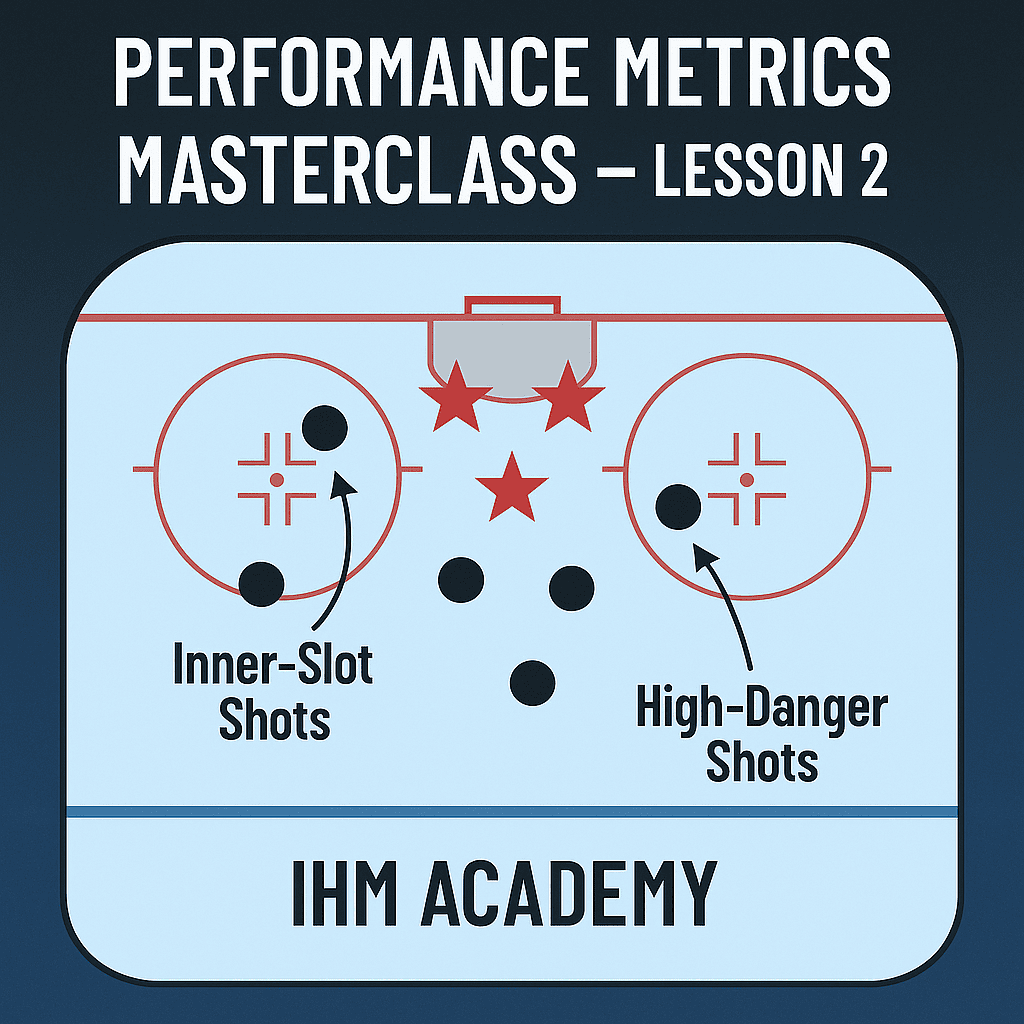
- What it is: Save percentage only on high-danger chances (slot, net-front, broken plays).
- Read: Tells how calm and technical the goalie is when structure breaks.
- Coaching use: If HDSV% is strong but overall SV% is poor, your problem is volume and breakdowns, not the goalie.
Rebound Control Rate
- What it is: Percentage of shots that end the play (frozen or cleared) vs second chances allowed.
- Read: High rebound rate = extra chaos around the net.
- Coaching use: Work on box-outs and inside body if rebounds are inevitable; and on tracking/puck absorption in technical goalie work.
3. Environment & Shot Suppression
Slot Shots Against per 60
- What it is: How many shots from the slot your team allows per 60 minutes.
- Read: Direct mirror of your Defensive Zone Coverage quality.
- Coaching use: If this number is high, you do not have a goalie problem, you have a structure problem.
Cross-Ice / East-West Chances Against
- What it is: Passes that cross the middle of the ice before a shot.
- Read: These are goalie killers; almost all models treat them as high-danger.
- Coaching use: Tighten weak-side awareness, stick position and low-zone switches.
Screened Shots vs Clear Sight
- What it is: Ratio of shots where the goalie is screened vs has a clear view.
- Read: Great goalies still need eyes. Too many screens mean D are losing net-front body and sticks.
- Coaching use: Track this for your top pair and your net-front forwards on the PK.
📊 Summary Table
| Metric | What it really tells you | Coaching reaction |
|---|---|---|
| SV% | Overall results over time | Use as a quick health check, never alone |
| GSAx | Goalie impact vs shot quality | Identify “stealing games” vs “costing games” trends |
| HDSV% | Performance when structure breaks | Evaluate composure and battle level in chaos |
| Rebound Control | Second chances allowed | Adjust goalie technique and D-zone box-outs |
| Slot Shots Against | How well you protect the house | Rebuild D-zone coverage and inside positioning |
| East-West Chances Against | Seam control and weak-side discipline | Tighten switches, sticks and F3 awareness |
💬 Coach Mark Lehtonen comment
Coach Mark Lehtonen says
A great goalie is a force multiplier. The numbers tell you if he is fighting the game, or if your team is making his job impossible.
❓ Questions & Answers | IHM Performance Metrics
Q: Which goalie stat should I look at first as a coach?
A: Start with save percentage and goals saved above expected over the last 5-10 games. Together they show both results and context.
Q: How do I know if the problem is my goalie or my team defense?
A: If GSAx and HDSV% are solid but you allow many slot shots and east-west chances, the issue is coverage, not goaltending.
Q: Are rebounds always the goalie’s fault?
A: No. Rebound metrics must be read together with net-front defense. If defenders lose inside body and sticks, any rebound becomes dangerous.
Q: How often should I check these metrics during the season?
A: Weekly snapshots are ideal. Daily overreaction creates noise; 5-10 game segments reveal real trends.
Q: Can minor hockey teams use advanced goalie stats?
A: Yes, in a simplified way: track shot locations, slot shots against and basic save percentage. The habits behind the numbers matter more than the software.
🧱 Lesson Takeaways
Goaltending performance is not a guessing game or a mood. Use a small, clear set of metrics-SV%, GSAx, high-danger saves, rebound control and slot shots against-to decide whether you need a new practice plan, a new D-zone structure or simply more patience with a good goalie in a bad stretch.