What are you looking for?
IHM Knowledge Center
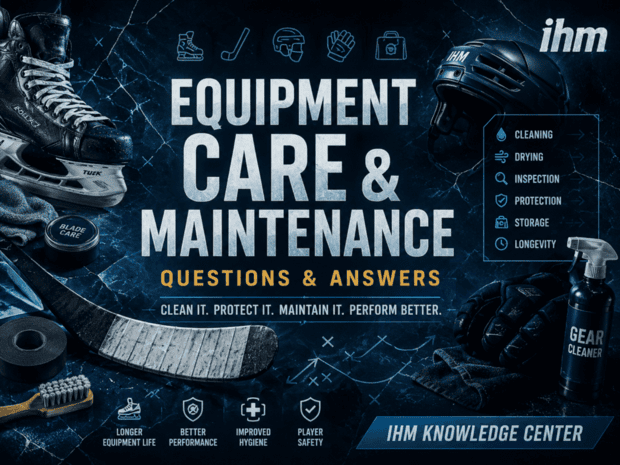
This hub explains how to clean, dry, inspect, protect and maintain hockey equipment correctly - from skates and sticks to helmets, gloves, pads and protective gear.
Editor: Coach Mark • Updated: July 16, 2026
What This Section Is
This is a structured hockey equipment care library. You get a short answer when you need a quick solution, and a full explanation when you want to understand the correct maintenance process, common mistakes, warning signs and long-term effects on performance and safety.
How to Use This Hub
- Choose the exact equipment care question from the article feed below.
- Use the Short Answer for the immediate recommendation.
- Use the Full Explanation for the complete cleaning, drying, inspection or maintenance process.
Editorial Standards
Equipment care guidance is written with performance, hygiene, durability and player safety in mind. Each topic explains what should be done, why it matters, which mistakes to avoid and when damaged equipment should be repaired or replaced rather than reused.
Core Equipment Care Topics
- Skate Maintenance - blade drying, sharpening, edge inspection, runner care, rivets, holders and boot protection.
- Stick Care - blade inspection, tape replacement, shaft damage, moisture exposure and signs that a stick may fail.
- Protective Equipment - cleaning and inspecting helmets, shoulder pads, elbow pads, shin guards and hockey pants.
- Gloves & Soft Gear - drying, odour control, palm wear, liner cleaning and preventing bacteria or mould.
- Storage & Transport - correct ventilation, hockey bag care, off-season storage and protection from heat or moisture.
Latest Equipment Care Questions
Below you will find all equipment care and maintenance questions published in this section. New entries are added regularly and follow the same structured explanation format.
Equipment Care FAQ
Should hockey equipment be dried after every use?
Yes. Equipment should be removed from the hockey bag and allowed to dry in a ventilated area after every session. Leaving wet equipment inside a closed bag encourages bacteria, odour, mould and faster material breakdown.
Can hockey equipment be washed in a washing machine?
Some soft protective equipment can be machine-washed on a gentle cycle, but the manufacturer’s instructions should always be checked first. Helmets, skates and equipment containing rigid components, adhesives or sensitive protective materials usually require manual cleaning.
How often should hockey skates be sharpened?
There is no single schedule for every player. Sharpening frequency depends on ice time, player weight, skating style, preferred hollow, ice conditions and blade damage. The edges should be inspected regularly rather than sharpened only according to a fixed number of sessions.
When should damaged hockey equipment be replaced?
Equipment should be replaced when damage affects its protective structure, fit or reliability. Cracked helmets, weakened straps, exposed padding, broken skate holders, loose rivets and deeply damaged stick shafts should not be ignored.
What causes hockey equipment to smell?
Odour develops when sweat, moisture and bacteria remain trapped inside equipment. Proper drying, regular cleaning and ventilation are more effective than simply covering the smell with sprays.
Can poor equipment maintenance affect performance?
Yes. Damaged skate edges, loose holders, worn glove palms, waterlogged equipment or poorly maintained protective gear can reduce comfort, control, mobility and confidence. Maintenance is not only about appearance - it supports consistent equipment performance.
Where should I go for equipment selection and fitting questions?
Use the relevant equipment section of the IHM Knowledge Center for guidance on skate fit, stick selection, protective equipment sizing and choosing gear for different player levels.